Independent Music & Equipment Reviews, Forthcoming Music Label & Sounds

Latest

Review: Aaron Martin/Christoph Berg – Day Has Ended

Martin-Berg DHE DR-14

DR-14 – CD Time: 36:36 – Limited to 250 CD copies or digital download

http://dronarivm.bandcamp.com/album/day-has-ended

http://dronarivm.com/2013/08/28/aaron-martin-christoph-berg-day-has-ended/

Aaron Martin: 1) Slow Wake, 2) Burl, 3) Comfort of Shadow, 4) Night Never Came

Christoph Berg: 5) Pillows, 6) Today Has Been Alright, 7) Things Are Sorted, Finally, 8) Coda


Contemplation is too often overlooked; a time for reflection, giving the mind a chance to wander and resolve the events of a day before moving onward into the night.  The transition into night may come slowly as the Sun sets on the horizon, yet some of the scenes of the day’s past are lost to fleeting time in the camera obscura of the mind.

Listening to Aaron Martin and Christoph Berg’s shared CD Day Has Ended is way to refocus the mind and to put the swiftly moving retrograde of time and visions back into perspective and allow the mind to return to a more natural order.  Martin’s half of the CD (tracks 1 through 4) are starker and more direct despite mixing a variety of instrumentation (electric guitar, acoustic strings [banjo or lute?], organ, voices and the familiar cello—in most cases the calming narrator).  Slow Wake’s electric guitar gently percolates with cello weaving.  Burl is more serious and centered. Comfort of Shadow uses layered voices like gentle breezes with slow, low and enveloping cello harmonies reaching up from below.  Night Never Came opening with an organ is the most solemn and deliberate with a mournful and distant cello, which transitions into…

…Berg’s more broadly orchestrated compositions (tracks 5 through 8).  Pillows starts with a phrasing and melody very reminiscent of King Crimson’s Formentera Lady (from the album Islands), and the cello (with other stringed accompaniment) is the narration before gently dispersing.  Today Has Been Alright is the most reflective piece on the album, the foundation (at first) is deeply rooted, then an idée fixe appears on piano.  The pace quickens somewhat to replay that which is to be contemplated and absorbed.  Things Are Sorted, Finally is as in a dream-state when the thoughts of the day may reformulate and become enmeshed in dreams.  And finally to Coda, the calming end, the quietude.

Day Has Ended is to be released on September 23, 2013.


Album Review: Zinovia – The Gift of Affliction

Zinovia - TGOA Front

Tympanik Audio: CD TA079  Time: About 49 minutes

Music – Zinovia [Arvanitidi]: www.facebook.com/ZinoviaMusic

Label – Tympanik Audio: www.tympanikaudio.com/artists/zinovia

Artwork – Shift: http://www.futurorg.com/

Available at: http://tympanikaudio.bandcamp.com/album/the-gift-of-affliction

Mastered by Alexander Dietz  Mixed by John Valasis

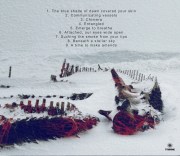
Tracks: 1) The Blue Shade Of Dawn Covered Your Skin, 2) Communicating Vessels, 3) Chimera, 4) Entangled, 5) Emerge To Breathe, 6) Attached, Our Eyes Wide Open, 7) Sucking The Smoke From Your Lips, 8) Beneath A Stellar Sky, 9) A Time To Make Amends

I suspect that most of us live pretty ordinary lives, but every once in a while finding oneself on the cusp of an adventure seems rather tempting.  A while back, author David Schickler wrote a book Kissing in Manhattan; it’s mysteriously haunting and strange—as if eavesdropping on people, places and their situations; the kinds of experiences that only happen to others.  So, imagine arriving at home some night and seeing a note pinned to the door: “Meet me at ___ at 9 pm”, signed “___” (you fill in the blanks).  Would you go?
Zinovia - TGOA BackI’ve mentioned it before: my strongest connection to music is when it takes me somewhere—whether an escape, a fantasy, to relax or to find a groove, and Zinovia’s The Gift of Affliction is a nearly perfect connection; even better, it’s beautifully recorded and produced. This album has the broad pulse of a city, its dark spaces and verve with occasional tender moments. It tells a story with many possible beginnings and endings.

First, I posit that the sounds in this album have a connection to the vast works of fellow Greek countryman Vangelis Papathanassiou (listen to his 1990 album The City, and passages in the dark soundtrack to the film Bladerunner)—if only for historical influences or connections, yet Zinovia’s album has a clear and freshly expressive voice of its own.  I also wonder, given the recent political and economic times in Greece, if there are any political undertones or foreboding woven into the narrative.

Second, I am most familiar with Zinovia Arvanitidi’s recent collaboration (on Kitchen Label) with Hior Chronik as the duo Pill-Oh, their Kitchen Label release Vanishing Mirror was a favorite of mine in 2012.  I love the reflective track Melodico.  It’s a compassionate album, but The Gift of Affliction is quite different in every way, except in the strong musicianship and production.
Zinovia 1

Throughout the entire album there is a constant shift from the ethereal to the grounded, reality to fantasy, electronic to acoustic; and as quickly as we are in a sonically amorphous zone, the vibe moves from solitary to a full ensemble of electronica or jazz undertones—a genre-bending and cohesive swirl.

It could be late at night or in the early hours of a morning; from the first plaintive beats of The Blue Shade Of Dawn Covered Your Skin all the characters are furtively introduced into the narrative with an broad ambience, beats, melodica and piano (the latter two, perhaps being the voices of the main characters).  Unexpected sounds enter and vanish in Communicating Vessels; there is movement of people, vehicles and information in this new place, yet despite all the motion there is a comforting presence of the familiar (the recurrent melodica and piano).  One doesn’t want to be swept-away too quickly. But adventures are not without complications, but why not enjoy the ride?


The mythic shift begins in Chimera, a fantasy of sound and voices, expansive, getting absorbed into the experience and the implausible.  Momentary introspection follows in Entangled—the deep and centered beats, one of the most absorbing (and longest) tracks on the album—I think my favorite too.  The narrating melodica returns, in conversation with the piano, they weave into each other, in and out of the pulse.  Emerge To Breathe is a shift from interiors to exteriors, traveling, sounds of rails and stations (like Kraftwerk’s Europe Endless, but more ominous).

Zinovia 2

Attached, Our Eyes Wide Open is the darkest and most vulnerable of scenes on the album, yet there is an alluring comfort in the melody of a solo piano (with string accompaniment).  Key shifts are slowly introduced, along with an emotional realism and sense of doubt, yet still one is drawn further  into the fantasy of…

Sucking The Smoke From Your Lips and its out-of-focus depth of field with moving colored lights—a sonic tilt-shift in a smoky jazz club with the liberation of dream-like voices.  The adventure nears its end with Beneath A Stellar Sky, out in the open, holding onto the escape.  It’s a reluctant emergence and one last taste of the vibrations of the night.  A Time To Make Amends is the return from fantasy, the pensive melancholy, with a reflective and intimate close, accentuated all the more with the sounds of the internal workings of Zinovia’s piano.

In case you’re wondering, I did take the note from my door and went on the adventure, and you should too.

****

This is a solicited review.

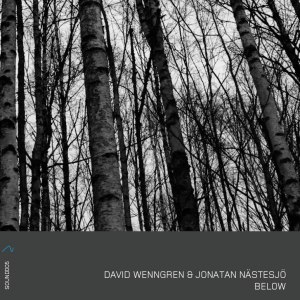
Review: David Wenngren & Jonatan Nästesjö – Below

sound005front_square

Soundscaping 005 CD: About 34 minutes

Label: http://www.soundscaping.net/

David Wenngren: http://librarytapes.com/  Jonatan Nästesjö: http://jonatannastesjo.com/

Tracks: 1) Something There, 2) Feel Nothing, 3) Before I Leave, 4) Still Nothing Moves You

Writing reviews is a tricky business.  One tries to be objective and in the end arrives at mostly subjective.  Try writing a review for audio equipment, like for speakers, often the quickest way to create a flame-out with audiophiles (even with qualitative test data)*.  Writing about different types of music is also a challenge; some folks just don’t like Bluegrass, Jazz or Folk music, for example.  Writing about Ambient, Electro-Acoustic, Electronic or other types instrumental music often proves to be the most challenging.  Many listeners just can’t grasp (we’ll call it generically) “ambient” music since there are often limited tangible melodies, lyrics or other references unless there’s an artist’s statement or a known concept behind a given work.  I find that when writing about instrumental music, it’s most helpful to reference the work of other artists (who might be familiar reference points) or try and describe how the music makes me feel, or what I see or where it takes me.

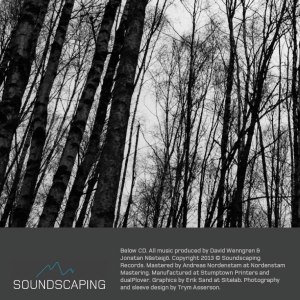
sound005back_square

Often, music enhances experiences, and at times nothing is better than a restful sonic journey to the quietude, and Below helps to get us there.

I’m more familiar with David Wenngren’s work as Library Tapes, Murralin Lane and other collaborations, but Jonatan Nästesjö’s work is new to me (and he also has used the nom de plume Woodchucker for some of his earlier work).  Both are from Sweden.  Instrumentation in this work is not readily identifiable compared to most of what I know of David Wenngren’s work, but as a point of reference I’d place Below closest to Wenngren’s recent collaboration with Kane Ikin entitled Strangers.

From the first gentle whispers of the ineffable Something There to the broadest fullness of choral passages of Still Nothing Moves You this album presents an ever-changing yet serene oasis of sound.  There is mystery within, and a sensitive audio system is almost essential for this album (*-you pick whether the music is through speakers or headphones, and no, I won’t advise on what system is best).  Throughout Something There are fleeting ethereal apparitions that emerge from high up and then they are absorbed back into the haze.  Part way through the piece there is a moment where the dream subsides, and seemingly the mind reaches back into the scene to complete it, before it disappears into the ether.


Feel Nothing appears as if from the edge of a drifting consciousness—at times the faintest of voices can be heard.  One floats through time, soft sound-light appears and diminishes and there are moments when a tangible clarity focuses, but it’s still gentle as one moves through the broad spaces created by the music (hence the term often used to describe this type of music: “cathedral electronic music”), yet this album resists being majestic.

Before I Leave is more intimate and centered initially, and then almost undetectably a tide (of organs, perhaps) builds on loops and expands as if rising and withdrawing on a broad sandy coast before receding slowly back to the horizon.  Still Nothing Moves You closes this sonic novella with veiled choral and Mellotron-like flute passages and after building the sound is gradually lost in the distance.  The effect is reminiscent of Holst’s Neptune [The Mystic] from The Planets.

Whether leaving a listener with a feeling of walking through a quiet forest (as depicted on the album’s cover), on foot in gentle breezes at a beach or escaping to another realm, Below is a fulfilling and tranquil way to leave the here, for the there.

DavidJonatan-hiresPhoto of Jonatan Nästesjö and David Wenngren courtesy of Soundscaping

****

This is a solicited review.

Review: Cock & Swan – Secret Angles

C&S Secret Angles 500x500

Hush Hush Records # HH011 CD: About 38 minutes

Band: http://www.cockandswan.com/ and http://dandeliongold.bandcamp.com/

Label: http://www.hushhushseattle.com/ and http://hushhushrecords.bandcamp.com/

Tracks: 1) Following, 2) Secret Angle, 3) Animal Totem, 4) Night Valley, 5) Looking Out, 6) Red Touch, 7) Inner Portal, 8) Kicking In, 9) Melt Down, 10) I’ve Got A Feeling, 11) Night Rising, 12) Myself Inside

I’m thrilled that Cock & Swan have a new album.  With each release it’s apparent that their confidence is growing, and even better, they’re still experimenting.  From their earliest albums like Drawing From Memory (2007) and Unrecognize (2010) their sound ranged from rough synthesized foundations, tape and microphone experiments to nearly extreme lo-fi acoustic recordings.  The 2012 album Stash (I reviewed early last year) had moved their sound from more electronic towards “…a record focused on acoustic instrumentation…”  For their forthcoming album (to be released on September 10th) Secret Angles they are combining the acoustic instrumentation with more of their electronic roots—the sound is fuller, rhythmically engaging and more up-beat.  Secret Angles moves between many different genres: progressive, electronica, acoustic and electric folk, house, dance and many others—it doesn’t dwell in one realm for long, but the album is not at all disjointed—it’s quite cohesive.

The acoustic and analog roots of Cock & Swan are still strong, and they appear as Following begins with the sound of tape mechanisms and immediately a seductive pulse, electric guitar riffs and Ola’s soft voice initiate their hypnotic spell.  By contrast the title track shifts to a darker, looped and gritty electronic foundation (and we are awakened briefly from our pastoral spell).  Animal Totem is quite reminiscent of the latter day Everything But The Girl’s track Before Today from their album Walking Wounded, when ETBG’s music shifted from coffee house to a darkened house vibe, but C&S’s Animal Totem is earthier and more acoustic with broad clarinet washes added by Hungerford.


With Night Valley, the album shifts to an even glitchier more experimental sphere where Ola’s voice and some of the instrumentation are bent and shifted and the sound enters a mysterious territory.  Looking Out continues with electronic, vocal loops, an almost Mellotron Brass sound and what I call “heavy drums.”  As I noted with their album Stash—tracks like these are reminiscent of King Crimson’s earlier work as on In The Wake of Poseidon.  The album also contains some short instrumental and vocal links (Red Touch and I’ve Got A Feeling) which are samples disguised elsewhere in other tracks.

Tracks often start with samples and a vibe that are then absorbed into the mix of a song; Inner Portal illustrates this with Ola’s vocal and breath loops coupled with what almost sounds like a ship’s steam-powered horn and it’s woven together with a heavy dub beat and coarse under-pinnings.  The chorus adds an acoustic guitar (a contrast of the heavy with the delicate).  This is a great track and one of my favorites on the album, along with the first three.  By comparison Kicking In is quite stark in its percussion and rhythm section before gathering momentum into the vocals.  Melt Down is the most electronically layered of the songs, and Ola’s vocals calm the mood and fill the spaces.


Only once did I feel like I had a sense of some monotony drifting in during the track, Night Rising—after a while it didn’t really take me anywhere…a bit like some of Edgar Froese’s (Tangerine Dream) solo work of the late 1970s.  It’s a vocal and rhythm-section drone.  The album closes with Myself Inside, which harkens back to Cock & Swan’s stark early work—an acoustic guitar (in the character of a child’s toy piano), a simple rhythm and Ola’s vocals layered with deep breathing.

Since I’m working with a promo recording, I don’t have access to the lyrics or the personnel list for the album, so I’m not sure if there are other musicians on the album besides Johnny Goss and Ola Hungerford.  It’s also worth noting that Johnny Goss provides engineering and recording support for other Seattle-based musicians, including one band that recently caught my attention, La Luz (absolutely infectious 60s surf-pop) fronted by Shana Cleveland.

After Secret Angles, I’ll be very interested in hearing where Cock & Swan takes us next.  Don’t miss this album, and seek out a copy of their last, Stash too.

C&S by Angel Ceballos

Cock & Swan – Ola Hungerford and Johnny Goss – Photo by Angel Ceballos

****

This is a solicited review

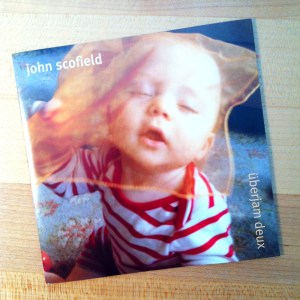
Review: John Scofield – Überjam Deux

JSUD

CD: Emarcy B0018605-02 Time: About 62 minutes www.johnscofield.com

Band: John Scofield: Guitar, Avi Bortnick: Guitar and Samples, Andy Hess: Bass, Adam Deitch: Drums, Louis Cato: Drums, Special Guest: John Medeski: Organ, Wurlitzer and Mellotron

Tracks: Camelus, Boogie Stupid, Endless Summer, Dub Dub, Cracked Ice, Al Green Song, Snake Dance, Scotown, Torero, Curtis Knew, Just Don’t Want To Be Lonely

Between his solo and collaborative work, John Scofield has appeared on more than a hundred albums since the 1970s (including his early work with Miles Davis).  His first Überjam album was released in 2002.  As with the first album, Scofield moves all around and in between music genres, Jazz, Rock, Blues and Funk.  Many of the tracks on Überjam Deux start with a sound or rhythm sample and the quartet (switching between drummers Adam Deitch and Louis Cato) build a groove and just chill there or get their funk-on.  My two favorite tracks are Boogie Stupid (which reminds me of Roy Buchanan’s work) and one of the five tracks with John Medeski Curtis Knew, where Medeski brilliantly has his way with a Mellotron—just delicious.  In recent years I’ve greatly enjoyed Scofield’s collaborative work with Medeski, Martin & Wood.   Überjam Deux is a joyful album and I can’t help but think that John Scofield was sending positive vibes to his son Evan during the recording of this album earlier this year (Evan died far, far too young in July, from a rare form of cancer).  A bitter-sweet album, yet excellent for a road trip or listening at home.

Rest in Peace, Evan.

More on the album in this video


Curtis Knew


Review: Chris Dooks – 300 Square Miles Of Upwards

300SMOUa300-back-500px


Record Label: http://www.idioholism.com/   Album Time: About 32 Minutes

Chris Dooks’ Website: http://www.dooks.org/

LP or Digital available via: http://chrisdooks.bandcamp.com/album/300-square-miles-of-upwards-2013-blue-vinyl-digital-album-hd-film

Tracks:  Side 1 – 1) Gardening as Astronomy; 2) The Greeks That I Love; 3) Morse Mode; Side 2 – 1) Conversation with a Boy (album mix); 2) Gwiazdozbiór Andromedy; 3) Pinpricks; 4) Katrina

For those old enough to remember, Carl Sagan wrote a book and produced a television series in 1980 for PBS (USA) entitled Cosmos*.  In that series he probed our knowledge of the Universe and explained in remarkably accessible language what scientists and astronomers knew at that time, and theories on the yet undiscovered.  On one hand we humans are bound by the limits of our Earth and our observations, yet beyond there are seemingly boundless realms to be explored and understood.  As noted by Dooks (in the detailed liner notes that I highly recommend reading) on each of the deep space Voyager probes (that have now left our Solar System) there is mounted The Golden Record, a phonograph LP containing sound recordings of Earth and pictograms explaining our location in our Milky Way galaxy–a collective memory of our humanity.

300SMOUc

300 Square Miles Of Upwards (subtitled: Tales for a Dark Sky Park) is the second album of Chris Dooks’ Idioholism Trilogy, the first being The Eskdalemur Harmonium (the link will take you to my previous review and an explanation of the overall project).  As with the first album, the graphic design and presentation (by Rutger Zuyderfelt AKA Machinefabriek) are impeccable; this time the motif and LP vinyl are the primary color blue.  The liner and cover photos are by Dooks, relating to the same color.  Dooks also has a marvelous online archive of his photographs here: http://d7000000.tumblr.com/


300 SMOU is a calming meditation and memory archive relating to science, astronomy, conversations, and music, and relationships to earthly flora.  The album’s title refers to an area of the Galloway Forest Park in Scotland (near Dooks’ home) and is a Dark Sky Park for observing the night sky.

The album’s recordings (a film soundtrack, field recordings, interviews and readings) are deftly interlaced with Dooks’ minimalist compositions (on piano and other instrumentation).  The works occupy an experimental realm somewhere between ethnographic documentary akin to Alan Lomax or Hamish Henderson and experimental (looped and altered) music by Laurie Anderson (Big Science) and The Books (The Lemon Of Pink).  Dooks has imaginatively woven the music, sounds and reflections on the night sky into an almost hypnotic opus.  Within the intricate, clarity is revealed.

If digital download is your usual mode, consider purchasing the LP–a beautiful presentation overall.  I’m looking forward to the third part of the trilogy.

300-mockup

* – For interested readers, Cosmos is available via streaming at Netflix.

Review: Brainkiller – Colourless Green Superheroes

Brainkiller - CGS

RareNoiseRecords CD RNR033 Time: 45:53  (LP version coming soon)

http://www.rarenoiserecords.com/brainkiller-store

Tracks: 1) The Vindicator Returns, 2) Scribble, 3) Empty Words (featuring Coppé), 4) Top Of The World, 5) Orange Grey Shades, 6) A Piedi Verso Il Sole, 7) Plates, 8) Noodlin, 9) Labratorio, 10) Secret Mission, 11) Otaku Goes To A Rave, 12) Viv, 13) To Be Continued

Band: Jacob Koller: Piano/Fender Rhodes/Keyboards, Brian Allen: Trombone/fx, Hernan Hecht: Drums

Wit and subtlety are often hard to find in much of what passes for music today.  Then there’s music that takes itself so seriously that it might collapse under the weight of its own ponderous self-importance.  Music isn’t always about the sound, it’s sometimes about the spaces and the silence—it doesn’t necessarily have to be a full-frontal assault on the senses.

A few years ago Brainkiller released their first album The Infiltration on RareNoiseRecords (#RNR010).  Initially, this album caught my attention because it was a trio with a trombone, their music sounded playful and quirky, and it had some roots in other artists whose work I admired (Frank Zappa, King Crimson, Brand X, Godley-Creme, Weather Report, Return To Forever).  Here’s a sample track, Casketch from their first album:

Casketch 

Colourless Green Superheroes is a series vignettes (some atmospheric like Empty Words, and some funky) exploring melodic, rhythmic and at time ethereal motifs and the tracks don’t rest long on a given theme before shifting direction.  In a way, this album is a soundtrack in search of a film.  There is also a restful ease throughout the album (making it perfect for a languid summer day or when the night is young), but there are moments when cool breezes blow and there is a jaunty awakening, as in Scribble.  The spirited Fender Rhodes opening phrases take me back to Brand X’s Disco Suicide*.  There is, however, an unexpectedly laid-back funky response from trombone and percussion, a bit like The Tortoise and the Hare—as if the Tortoise retorts, “Chill, I’ll get there…”

Scribble

The themes introduced in the anthemic opening track The Vindicator Returns are explored further in Top Of The World, at first on a solo piano before the full trio plays off the rhythms and melodies.  As in their first album, there are moments of recorded studio banter or live voices, which add a sense of spontaneity—also evident in the veiled conversations during the furtive Orange Grey Shades (my favorite track on the album).  One can make up their own story to accompany the music.

The Vindicator Returns

There are times when the album is more contemplative as in A Piedi Verso Il Sole, a reflective lament of sorts.  Yet the album shifts (before the vibe gets too heavy) to more raucous themes in Plates.  The mood lightens further with Noodlin—a spirited piano solo (think a leisurely evening at a night club…at first), before moving to lighthearted voices (steering the improvisation), muted trombone solos and ultimately a vigorous trio romp.  The upbeat repartee continues with the march-like Labratorio and perhaps the most vigorous track on the album Secret Mission (like a chase scene from one of the Bourne films)—see the video below for an excerpt.


Earlier themes are again revisited in the closing tracks of the album Otaku Goes To a Rave (my other favorite track on the album) mixing in some Scribble[s] and polyrhythms from the drums and piano.  There’s an interesting combination of 1970s-era electric piano work combined with energetic phrasings similar to what the band Zammuto (ex-The Books) is working on these days.  The album closes with the peculiar and brief Viv—a prepared piano musing, followed by To Be Continued, a reflective and somewhat subdued “roll credits” piece.

This album functions well as both incidental music or for straight-on listening and as soon as it ends I wonder where the time has gone…and so, REPLAY!

BrainkillerPic2

Photo of Brainkiller Courtesy of RareNoiseRecords

* – For those curious about Disco Suicide by Brand X: http://www.youtube.com/watch?v=FdAPEEW-OUA

***

This is a solicited review.

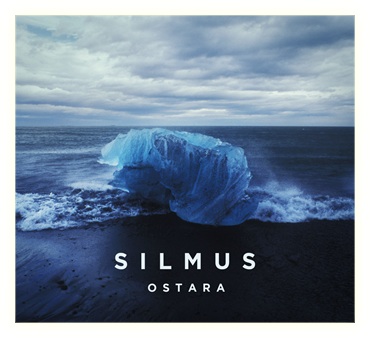
Review: Silmus – Ostara

Silma - Ostara

Volkoren #46 – CD Time: 29:00

Available at: http://www.silmus.com/ & http://www.youmakemusic.com/music/cd/silmus-ostara

Label: http://volkoren.com/  Photography by: Jan Borger

More Information: https://www.facebook.com/pages/SILMUS/159349577522537?fref=ts

Tracks: 1) Birth 2) Bright 3) Fortunate, My Child 4) Mono No Aware 5) Song For You 6) Clearing Up 7) Lives Lighted Out 8) Ostara 9) Disappearance (The Horse Ride) 10) Storm Lay Down

Some observed rituals are ancient and have roots in far away and nearly forgotten times, and various natural orders remain mysterious until the moment when one is firmly planted within the experience—there is no book to be read (although advice might be given) yet somehow deeply planted instincts guide…trusting that it will all turn out as we hope.  There may be unexpected turns, but that is part of the adventure…the journey through life.  If I have my history correct, Ostara is a pagan goddess of fertility and referred to centuries ago during the annual Festival of Easter—rebirth, the cycle of life and in some languages ostara also translates as “loop”.

Bright


Silmus is Dutch musician Gert Boersma (acoustic and electric guitars, bass, ukelele, vocals), and along with producer Minco Eggersman (guitars, mandolin, percussion and synthesizer), Jan Borger (piano, bass, synthesizer, Hammond, accordian) and Mirjam Feenstra (vocals), Boersma has created a sonic novella of the anticipations, sensations and emotions of becoming a parent—the delight of wonderment and discovery.

Clearing Up


Released in late 2012, this debut album (which is beautifully recorded, mastered and illustrated) contains often dream-like vignettes displaying tenderness and crystalline musicality that guide the narrative without any self-absorbed sentimentality—themes are developed, explored and nimbly resolved.  There is an enchanting innocence as the sounds coalesce with ethereal movements in the electric and acoustic instrumentation and occasional subtle voices.  This album is curious in that it allows moments of deep and absorbing reflection, yet one is not cast into the depths to awaken in a chilled haze (despite the album artwork); instead the feeling is the presence of warmth and refreshing clarity after the music has gently departed.

Ostara


A few have placed Silmus’ work in the canon of some well-known ambient artists, but I think his work is more engaging, closer to some instrumental works of Anthony Phillips, selections from albums like New England and Dragonfly Dreams.  My favorite track on the album is the nearly-mystical Mono No Aware.

Let’s hope for more from Silmus.

Gert Boersma

This is a solicited review.

Review: Yellowbirds – Songs From The Vanished Frontier

Yellowbirds SFTVF

The Royal Potato Family – RPF 1312 – LP, CD, Digital – About 35 Minutes

http://royalpotatofamily.com/ and https://www.facebook.com/YellowbirdsMusic

Songs: Side A: Stop Tonight, Mean Maybe, Love Stories, Young Men Promise, The Ceiling Side B: The Vanished Frontier, Julian, For Girls Who Love To Sing, What’s Out There

Sam Cohen: Vocals, Guitar, Bass, Organ; Annie Nero: Vocals; Brian Kantor: Drums, Percussion, Vocals; Josh Kaufman: Guitar, Organ, Vocals

Something different…and even better it has an excellent sleeve design and is available in white vinyl…


The new Yellowbirds album is: mysterious, drifting, lush, orchestrated, cheerful, danceable, hopeful, syncopated, witty, retro, autoharpy (I know, not a word, but very 10cc*), uplifting, sonorous, jangly, toe-tapping, catchy, spirited, amorous, languid, romantic, edgy, bathed in reverb, fuzzy, harmonious, bluesy, intimate, ragged, orchestral, stark, melancholy, reflective, sad (but wait!), buoyant, lively, driving, dramatic, thoughtful, inviting, tuneful, lyrical, spacey, philosophical and inventively melodic.

I love the combinations of organ, guitars, bells, zither, Mellotron, strings, bass-lines, and the (at times) witty vocals.  Yellowbirds’ last album, The Color was exceptional, but this album is even better.  Deftly crafted songs, and an supportive record label that takes care of its customers.

Buy it.


*Autoharpyhttp://www.youtube.com/watch?v=2zW2wmna2sg&feature=youtu.be&t=4m18s

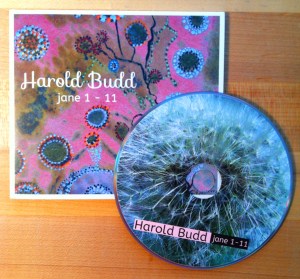
Review: Harold Budd – Jane 1-11 *Updated with Jane 8 Video*

HB Jane1-11

Darla Records – DRL 281 CD Time: 59:18

Available here: http://darla.com/?fuseaction=item_cat.ecom_superitem_detail&item_cat_id=41841

Tracks: Jane 1, Jane 2, Jane 3, Jane 4, Jane 5, Jane 6, Jane 7, Jane 8, Jane 9, Jane 10, Jane 11

Harold Budd is not complacent and I am thankful that rumors of his retirement actually turned out to be false (he briefly tired of writing and recording).  He is (at 77) producing some of the most interesting work of his long and varied career.  In a way, he is like Frank Lloyd Wright was at about the same age when Wright was hitting his stride with highly original and innovative works like the Kaufmann House (best known as Fallingwater)—always exploring and seeking new edges.  Many might connect Budd’s work almost exclusively with solo piano pieces or his first collaboration with Brian Eno, Ambient 2: The Plateaux of Mirror, but his discography is remarkably varied, and including his joint releases, he has contributed to or been the solo artist on over forty albums since 1971.

The music alone on this album is divine, and even better there will be a DVD later this year including video collaborations with artist Jane Maru (who also produced the beautiful artwork for this album).  Earlier this year a version of the furtive and at times skittering Jane 9 was quietly released on youtube—it’s just a hint of what to expect from this album.


This is a work of contrasts; some tracks tease the senses (like the unexpected and at times shrill Jane 1 or sharp-edged Jane 5 or the visceral and ghostly Jane 7) and then the pleasurable counter-effects are later intensified as the music ebbs and flows (as in Jane 2, Jane 3, Jane 4 and the sublime Jane 8). Moods and spaces change, first grounded and up-close and then transform into expansive and liberating flights.  Budd is also exploring new sounds, instrumentation and treatments on this album (percussion [like chimes], electric piano, droning electronics, celeste and harp).  I won’t say why, but Jane 6 evokes some very pleasant childhood memories.  Jane 8 reminds me a bit of Anthony Phillips’ recent work Watching While You Sleep—deeply moving and one of those tracks I don’t want to end.  The expansive Jane 10 is almost a reverse overture, recapitulating variations of sounds and themes from the previous tracks, as if reliving the experiences.  To me, Jane 11 is the reappearance of the spirit of Jane 8—that which I didn’t want to end earlier, returned.  How did Budd know that this is what I wanted?

Harold Budd has an uncanny gift for expressing so much with so little, a poet who just happens to use music instead of words.


MINDBENDERS

Learn, Ponder, Discuss

richard jefferies

visionary author and naturalist (1848-1887)

My Patronus Is Coffee

Life is Messy. Send Coffee and Posh.

Wendy Artin, photos from the exhibition

This is a blog with news - to see Wendy Artin's website, please visit www.wendyartin.com

JAZZ LIVES

MAY YOUR HAPPINESS INCREASE! "Lives" is both noun and verb.

No More Workhorse

Appear highbrow without trying by reading...

Stationary Travels

Journeys in Sound & Music

The Oxford Culture Review

"I have nothing to say, and I am saying it" - John Cage

Kendra Steiner Editions (Bill Shute)

publishers and champions of contemporary poetry and experimental music from San Antonio, Texas

monty adkins | SKRIKA

composer | dark ambient sound artist

Sunnymeade Astro

An Amateur Astronomer's Observing Diary from the Welsh Border

Wist Rec.

Handy Music Handmade

Somme Battlefields

WW1 Centenary website by Paul Reed

WW1 Centenary

Great War Centenary 2014-2018 website by Paul Reed

Out of Battle

Musings of a Military Historian

The Echoes Blog

The weblog of Echoes, the nightly music soundscape on Public Radio and the internet.

gleamingsilverribbon

Words, sounds and pictures by Kate Carr