Independent Music & Equipment Reviews, Forthcoming Music Label & Sounds

Latest

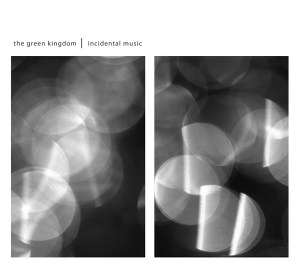
The Green Kingdom – Incidental Music

Tench – TCH03: CD Time: 39:58

Record Label Website: http://www.tenchrec.com/

More on this release: http://www.tenchrec.com/TCH03.html

Artist Website: http://thegreenkingdom.wordpress.com/

Available at: http://darla.com/


1) Three Friends Of Winter; 2) Backyard Epiphany; 3) Over Treetops; 4) Cherry Theme; 5) Slow Bloom; 6) Green Theme; 7) Floatation Themes; 8) rshda; 9) Whispered Through Pines

Whether in a conscious state of reverie or in the pre-waking hours when fleeting visions come forth into the camera obscura* of the mind, there are moments where hanging onto the edges of dreams is perhaps more desirable than even slumber.  And after the dreams end, in the glistening haze of the morning, The Green Kingdom’s latest album, appropriately titled Incidental Music, is the soundtrack for this quietude.

My first experience with Michael Cottone’s work was on the Home Assembly’s #HAM004 album from 2010 entitled Prismatic, and his more recent album Egress on Nomadic Kids Republic #011.  Incidental Music holds time in suspension with subtle rhythms, and gentle yet tangible instrumentation (crystalline guitars, keyboards, kalimba and minimal processing) that encourage a calm wandering state of mind.  Although different and original in his approach, there are some similarities in the feeling and sound in Cottone’s work to Dictaphone’s recent album Poems From A Rooftop (Sonic Pieces) and The Boats album Ballads Of The Research Department (12k), two albums that I like very much.  It is evident that great care was taken in the recording of this album, and it has been beautifully mastered by Tench’s M. Ostermeier.

Three Friends Of Winter is the placid introduction, a point of awareness without a concrete reality.  Backyard Epiphany is serene in its sense of movement and passage of time.  Over Treetops is the beginning of a gentle awakening.  There are Satie-esque moments of allure as in Cherry Theme and Green Theme, even after a chimed nudge opening in Cherry ThemeSlow Bloom and Floatation Themes blur the sense of time.  rshda is the most ethereal track on the album; the moment before stirring, where reality is still beyond reach.  The album closes with a gentle awakening in Whispered Through Pines.

There was a place-holder for album #TCH03 at Tench Records for some time.  Now the mystery is solved, and the void filled with these delightfully tranquil scenes and halcyon musings from The Green Kingdom.

* Tip of the hat to Mr. Williamson.

Review: Almost Charlie – Tomorrow’s Yesterday

Words On Music – WM33: CD Time: 42:17

Record Label Website: http://words-on-music.com/

More on this release:

http://words-on-music.com/WM33.html & http://words-on-music.com/almostcharlie.html

Artist Website: http://www.almostcharlie.com/

Available at: http://darla.com/


1) Hope Less; 2) Open Book; 3) Sandsong; 4) Man Without A Home; 5) A Nice Place To Die; 6) Tomorrow’s Yesterday; 7) Still Crazy ‘Bout You After All These Years; 8) Cummings; 9) Youth Is Wasted On The Young; 10) Undertow; 11) When Venus Surrenders

I have a broad rotation of albums, all sorts of genres (I listen to more than ambient and electro-acoustic works, despite what some might think from my reviews).  Since its release in 2009, Almost Charlie’s album The Plural Of Yes (TPOY) hasn’t been too far away from my CD player.  It’s a great album of songs written in the tradition of Elton John and Bernie Taupin or Burt Bacharach and Hal David, musician and lyricist working separately.  In the case of Berlin’s Dirk Homuth (singer and multi-instrumentalist) and New York City’s Charlie Mason (lyricist), they still haven’t met in-person and aren’t separated by “two rooms”, but two continents and an ocean.  It’s evident, however, from their work together that they communicate well, no matter what the distance.

Tomorrow’s Yesterday is the latest release, and I’m really happy that Almost Charlie has returned after three years with more beautifully crafted and skillfully recorded songs.  There are familiar faces in the band: Sven Mühlbradt on bass and Pelle Hinrichsen on drums and percussion with the addition of Bert Wenndorff on piano as well as other supporting musicians.

For those unfamiliar with Almost Charlie, I find similarities to the songwriting and sound of bands like The Beautiful South, The Autumn Defense and some of the less raucous songs of the Fountains of Wayne.  I’d even compare some songs to works by 10cc (either written by Eric Stewart/Graham Gouldman or Kevin Godley/Lol Creme).  Similarities to the Beatles are also unmistakable (especially the voice of John Lennon with a bit of George Harrison on the track Still Crazy ‘Bout You After All These Years).  There are marvelous wordplays, edges of wit and subtle metaphors in the lyrics resulting in this latest collection of musical gems.

The feeling of Tomorrow’s Yesterday is a bit more pensive and acoustic than TPOY, but there are upbeat, playful and spirited tracks too.  Instrumentally, the foundation of most of the songs is guitar, bass, drums and piano, but many of the tracks are delightfully punctuated with brass, woodwinds, sitar and dobro guitar.  Some of the finest moments are simply acoustic guitar and Homuth’s vocal harmonies, as on Sandsong, which is a bit melancholy and reflective.  In this album there are songs of relationships, a sense of realism, but not resignation; acceptance and contentment, but also a feeling of hope as in Cummings.  I also appreciate that the recording is crisp and sounds like a live performance in the studio with minimal processing.  There was only one point (at the end of the last track) where the recording was sounding saturated on my equipment, but I stress this is a minimal issue.


Hope Less (a song of setting expectations) begins with acoustic guitar and harmonies and then advances into a march of sorts.  This and Open Book are great examples of the smart wordplay in the lyrics, double-meanings, literary references and a deft efficiency of expression.  Man Without A Home and Youth Is Wasted On The Young are ironically upbeat ruminations with shades of The Byrds (electric guitars), syncopated rhythms and are gently arranged with brass and strings respectively.  A Nice Place To Die has a lively rhythm and bluegrass roots-music vibe with dobro and violin solos.  Tomorrow’s Yesterday is a stark and melancholy observation on the passage of time, and perhaps more than any other track Homuth is channeling John Lennon’s voice (literally and figuratively).

Undertow (a favorite of mine) has power in its symbolism and realism; the words and music combined are indeed greater than the sum of their parts.  The passage “The more I try to fight it; Its grip on me is tightened…Overwhelmed by the undertow” is about as close to perfect as it gets.  The closing track When Venus Surrenders builds from a quiet beginning, and is the longest and most ambitious song on the album, similar to the spirit of The Monster and Frankenstein from TPOY with a nod, I think, to The Beatles’ Let It Be.


As The Plural of Yes was in 2009, Tomorrow’s Yesterday is one of my favorite song-albums of 2012.  Perhaps next time lyrics could be included in the package, since they are such an integral part of the songs.  The Homuth and Mason formula works, the chemistry is still there, and I hope they continue to write songs together and we hear much more from Almost Charlie in years to come.

Autistici – Beneath Peaks

Hibernate Recordings – HB44: Time: 46:30 – Edition of 250

Record Label Website: http://hibernate-recs.co.uk

More on this release: http://hibernate-recs.co.uk/releases/autistici-beneath-peaks/

Artist Website: http://www.autistici.com/ 

1) Asleep Beneath Nests (Fieldhead); 2) Edall; 3) Mam Tor Soarers’ Workshop; 4) Styx; 5) Edge Over Millstone View; 6) Padley Gorge; 7) Noe (Upper Booth); 8) Mulgrave’s Dining-Room; 9) Aidale; 10) Peveril’s Open Door; 11) Sleep State For Carl Wark

Beneath Peaks (Autistici’s debut release on Hibernate Recordings) is an interpretive sound narrative of a walking and camping tour through the Peak District in the central UK; a luminous and expansive journey with a strong sense of place.  The region is geologically diverse with moorland plateaus, expanses of millstone grit escarpments, limestone and demarking zones at the edges of the long-ago eroded strata.  I have been fortunate to take long walks in similar places: Devon (The Burrows in Saunton) and on Exmoor in the southwestern UK, and Beneath Peaks is certainly an enticement to travel to this varied pastoral upland region.

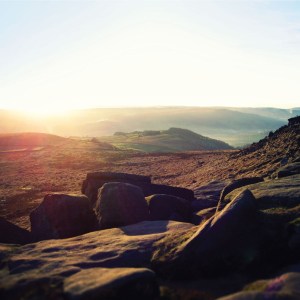
Even before the music, I was struck by the hues, varying landscape and seemingly endless sky in the cover photo (quite similar to Exmoor in some respects).  The photo is also illustrative of Autistici’s work, which ranges from outwardly expansive to inwardly minute explorations; the literal and abstract in a landscape that is both known yet still mysterious.

Instrumentation throughout the album is both recognizable and veiled, and includes piano, guitar, synthesizer and electronics, in addition to sculpted fragments of extensive field recordings captured during the trip (processed with the help of Christopher Hipgrave’s software module AMBIENT).  Additional guitar on Edge Over Millstone View was provided by Erik Schoster.


Beneath Peaks is book-ended by two sleep-states: an awakening (the beginning of the journey at a campsite named Fieldhead) and a closing to slumber and inward contemplation (at the ancient Carl Wark).  Throughout there is a deep sense of observation and contemplation, both in the literal field recordings and abstract sonic interpretations of the journey.

Asleep Beneath Nests (Fieldhead) is a deftly woven tapestry of field, avian and human sounds, rising with the sun (while human slumbers).  Edall is the sound of breathing and pulsing; movement through this timeless area.  Edall is a 16th century variant spelling of the village of Edale and was once known as the “Valley of the River Noe”; the start of the Pennine Way, a trail in this district.  Mam Tor Soarers’ Workshop; starts in what appears to be in a woodworker’s shop.  This is a region known for hang and para-gliding.  As this track progresses, it transitions from being grounded to having a sense of weightlessness.  The latter section (and I am speculating) appears to be a bit of an homage to Raymond Scott’s rhythmic and melodic electronic Bass-Line Generator (of 1967).  Styx is a brief and quiet transition into Edge Over Millstone View.  The sound is sharp and panoramic in contrast to other areas of rolling pasturelands elsewhere in this region (a reference to the geology, I speculate).

The rocky echoed sounds of Padley Gorge give the sense of passing through the deep narrow wooded valley near the village of Grindleford.  Burbage Brook is at the base of the gorge.  Noe (Upper Booth) is a small tributary to the River Derwent and forms a sonic respite before a pulsating encounter with Mulgrave’s Dining-RoomAidale (I believe, another early variant spelling of the village Edale) is at first, a delightful contrast to Mulgrave’s; a meandering solo piano, which then drifts into an altered dream-state and transitions to the apparent sounds of traffic passing or is it time bending?  Peveril’s Open Door brings us to the environs of Castleton and the nearby Peveril Castle, which overlooks the village with sounds of birds, nearby waterway and the piano returns.  The end of the journey is Sleep State For Carl Wark, the rocky promontory in Hatersage Moor (believed to be the site of an Iron Age hill fort).  It is here that memories of the distant past flow into and blend with the present, and sleep returns with music box and strings; the end of a captivating journey.

Autistici is Sheffield-based (UK) sound artist David Newman.  He is the curator of the Audiobulb (where I discovered the marvelous work of Monty Adkins) and Audiomoves record labels.  To date, Autistici has released a number of acclaimed albums on the 12k, Home Normal and Keshhhhhh labels, amongst others.

Updated sound files will be posted when available.

****

This is a solicited review.

Caught In The Wake Forever – Against A Simple Wooden Cross

Hibernate Recordings – HB43: Time: 41:27 – Edition of 250 – Cover photo by Chris Gowers

Record Label Website: http://hibernate-recs.co.uk

More background information on the album: http://hibernate-recs.co.uk/releases/caught-in-the-wake-forever-against-a-simple-wooden-cross/


1) Scottish Grief; 2) The Quiet Beauty Of The Northern Lakes; 3) Waiting Rooms & Chemists; 4) After The Blackout; 5) Western Medicine Failed Me; 6) Last Of The Heroin; 7) Point Sands

Caught In The Wake Forever is the nom de plume of Fraser McGowan, who lives in Paisley, Scotland where he composes and records his works at home.  McGowan has been recording music in various incarnations since 1998.  I recently became acquainted with CITWF’s work through a Hibernate Recordings collaboration with Yellow6 (Jon Attwood), entitled The Slow Manipulation Of Dying Light (now sold out, but digital files are still available for download).  And so, I started to dig further…


McGowan’s latest album, Against A Simple Wooden Cross is a surprisingly open and stark account of his recovery from a lifelong affliction with chronic anxiety, and ultimately a complete mental breakdown in 2011.  As is often the case, the crash was not only debilitating to him, but also to family and friends (and I suspect the title of the album is a reaction to those who don’t often understand all the circumstances; a feeling of guilt that can also hinder recovery).

Despair and melancholy permeate this album.  Recordings vary from a six month period when McGowan was heavily medicated to a time when more effective alternate methods of treatment were found.  As a result those pieces are more hopeful as resolve and clarity develop.  There is also an ancient and timeless quality to the album (similar to Cock and Swan’s album Stash and other works by Sparklehorse AKA Mark Linkous…oh, I miss ML).  In this case, it is the concept that recovery takes time, time for a worthwhile cause—rebuilding a life worth saving, on one’s own terms.

I am also attracted to this album in a similar way that I admire self-examination in the works of East River Pipe (F. M. Cornog); although the songwriting and atmospheric approaches are quite different.  In particular, the stark simplicity of penultimate song on the album, Last Of The Heroin.  Not being fully aware of all the circumstances (and not wanting to speculate blindly), I have made some notes on some of the tracks, but I think that some interpretation is best left to the individual listener.

Scottish Grief opens with field recordings from a holiday before his breakdown.  As the tragic nature of the events is revealed, the piece transforms into a dirge.  Conflict grows represented by increasing dissonance and ultimately a shredding electric guitar. Despite dealing with conflicting feelings and thoughts, there is a determination to keep moving and not give up, even at this early stage.  The track builds in layers slowly, perhaps symbolic of the pace of treatment, and closes with an excerpt from (what appears to be) a demo where it is evident that hopelessness still weighs heavily.

The Quiet Beauty Of The Northern Lakes opens with a simple rhythm and acoustic guitar, where re-building a life begins.  The struggles are evident: “It’s hard to keep a light on…”  Eventually, piano and keyboards layer with McGowan’s almost-whispered vocals and a chorus of a Gizmo-like (bowed) electric guitar.  Waiting Rooms & Chemists is atmospheric with acoustic guitar, and the feeling of endless waiting and being alone.  After The Blackout starts with melodic rhythmic blips and then blends acoustic guitar and vocals.  The track is reminiscent of Recorded With You In Mind (from the 2011 EP All The Hurt That Hinders Home**).  Western Medicine Failed Me is instrumental, with acoustic guitar and a veil of electric guitar reminiscent of Frippertronics in Robert Fripp’s 1979 album Exposure (that which simmers below the surface).

Point Sands closes the album, and it appears to look back on the beginning of the journey to getting well, and as I understand it, the title of this track is taken from the location heard in the field recordings in Scottish Grief; a pleasant memory perhaps held onto and another piece of the journey back.  Some might feel that this album goes too far into the abyss of despair and is too personal, but it is also the case that music such as this occupies a space that seldom gets explored, or even understood, as it is often hushed with whispers.

**Recorded With You In Mind from the EP All The Hurt That Hinders Home:

****

This is a solicited review.

SRFélix – SRFélix

My Little Cab Records MLCR#031 CDr limited run of 100 (Review copy is #25)

Timing: 23:56 Mastered by Emmanuel Nogues

Website and Ordering: http://mylittlecabrecords.bandcamp.com/album/srf-lix

Tracks: 1) We Walk Until The End; 2) The Wind Dies; 3) Leaving Home; 4) A River In Winter; 5) Old Memories; 6) Until The End

S. R. Félix lives and records his works at home, between Lille and the shores of Brittany in France.  His self-titled debut release on My Little Cab Records is an enchanting sonic novella that alternates between states of observation and contemplation.  Most of the instrumentation is acoustic (piano, guitar, strings and treatments), and there are similarities with the instrumental portions of recent works by Will Samson and Gareth Dickson.  There is deep sense of reverence for place and time.

We Walk Until The End announces a departure on a (perhaps imagined) journey with a layered and expansive beckoning, which gradually develops into an exultant march before fading.  The Wind Dies shifts to a more introspective piano meditation.  The recording preserves the ambient sounds of the inner workings of the muted piano*.  Leaving Home continues the sense of reflection, this time with a solitary electric guitar lament.  It starts quietly and grows more intense during the choruses.  A River In Winter is a more outward looking and expansive sonic vision; a desolate scene encountered as the journey continues.  Old Memories has a metronomic muted piano (layered with shimmering guitar).  It expresses the passage of time, and gives the sense of viewing faded photographs.  Until The End is perhaps the arrival at the destination, to a darker yet more serene realm.  The sound is deeper and moves in waves to the close.


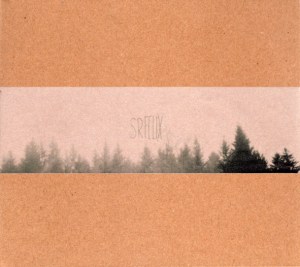
My Little Cab Records is a French DIY record label that has released mostly limited edition CDrs since 2004.  The CD sleeve has an intriguing pine forest panorama spanning the front and back covers of the expressive and fully hand-lettered sleeve (with pressed dried flowers). S. R. Félix is working on his next album, to be released in 2013.  Although this eponymous debut release is more akin to an extended EP than a full LP album, I find it to be a solid introduction to Félix’s work, and I look forward to the future release, as well.

*-Recording note: There is a slight vibration at the edges of the sonic peaks on this track. To be certain that it was not my equipment, I switched between multiple pairs of speakers and the vibration remained.  It is not too distracting, but it is noticeable on certain equipment.

****

This is a solicited review, although I had already purchased a copy of the album.

Library Tapes – Sun peeking through

CD Time: 29:11 #auecd006

Website and available from: http://librarytapes.com/

Julia Kent – Cello (3, 4, 8 & 9), Sarah Kemp – Violin (2 & 6), Danny Norbury – Cello (7), David Wenngren – Piano

Tracks: 1) Variation II, 2) Parlour (Variation I), 3) Found, 4) Parlour (Variation III), 5) We won’t need you anymore, 6) End of the summer, 7) Lost, 8) Sun peeking through, 9) Parlour (Variation II), 10) Variation I

Music takes me places, always has.  Sometimes there is emotion, a memory or colors, but it is always spatial.  Although a relative newcomer to some artists, it is not that I am unfamiliar with David Wenngren’s work, but as for Library Tapes I have some catching-up to do.  A while back I reviewed his hypnotic album with Kane Ikin entitled Strangers, and I have both albums Our House Is On The Wall (as the moniker of Murralin Lane with Ylva Wiklund), and The Meridians of Longitude and Parallels of Latitude, his collaboration with Christopher Bissonnette.  All are different explorations of sound and place, but Sun peeking through seems more personal. Wenngren’s piano is deftly blended with a spare ensemble of strings.

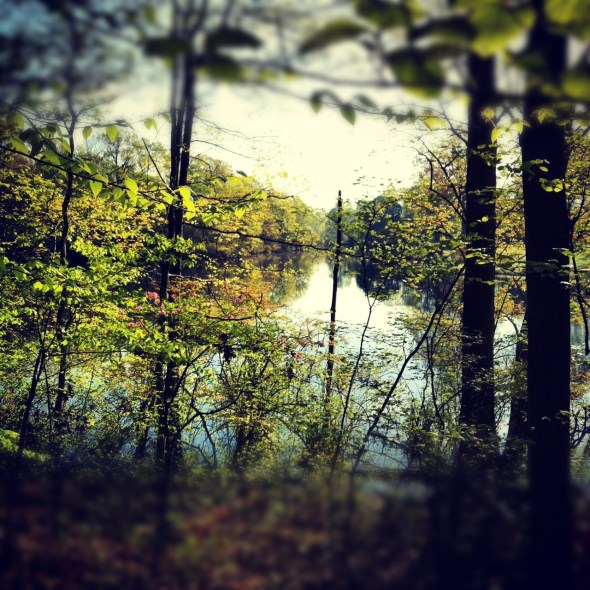
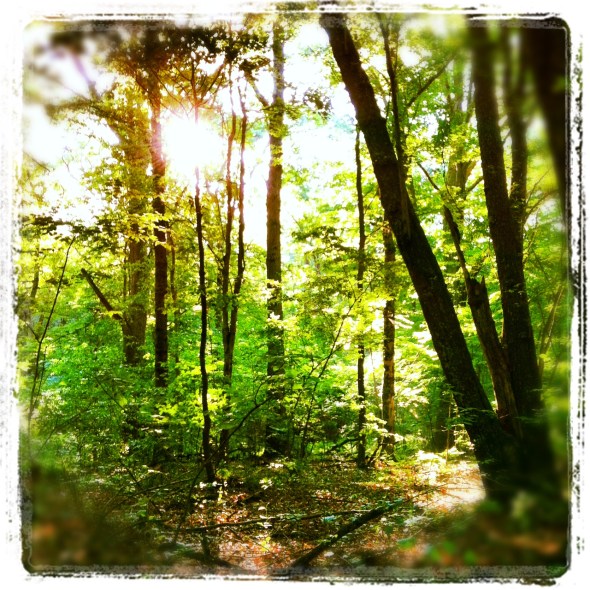
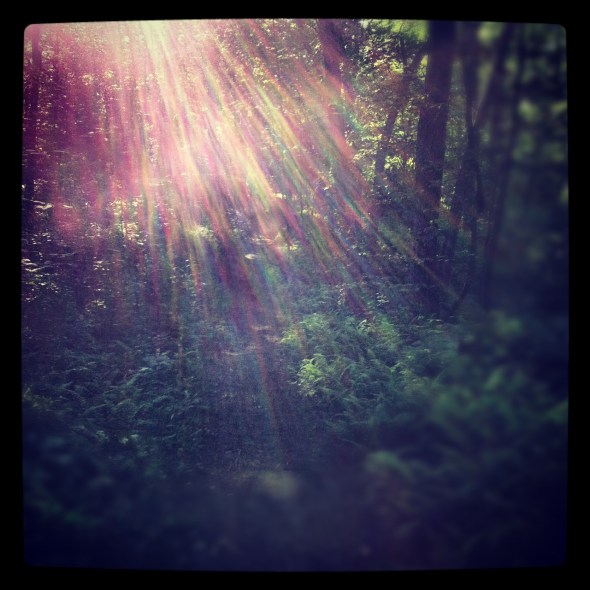
Something a bit different this time; I won’t attempt to describe where Wenngren is taking me, but I will show you where I have been.  These are often places I don’t want to leave once I am there (even if melancholy is involved).

1) Variation II


2) Parlour (Variation I)


3) Found


4) Parlour (Variation III)


5) We won’t need you anymore


6) End of the summer


7) Lost


8) Sun peeking through


9) Parlour (Variation II)


10) Variation I


The title track (to me) is beautiful, almost beyond words—a deeply reflective meditation.  David Wenngren as Library Tapes has assembled a collection of poignant vignettes, and a treasured diary of sound memories.

And now, off to explore more of his previous recordings.

****

All photos (except album cover) are by wajobu.

The To-Listen Stack

I’m slowly working my way back to a stack of LPs that I have been avoiding due to the summer heat.  My main turntable is connected to a pair of tube amps, and in hot weather tube output only makes a warm room…hot!  So, time to move a “sand amp” into place until cooler weather.  Here’s what I’m spinning:

Kink Gong – Xinjiang: An “ethno electronic collage” with incredible field recordings combined with electronics recorded by Laurent Jeanneau in China.  Jeremy Bible at Experimedia recommended this in one of his (what I now call “dangerous Friday e-mails”).  Available at: http://www.experimedia.net/index.php?main_page=product_music_info&products_id=5182


Hands Off Cuba – Volumes of Sobering Liquids: More sound experiments from a number of musicians who have worked in Lambchop over the years.  Available at: http://www.sebastianspeaks.com/

William Tyler – Behold the Spirit: Long time guitarist with Lambchop and Hands Off Cuba, this is William Tyler’s latest solo work.  Available at: http://www.tompkinssquare.com/william-tyler.html  A short film on the release is here:


Jonas Munk – Pan: I know Jonas Munk’s work mostly from Manual (Confluence, I think is the best album under that moniker).  Available at: http://www.elparaisorecords.com/content/jonas-munk-pan-cd


Mark Fosson – Digging In The Dust: Taken from the long lost home demo recordings of 1976 after Mark Posson had just acquired a 12 string guitar; even the final version of this recording was shelved and went unreleased until 2006 as The Lost Tokoma Sessions on Drag City Records.  Available at: http://www.tompkinssquare.com/mark-fosson.html  You can stream the record here: http://www.fretboardjournal.com/audio/mark-fosson-digging-dust-exclusive-stream

MOLE – What’s The Meaning?

CD: RareNoiseRecords RNR027: 70:39

Website: http://www.rarenoiserecords.com/mole-store/whats-the-meaning-cd

Album samples: http://www.rarenoiserecords.com/jukebox/mole/wtm/

Also available at: http://darla.com/

Mole Productions at Facebook: https://www.facebook.com/MoleProductions

Tracks: 1) PB; 2) Stones; 3) Trees And The Old New Ones; 4) Flour Tortilla Variation; 5) What’s The Meaning; 6) Greenland; 7) Grass; 8) Grubenid

Spirited, funky, and at times reflective is the vibe of the debut album What’s The Meaning from the Mexican, Argentinean and American contemporary jazz quartet known as MOLE.  Originally started as a duo about eight years ago, Mark Aanderud (on piano and composer, from Mexico) and Hernan Hecht (on drums, from Argentina) sought out New York guitarist David Gilmore for his diverse recording credits and touring experience with Wayne Shorter, Steve Coleman’s Five Elements and others, as well as Jorge “Luri” Molina (on bass, also from Mexico).

Mark Aanderud and Hernan Hecht

So, the music?  Think food…GOOD food…Mōl-eh!  The album starts quietly and mysteriously with PB.  The individual ingredients are being prepared for what will become a great meal.  PB develops as the quartet gradually mixes together, an exchange of themes and solos.  In Stones, the drums take a powerful lead and the solos gather around.  With each track the intensity of the album grows, although there are some pauses along the way.  The most delightful is Trees And The Old New Ones.  It has some calming shades of Metheny and Mays’ 1981 album As Falls Wichita, So Falls Wichita Falls (September Fifteenth in particular).  Bowed bass and cello (played by Dorota Barova) almost mournfully open the piece.  The woven piano and guitar themes echo each other throughout along with skilful and gentle percussion.

Flour Tortilla Variation has a driving drum, piano and bass opening.  Solos are traded and echoed between guitar and piano, including a closing guitar solo reminiscent of Al Di Meola’s expressive work.  Brooding and syncopated is the feeling at the start of the title track, What’s The Meaning?  Initially, a gentle piano and drum exploration between Aanderud and Hecht (think Bill Bruford’s Earthworks), which then weaves in Gilmore’s guitar to explore with piano interludes, and builds to a closing solo by Gilmore with chops reminiscent of Carlos Santana.  Hecht and Molina lay down an upbeat foundation on Greenland for Aanderud and Gilmore to vamp and solo over—it’s a spirited romp.

Greenland


Grass is a languid piano and bass pulse with a repeated piano and guitar theme and is one last pause before the last track; Grubenid gets its funk on.  This is a great piece with plucky shades of Stanley Clarke.  After the guitar and bass opening vamp it stomps and Aanderud and Gilmore carry the somewhat off-key main melody.  Gilmore then leads the rhythm with a growling and energetic solo and Aanderud responds.  Guitar and piano return to the original theme before the rhythm section fades.

Let’s hope MOLE does some touring to support this album—they’re cookin’!

****

This is a solicited review.

unrecognizable now – two rooms

CD Time: 33:14* #KESH018

*With forthcoming excerpt remixes by Simon Scott and Kane Ikin

Record Label: http://www.keshhhhhh.com/

Artist Website: http://unrecnow.com/blog/

Sound Samples & More Info: http://kesh.bandcamp.com/

More on Matt Jones: http://www.matthewjones76.com/Unrecognizable-Now-1

More on Marcus Fischer: http://mapmap.ch/index.php?/ongoing/unrecognizable-now/2/

Tracks: Track 01, Track 02, Track 03, Track 04 (mastered to have seamless transitions)

unrecognizable now is an occasional collaborative project of Matt Jones and Marcus Fischer.  They consider their work to be “gradual layered music” based on live improvisation, found sounds, a range of instrumentation, and laptop computers.  In 2004, Jones and Fischer scored various experimental films by Portland, Oregon filmmaker Rob Tyler.  The relationship of sight and sound was further explored by Fischer, Jones and Tyler in the first of a series of events in 2006 entitled Vision+Hearing.   Fischer and Jones released their debut CD in a cave or a coma in mid-2006 on the Pehr Label (with 10 tracks and a short film by Tyler).  In 2008 a live performance of unrecnow was captured on self-released limited edition CD entitled for sleeping it off.  Marcus Fischer is a well known solo and collaborative sound artist, to date releasing more than ten recordings on labels such as 12k, Tench and Flaming Pines.  Matt Jones is a photographer, artist and sculptor.  Both are based in Portland, Oregon.

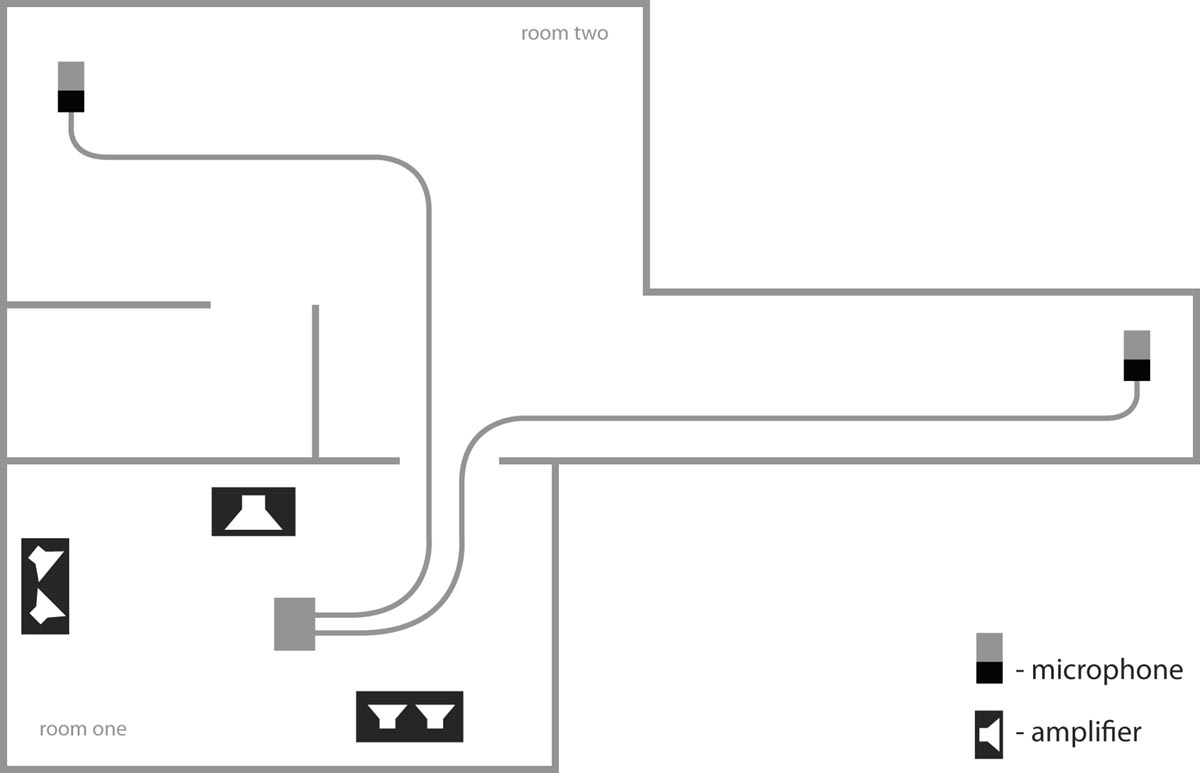
While two rooms is a further exploration of the electro-acoustic improvisation realm, this project also seems to nod to earlier works like Brian Eno’s seminal Ambient 1 – Music For Airports (1978) and the somewhat darker Ambient 4 – On Land (1982).  unrecognizable now including a diagram of how the music was recorded is not unlike diagrams included on the reverse of both of the noted albums by Eno.  This release is not only the literal music recording, but an in-situ analysis of how and why it exists as it does.  Not a “field recording” per se, rather an interior anti-studio recording, one where it is important to document not only the music, but the ambience of the setting as well as the process.
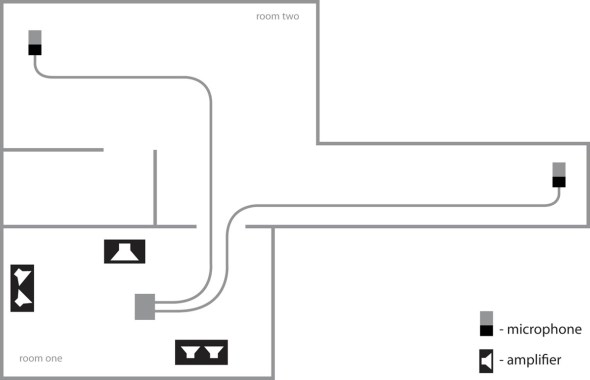
The microphone placement for two rooms (in the basement of a downtown Portland office building), with the varying distances from source material and varying sound decay rates gives a tangible sense of space.  This treatment also counters a sense of claustrophobia that one might expect, being recorded in a concrete tomb, of sorts.  It has a remarkably expansive sound (historical note: the vocals for the David Bowie song Heroes were recorded using a series of remotely placed mics similar to this).  Since this is a live improvised recording, it includes all the sounds associated with movement and production of the work by the artists (walking, changing instruments, etc.); adding a sense of transparency and intimacy.

The progression of this work is similar to Fischer’s recent 16 minute live release EP At Frame. Non-representational yet (depending on the listener) it can evoke memories or visions.  For me, parts are like being on a sailboat, anchored or just drifting in light wind, and at others like wandering through an old dark factory and wondering about the history of the place.  two rooms has the pleasant effect of allowing the mind to wander while occasionally being nudged by recognition of a particular instrument in the soundstage.
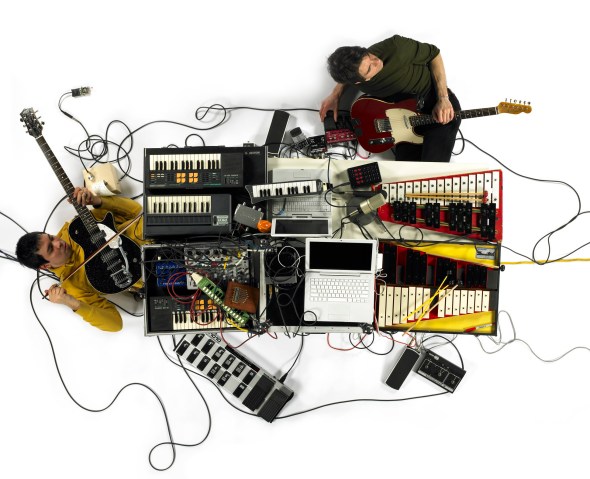
unrecognizable now photo by barry hill

The feeling in Track 1 is largely one of comfort. This section is more guitar and string-based (with some bowing) with pedal effects.  Track 2 transitions to more keyboards, and then strings blend and the sound is fuller and brighter.  After a graceful lull, deep and gentle waves begin at about the midpoint.  There is a slight recurrent low-register plucked-string theme and then one is cast adrift at about 9:00.  Track 3 is more ethereal than the other parts, especially at the beginning.  Guitars return again at 1:30 and are blended into the omnipresence.  At about 3:00 the density increases and bowed strings return to then be consumed into a cavernous silence.  Late in this track there are various percussive effects to announce the transition to Track 4.  This section is plucked, strummed and somewhat simplified; in a sense returning to the beginning and later an overlay of a nearly hidden repetitive melody appears and vanishes as the piece closes.

two rooms will be released on July 16th and digital files will be available for download, but if you are so inclined for a physical release, there will soon be 300 CD copies available in numbered and letter-pressed recycled card sleeves and related artwork—reasonably-priced, for such a beautiful work of sound art.  This is an intriguing exploration of sound and space (an interior “field recording” of sorts), evoking different images and experiences.  Perhaps now, rather than incidental music to a short film, this piece could be the creative inspiration for a visual work of its own.

*Postscript on the forthcoming remixes – More information on these soon (to be released on July 28th), but the Simon Scott remix is taken from the second half of Track 2 (one of my favorite sections) and finishes with the sound of a vinyl runout groove.  Given Simon Scott’s recent work on his Below Sea Level project, I can see why he would be attracted to what I think is the most marine-like section of this work.  The Kane Ikin remix has mysterious origins (to be discovered by the listener) with added treatments and loops.

***

This is a solicited review, although I have the physical release on pre-order.

David Fiuczynski – Planet MicroJam

CD: RareNoiseRecords RNR025: 60:51

Website: http://www.rarenoiserecords.com/david-fiuczynski-store/planet-microjam-cd

Also available at: http://darla.com/

Artist Website: http://torsos.com/  Album Website: http://www.planetmicrojam.com/

Album samples: http://www.rarenoiserecords.com/jukebox/fiuczynski/pmj/

Tracks: 1) Micro Emperor; 2) Mystic MicroJam; 3) Meditacion; 4) Sun Song; 5) Horos Fuzivikos; 6) Drunken Longing; 7) Madoka Blue; 8) En Secreto; 9) Green Lament; 10) Apprehension; 11) Ragaku

Have you ever had a friend or acquaintance that you might see every five or ten (even fifteen) years, and then for some inexplicable reason they disappear into the ether?  When you next see the friend the conversation picks-up where it left off, without skipping a beat?  The intervening years are important and they might filter into the new conversation, but immediately the old connection is solid again.

The last time I saw David Fiuczynski he was with John Medeski and I am embarrassed to say that it was…eighteen years ago…it was a Lunar Crush back then.  I have stayed in touch with Medeski and his compatriots, Martin and Wood, but I do not have any excuses for why I have not seen Fiuczynski in quite some time.  So, after all these years, we reach again, this time on Planet MicroJam. This is where Brand X could have traveled after Moroccan Roll had they hit the teleport button to a laterally warped microtonal universe.

I will say it now: I think this is a great and colorful album.  This is one of those times when the connection for me is instantaneous, even when it is challenging.  The reason is the interest in exploring, pushing the edges of musicality, and at the point where it seems like it might break apart, there is a sonic magnet that pulls it all together, and that is the Fuze.

This time guitarist David Fiuczynski is microtonally jamming with Evgeny Lebedev on keyboards, David Radley on violin and Takeru Yamazaki on keyboards.  Special guests also include Kenwood Dennard, Jovol Bell, Jack DeJohnette and Eric Kerr on drums with appearances by Trout (Fuze’s pup).

The album opens with Micro Emperor (based on a fragment of Beethoven’s 5th Piano Concerto) and it slides and twists immediately into stimulating fretless territory.  Mystic MicroJam starts with a lazy vamping rhythm, strums on the piano soundboard with twisting guitar and keyboards syncopating.  After a speedy refrain, meandering violin joins and all peregrinate and then return to edgy indolence and then solos play off each other.

Meditacion starts with playful chordal-quartertones by Fiuczynski and then drums, violin, guitar, bass and piano meander in a delightfully light-hearted banter.  The piano at times harkens back to Corea’s work on Romantic WarriorSun Song is based on Sun Ra’s piece of the same name with polite melodic percussion and guitar on the edges and in between.  As the piece continues, layers are added into a soothing fabric.  Horos Fuzivikos is a spinning tarantella that does stop and then romp with a great spirit.

Horos Fuzivikos


Drunken Longing is a traditional Chinese interlude.  Madoka Blue’s guitars and keyboards cascade then guitar, bass and drums have a layered conversation with strategic interjections from a treated piano—a bit like a herd of wrens in the trees.  En Secreto’s trio furtively creeps and is based on a quartertone string quartet by Julian Carrillo.  Green Lament is a subdued guitar solo.  Apprehension starts by taking it easy, then the rhythm quickens, sound expands and dissonance appears.  Takeru Yamazaki solos on violin, trading themes with guitar and piano and the structure switches between chaotic and rhythmic.  There are times when John Goodsall-like phrases appear.  Ragaku is a Far Eastern postscript and there are percussive stops emphasized with growls and barks by Trout.

For some, this work will be an acquired taste (quarter and micro tones can take some getting used to…for dogs too), but if you are in for a tonal adventure, I say take the leap and turn it up.

So David, let’s stay in touch more often, OK?  I know; it’s entirely my fault.

Photo of Fuze by Gaspard Duroselle

***

This is a solicited review.

MINDBENDERS

Learn, Ponder, Discuss

richard jefferies

visionary author and naturalist (1848-1887)

My Patronus Is Coffee

Life is Messy. Send Coffee and Posh.

Wendy Artin, photos from the exhibition

This is a blog with news - to see Wendy Artin's website, please visit www.wendyartin.com

JAZZ LIVES

MAY YOUR HAPPINESS INCREASE! "Lives" is both noun and verb.

No More Workhorse

Appear highbrow without trying by reading...

Stationary Travels

Journeys in Sound & Music

The Oxford Culture Review

"I have nothing to say, and I am saying it" - John Cage

Kendra Steiner Editions (Bill Shute)

publishers and champions of contemporary poetry and experimental music from San Antonio, Texas

monty adkins | SKRIKA

composer | dark ambient sound artist

Sunnymeade Astro

An Amateur Astronomer's Observing Diary from the Welsh Border

Wist Rec.

Handy Music Handmade

Somme Battlefields

WW1 Centenary website by Paul Reed

WW1 Centenary

Great War Centenary 2014-2018 website by Paul Reed

Out of Battle

Musings of a Military Historian

The Echoes Blog

The weblog of Echoes, the nightly music soundscape on Public Radio and the internet.

gleamingsilverribbon

Words, sounds and pictures by Kate Carr