The Green Kingdom – Incidental Music
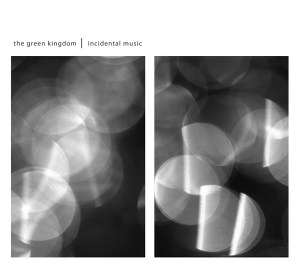
Tench – TCH03: CD Time: 39:58
Record Label Website: http://www.tenchrec.com/
More on this release: http://www.tenchrec.com/TCH03.html
Artist Website: http://thegreenkingdom.wordpress.com/
Available at: http://darla.com/
1) Three Friends Of Winter; 2) Backyard Epiphany; 3) Over Treetops; 4) Cherry Theme; 5) Slow Bloom; 6) Green Theme; 7) Floatation Themes; 8) rshda; 9) Whispered Through Pines
Whether in a conscious state of reverie or in the pre-waking hours when fleeting visions come forth into the camera obscura* of the mind, there are moments where hanging onto the edges of dreams is perhaps more desirable than even slumber. And after the dreams end, in the glistening haze of the morning, The Green Kingdom’s latest album, appropriately titled Incidental Music, is the soundtrack for this quietude.
My first experience with Michael Cottone’s work was on the Home Assembly’s #HAM004 album from 2010 entitled Prismatic, and his more recent album Egress on Nomadic Kids Republic #011. Incidental Music holds time in suspension with subtle rhythms, and gentle yet tangible instrumentation (crystalline guitars, keyboards, kalimba and minimal processing) that encourage a calm wandering state of mind. Although different and original in his approach, there are some similarities in the feeling and sound in Cottone’s work to Dictaphone’s recent album Poems From A Rooftop (Sonic Pieces) and The Boats album Ballads Of The Research Department (12k), two albums that I like very much. It is evident that great care was taken in the recording of this album, and it has been beautifully mastered by Tench’s M. Ostermeier.
Three Friends Of Winter is the placid introduction, a point of awareness without a concrete reality. Backyard Epiphany is serene in its sense of movement and passage of time. Over Treetops is the beginning of a gentle awakening. There are Satie-esque moments of allure as in Cherry Theme and Green Theme, even after a chimed nudge opening in Cherry Theme. Slow Bloom and Floatation Themes blur the sense of time. rshda is the most ethereal track on the album; the moment before stirring, where reality is still beyond reach. The album closes with a gentle awakening in Whispered Through Pines.
There was a place-holder for album #TCH03 at Tench Records for some time. Now the mystery is solved, and the void filled with these delightfully tranquil scenes and halcyon musings from The Green Kingdom.
* Tip of the hat to Mr. Williamson.
Autistici – Beneath Peaks
Hibernate Recordings – HB44: Time: 46:30 – Edition of 250
Record Label Website: http://hibernate-recs.co.uk
More on this release: http://hibernate-recs.co.uk/releases/autistici-beneath-peaks/
Artist Website: http://www.autistici.com/
1) Asleep Beneath Nests (Fieldhead); 2) Edall; 3) Mam Tor Soarers’ Workshop; 4) Styx; 5) Edge Over Millstone View; 6) Padley Gorge; 7) Noe (Upper Booth); 8) Mulgrave’s Dining-Room; 9) Aidale; 10) Peveril’s Open Door; 11) Sleep State For Carl Wark
Beneath Peaks (Autistici’s debut release on Hibernate Recordings) is an interpretive sound narrative of a walking and camping tour through the Peak District in the central UK; a luminous and expansive journey with a strong sense of place. The region is geologically diverse with moorland plateaus, expanses of millstone grit escarpments, limestone and demarking zones at the edges of the long-ago eroded strata. I have been fortunate to take long walks in similar places: Devon (The Burrows in Saunton) and on Exmoor in the southwestern UK, and Beneath Peaks is certainly an enticement to travel to this varied pastoral upland region.
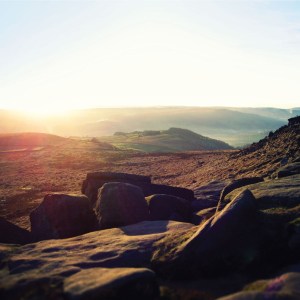
Even before the music, I was struck by the hues, varying landscape and seemingly endless sky in the cover photo (quite similar to Exmoor in some respects). The photo is also illustrative of Autistici’s work, which ranges from outwardly expansive to inwardly minute explorations; the literal and abstract in a landscape that is both known yet still mysterious.
Instrumentation throughout the album is both recognizable and veiled, and includes piano, guitar, synthesizer and electronics, in addition to sculpted fragments of extensive field recordings captured during the trip (processed with the help of Christopher Hipgrave’s software module AMBIENT). Additional guitar on Edge Over Millstone View was provided by Erik Schoster.
Beneath Peaks is book-ended by two sleep-states: an awakening (the beginning of the journey at a campsite named Fieldhead) and a closing to slumber and inward contemplation (at the ancient Carl Wark). Throughout there is a deep sense of observation and contemplation, both in the literal field recordings and abstract sonic interpretations of the journey.
Asleep Beneath Nests (Fieldhead) is a deftly woven tapestry of field, avian and human sounds, rising with the sun (while human slumbers). Edall is the sound of breathing and pulsing; movement through this timeless area. Edall is a 16th century variant spelling of the village of Edale and was once known as the “Valley of the River Noe”; the start of the Pennine Way, a trail in this district. Mam Tor Soarers’ Workshop; starts in what appears to be in a woodworker’s shop. This is a region known for hang and para-gliding. As this track progresses, it transitions from being grounded to having a sense of weightlessness. The latter section (and I am speculating) appears to be a bit of an homage to Raymond Scott’s rhythmic and melodic electronic Bass-Line Generator (of 1967). Styx is a brief and quiet transition into Edge Over Millstone View. The sound is sharp and panoramic in contrast to other areas of rolling pasturelands elsewhere in this region (a reference to the geology, I speculate).
The rocky echoed sounds of Padley Gorge give the sense of passing through the deep narrow wooded valley near the village of Grindleford. Burbage Brook is at the base of the gorge. Noe (Upper Booth) is a small tributary to the River Derwent and forms a sonic respite before a pulsating encounter with Mulgrave’s Dining-Room. Aidale (I believe, another early variant spelling of the village Edale) is at first, a delightful contrast to Mulgrave’s; a meandering solo piano, which then drifts into an altered dream-state and transitions to the apparent sounds of traffic passing or is it time bending? Peveril’s Open Door brings us to the environs of Castleton and the nearby Peveril Castle, which overlooks the village with sounds of birds, nearby waterway and the piano returns. The end of the journey is Sleep State For Carl Wark, the rocky promontory in Hatersage Moor (believed to be the site of an Iron Age hill fort). It is here that memories of the distant past flow into and blend with the present, and sleep returns with music box and strings; the end of a captivating journey.

Autistici is Sheffield-based (UK) sound artist David Newman. He is the curator of the Audiobulb (where I discovered the marvelous work of Monty Adkins) and Audiomoves record labels. To date, Autistici has released a number of acclaimed albums on the 12k, Home Normal and Keshhhhhh labels, amongst others.
Updated sound files will be posted when available.
****
This is a solicited review.
Caught In The Wake Forever – Against A Simple Wooden Cross

Hibernate Recordings – HB43: Time: 41:27 – Edition of 250 – Cover photo by Chris Gowers
Record Label Website: http://hibernate-recs.co.uk
More background information on the album: http://hibernate-recs.co.uk/releases/caught-in-the-wake-forever-against-a-simple-wooden-cross/
1) Scottish Grief; 2) The Quiet Beauty Of The Northern Lakes; 3) Waiting Rooms & Chemists; 4) After The Blackout; 5) Western Medicine Failed Me; 6) Last Of The Heroin; 7) Point Sands
Caught In The Wake Forever is the nom de plume of Fraser McGowan, who lives in Paisley, Scotland where he composes and records his works at home. McGowan has been recording music in various incarnations since 1998. I recently became acquainted with CITWF’s work through a Hibernate Recordings collaboration with Yellow6 (Jon Attwood), entitled The Slow Manipulation Of Dying Light (now sold out, but digital files are still available for download). And so, I started to dig further…
McGowan’s latest album, Against A Simple Wooden Cross is a surprisingly open and stark account of his recovery from a lifelong affliction with chronic anxiety, and ultimately a complete mental breakdown in 2011. As is often the case, the crash was not only debilitating to him, but also to family and friends (and I suspect the title of the album is a reaction to those who don’t often understand all the circumstances; a feeling of guilt that can also hinder recovery).
Despair and melancholy permeate this album. Recordings vary from a six month period when McGowan was heavily medicated to a time when more effective alternate methods of treatment were found. As a result those pieces are more hopeful as resolve and clarity develop. There is also an ancient and timeless quality to the album (similar to Cock and Swan’s album Stash and other works by Sparklehorse AKA Mark Linkous…oh, I miss ML). In this case, it is the concept that recovery takes time, time for a worthwhile cause—rebuilding a life worth saving, on one’s own terms.
I am also attracted to this album in a similar way that I admire self-examination in the works of East River Pipe (F. M. Cornog); although the songwriting and atmospheric approaches are quite different. In particular, the stark simplicity of penultimate song on the album, Last Of The Heroin. Not being fully aware of all the circumstances (and not wanting to speculate blindly), I have made some notes on some of the tracks, but I think that some interpretation is best left to the individual listener.
Scottish Grief opens with field recordings from a holiday before his breakdown. As the tragic nature of the events is revealed, the piece transforms into a dirge. Conflict grows represented by increasing dissonance and ultimately a shredding electric guitar. Despite dealing with conflicting feelings and thoughts, there is a determination to keep moving and not give up, even at this early stage. The track builds in layers slowly, perhaps symbolic of the pace of treatment, and closes with an excerpt from (what appears to be) a demo where it is evident that hopelessness still weighs heavily.
The Quiet Beauty Of The Northern Lakes opens with a simple rhythm and acoustic guitar, where re-building a life begins. The struggles are evident: “It’s hard to keep a light on…” Eventually, piano and keyboards layer with McGowan’s almost-whispered vocals and a chorus of a Gizmo-like (bowed) electric guitar. Waiting Rooms & Chemists is atmospheric with acoustic guitar, and the feeling of endless waiting and being alone. After The Blackout starts with melodic rhythmic blips and then blends acoustic guitar and vocals. The track is reminiscent of Recorded With You In Mind (from the 2011 EP All The Hurt That Hinders Home**). Western Medicine Failed Me is instrumental, with acoustic guitar and a veil of electric guitar reminiscent of Frippertronics in Robert Fripp’s 1979 album Exposure (that which simmers below the surface).
Point Sands closes the album, and it appears to look back on the beginning of the journey to getting well, and as I understand it, the title of this track is taken from the location heard in the field recordings in Scottish Grief; a pleasant memory perhaps held onto and another piece of the journey back. Some might feel that this album goes too far into the abyss of despair and is too personal, but it is also the case that music such as this occupies a space that seldom gets explored, or even understood, as it is often hushed with whispers.
**Recorded With You In Mind from the EP All The Hurt That Hinders Home:
****
This is a solicited review.
SRFélix – SRFélix
My Little Cab Records MLCR#031 CDr limited run of 100 (Review copy is #25)
Timing: 23:56 Mastered by Emmanuel Nogues
Website and Ordering: http://mylittlecabrecords.bandcamp.com/album/srf-lix
Tracks: 1) We Walk Until The End; 2) The Wind Dies; 3) Leaving Home; 4) A River In Winter; 5) Old Memories; 6) Until The End
S. R. Félix lives and records his works at home, between Lille and the shores of Brittany in France. His self-titled debut release on My Little Cab Records is an enchanting sonic novella that alternates between states of observation and contemplation. Most of the instrumentation is acoustic (piano, guitar, strings and treatments), and there are similarities with the instrumental portions of recent works by Will Samson and Gareth Dickson. There is deep sense of reverence for place and time.
We Walk Until The End announces a departure on a (perhaps imagined) journey with a layered and expansive beckoning, which gradually develops into an exultant march before fading. The Wind Dies shifts to a more introspective piano meditation. The recording preserves the ambient sounds of the inner workings of the muted piano*. Leaving Home continues the sense of reflection, this time with a solitary electric guitar lament. It starts quietly and grows more intense during the choruses. A River In Winter is a more outward looking and expansive sonic vision; a desolate scene encountered as the journey continues. Old Memories has a metronomic muted piano (layered with shimmering guitar). It expresses the passage of time, and gives the sense of viewing faded photographs. Until The End is perhaps the arrival at the destination, to a darker yet more serene realm. The sound is deeper and moves in waves to the close.
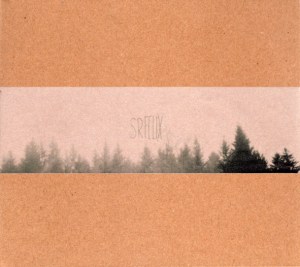
My Little Cab Records is a French DIY record label that has released mostly limited edition CDrs since 2004. The CD sleeve has an intriguing pine forest panorama spanning the front and back covers of the expressive and fully hand-lettered sleeve (with pressed dried flowers). S. R. Félix is working on his next album, to be released in 2013. Although this eponymous debut release is more akin to an extended EP than a full LP album, I find it to be a solid introduction to Félix’s work, and I look forward to the future release, as well.
*-Recording note: There is a slight vibration at the edges of the sonic peaks on this track. To be certain that it was not my equipment, I switched between multiple pairs of speakers and the vibration remained. It is not too distracting, but it is noticeable on certain equipment.

****
This is a solicited review, although I had already purchased a copy of the album.
Library Tapes – Sun peeking through

CD Time: 29:11 #auecd006
Website and available from: http://librarytapes.com/
Julia Kent – Cello (3, 4, 8 & 9), Sarah Kemp – Violin (2 & 6), Danny Norbury – Cello (7), David Wenngren – Piano
Tracks: 1) Variation II, 2) Parlour (Variation I), 3) Found, 4) Parlour (Variation III), 5) We won’t need you anymore, 6) End of the summer, 7) Lost, 8) Sun peeking through, 9) Parlour (Variation II), 10) Variation I
Music takes me places, always has. Sometimes there is emotion, a memory or colors, but it is always spatial. Although a relative newcomer to some artists, it is not that I am unfamiliar with David Wenngren’s work, but as for Library Tapes I have some catching-up to do. A while back I reviewed his hypnotic album with Kane Ikin entitled Strangers, and I have both albums Our House Is On The Wall (as the moniker of Murralin Lane with Ylva Wiklund), and The Meridians of Longitude and Parallels of Latitude, his collaboration with Christopher Bissonnette. All are different explorations of sound and place, but Sun peeking through seems more personal. Wenngren’s piano is deftly blended with a spare ensemble of strings.
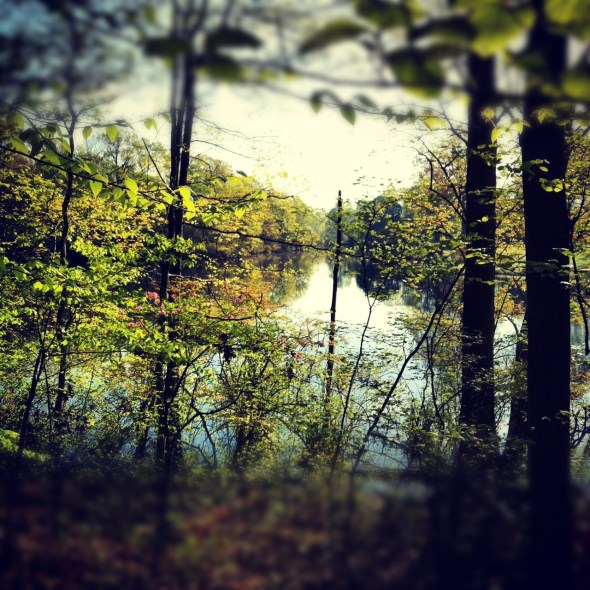
Something a bit different this time; I won’t attempt to describe where Wenngren is taking me, but I will show you where I have been. These are often places I don’t want to leave once I am there (even if melancholy is involved).
1) Variation II

2) Parlour (Variation I)

3) Found

4) Parlour (Variation III)
5) We won’t need you anymore

6) End of the summer

7) Lost

8) Sun peeking through
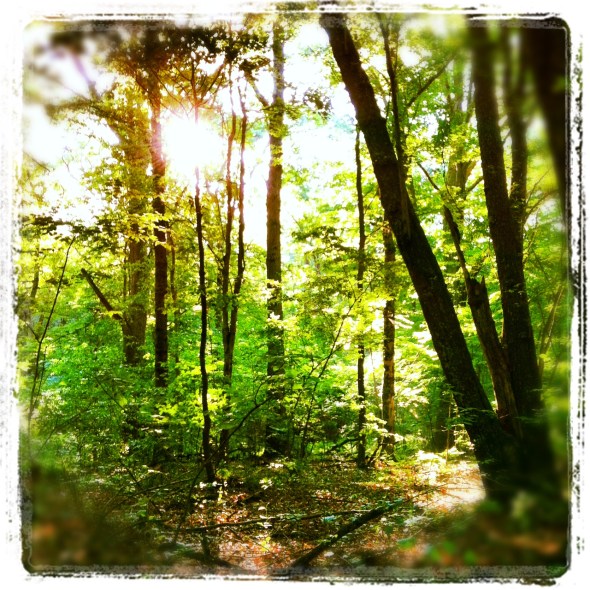
9) Parlour (Variation II)

10) Variation I
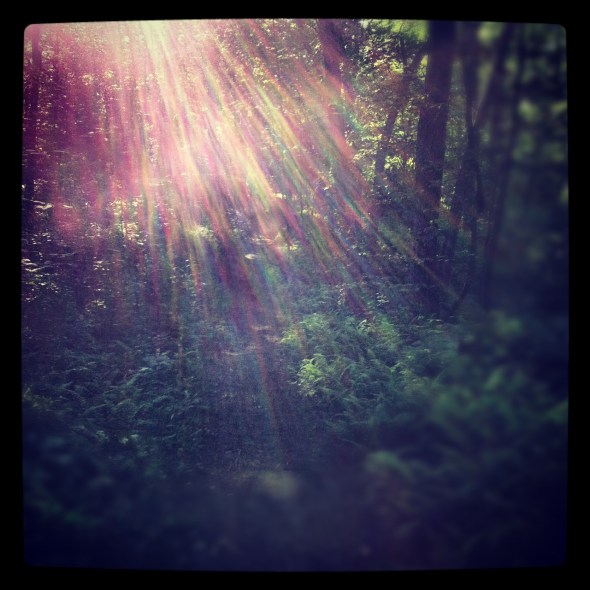
The title track (to me) is beautiful, almost beyond words—a deeply reflective meditation. David Wenngren as Library Tapes has assembled a collection of poignant vignettes, and a treasured diary of sound memories.
And now, off to explore more of his previous recordings.
****
All photos (except album cover) are by wajobu.
The To-Listen Stack
I’m slowly working my way back to a stack of LPs that I have been avoiding due to the summer heat. My main turntable is connected to a pair of tube amps, and in hot weather tube output only makes a warm room…hot! So, time to move a “sand amp” into place until cooler weather. Here’s what I’m spinning:

Kink Gong – Xinjiang: An “ethno electronic collage” with incredible field recordings combined with electronics recorded by Laurent Jeanneau in China. Jeremy Bible at Experimedia recommended this in one of his (what I now call “dangerous Friday e-mails”). Available at: http://www.experimedia.net/index.php?main_page=product_music_info&products_id=5182

Hands Off Cuba – Volumes of Sobering Liquids: More sound experiments from a number of musicians who have worked in Lambchop over the years. Available at: http://www.sebastianspeaks.com/

William Tyler – Behold the Spirit: Long time guitarist with Lambchop and Hands Off Cuba, this is William Tyler’s latest solo work. Available at: http://www.tompkinssquare.com/william-tyler.html A short film on the release is here:

Jonas Munk – Pan: I know Jonas Munk’s work mostly from Manual (Confluence, I think is the best album under that moniker). Available at: http://www.elparaisorecords.com/content/jonas-munk-pan-cd
Mark Fosson – Digging In The Dust: Taken from the long lost home demo recordings of 1976 after Mark Posson had just acquired a 12 string guitar; even the final version of this recording was shelved and went unreleased until 2006 as The Lost Tokoma Sessions on Drag City Records. Available at: http://www.tompkinssquare.com/mark-fosson.html You can stream the record here: http://www.fretboardjournal.com/audio/mark-fosson-digging-dust-exclusive-stream
MOLE – What’s The Meaning?

CD: RareNoiseRecords RNR027: 70:39
Website: http://www.rarenoiserecords.com/mole-store/whats-the-meaning-cd
Album samples: http://www.rarenoiserecords.com/jukebox/mole/wtm/
Also available at: http://darla.com/
Mole Productions at Facebook: https://www.facebook.com/MoleProductions
Tracks: 1) PB; 2) Stones; 3) Trees And The Old New Ones; 4) Flour Tortilla Variation; 5) What’s The Meaning; 6) Greenland; 7) Grass; 8) Grubenid
Spirited, funky, and at times reflective is the vibe of the debut album What’s The Meaning from the Mexican, Argentinean and American contemporary jazz quartet known as MOLE. Originally started as a duo about eight years ago, Mark Aanderud (on piano and composer, from Mexico) and Hernan Hecht (on drums, from Argentina) sought out New York guitarist David Gilmore for his diverse recording credits and touring experience with Wayne Shorter, Steve Coleman’s Five Elements and others, as well as Jorge “Luri” Molina (on bass, also from Mexico).

Mark Aanderud and Hernan Hecht
So, the music? Think food…GOOD food…Mōl-eh! The album starts quietly and mysteriously with PB. The individual ingredients are being prepared for what will become a great meal. PB develops as the quartet gradually mixes together, an exchange of themes and solos. In Stones, the drums take a powerful lead and the solos gather around. With each track the intensity of the album grows, although there are some pauses along the way. The most delightful is Trees And The Old New Ones. It has some calming shades of Metheny and Mays’ 1981 album As Falls Wichita, So Falls Wichita Falls (September Fifteenth in particular). Bowed bass and cello (played by Dorota Barova) almost mournfully open the piece. The woven piano and guitar themes echo each other throughout along with skilful and gentle percussion.

Flour Tortilla Variation has a driving drum, piano and bass opening. Solos are traded and echoed between guitar and piano, including a closing guitar solo reminiscent of Al Di Meola’s expressive work. Brooding and syncopated is the feeling at the start of the title track, What’s The Meaning? Initially, a gentle piano and drum exploration between Aanderud and Hecht (think Bill Bruford’s Earthworks), which then weaves in Gilmore’s guitar to explore with piano interludes, and builds to a closing solo by Gilmore with chops reminiscent of Carlos Santana. Hecht and Molina lay down an upbeat foundation on Greenland for Aanderud and Gilmore to vamp and solo over—it’s a spirited romp.
Greenland
Grass is a languid piano and bass pulse with a repeated piano and guitar theme and is one last pause before the last track; Grubenid gets its funk on. This is a great piece with plucky shades of Stanley Clarke. After the guitar and bass opening vamp it stomps and Aanderud and Gilmore carry the somewhat off-key main melody. Gilmore then leads the rhythm with a growling and energetic solo and Aanderud responds. Guitar and piano return to the original theme before the rhythm section fades.
Let’s hope MOLE does some touring to support this album—they’re cookin’!

****
This is a solicited review.
unrecognizable now – two rooms

CD Time: 33:14* #KESH018
*With forthcoming excerpt remixes by Simon Scott and Kane Ikin
Record Label: http://www.keshhhhhh.com/
Artist Website: http://unrecnow.com/blog/
Sound Samples & More Info: http://kesh.bandcamp.com/
More on Matt Jones: http://www.matthewjones76.com/Unrecognizable-Now-1
More on Marcus Fischer: http://mapmap.ch/index.php?/ongoing/unrecognizable-now/2/
Tracks: Track 01, Track 02, Track 03, Track 04 (mastered to have seamless transitions)
unrecognizable now is an occasional collaborative project of Matt Jones and Marcus Fischer. They consider their work to be “gradual layered music” based on live improvisation, found sounds, a range of instrumentation, and laptop computers. In 2004, Jones and Fischer scored various experimental films by Portland, Oregon filmmaker Rob Tyler. The relationship of sight and sound was further explored by Fischer, Jones and Tyler in the first of a series of events in 2006 entitled Vision+Hearing. Fischer and Jones released their debut CD in a cave or a coma in mid-2006 on the Pehr Label (with 10 tracks and a short film by Tyler). In 2008 a live performance of unrecnow was captured on self-released limited edition CD entitled for sleeping it off. Marcus Fischer is a well known solo and collaborative sound artist, to date releasing more than ten recordings on labels such as 12k, Tench and Flaming Pines. Matt Jones is a photographer, artist and sculptor. Both are based in Portland, Oregon.
While two rooms is a further exploration of the electro-acoustic improvisation realm, this project also seems to nod to earlier works like Brian Eno’s seminal Ambient 1 – Music For Airports (1978) and the somewhat darker Ambient 4 – On Land (1982). unrecognizable now including a diagram of how the music was recorded is not unlike diagrams included on the reverse of both of the noted albums by Eno. This release is not only the literal music recording, but an in-situ analysis of how and why it exists as it does. Not a “field recording” per se, rather an interior anti-studio recording, one where it is important to document not only the music, but the ambience of the setting as well as the process.
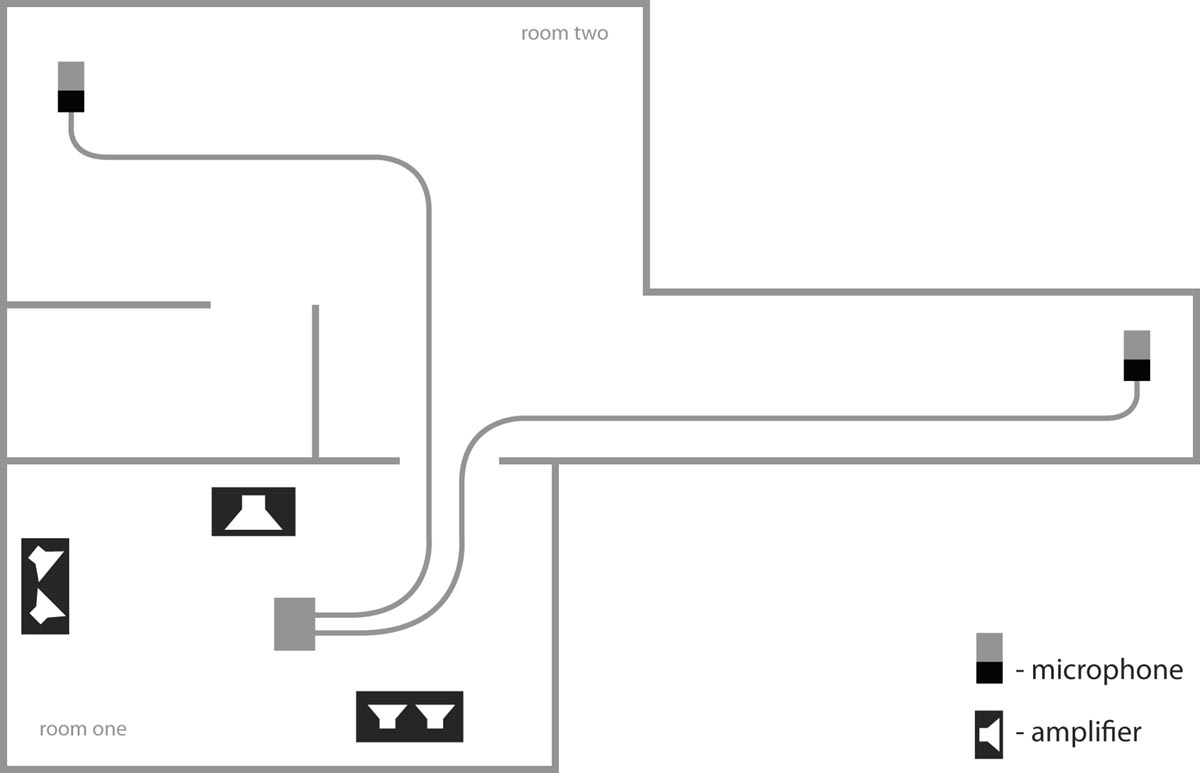
The microphone placement for two rooms (in the basement of a downtown Portland office building), with the varying distances from source material and varying sound decay rates gives a tangible sense of space. This treatment also counters a sense of claustrophobia that one might expect, being recorded in a concrete tomb, of sorts. It has a remarkably expansive sound (historical note: the vocals for the David Bowie song Heroes were recorded using a series of remotely placed mics similar to this). Since this is a live improvised recording, it includes all the sounds associated with movement and production of the work by the artists (walking, changing instruments, etc.); adding a sense of transparency and intimacy.
The progression of this work is similar to Fischer’s recent 16 minute live release EP At Frame. Non-representational yet (depending on the listener) it can evoke memories or visions. For me, parts are like being on a sailboat, anchored or just drifting in light wind, and at others like wandering through an old dark factory and wondering about the history of the place. two rooms has the pleasant effect of allowing the mind to wander while occasionally being nudged by recognition of a particular instrument in the soundstage.

unrecognizable now photo by barry hill
The feeling in Track 1 is largely one of comfort. This section is more guitar and string-based (with some bowing) with pedal effects. Track 2 transitions to more keyboards, and then strings blend and the sound is fuller and brighter. After a graceful lull, deep and gentle waves begin at about the midpoint. There is a slight recurrent low-register plucked-string theme and then one is cast adrift at about 9:00. Track 3 is more ethereal than the other parts, especially at the beginning. Guitars return again at 1:30 and are blended into the omnipresence. At about 3:00 the density increases and bowed strings return to then be consumed into a cavernous silence. Late in this track there are various percussive effects to announce the transition to Track 4. This section is plucked, strummed and somewhat simplified; in a sense returning to the beginning and later an overlay of a nearly hidden repetitive melody appears and vanishes as the piece closes.
two rooms will be released on July 16th and digital files will be available for download, but if you are so inclined for a physical release, there will soon be 300 CD copies available in numbered and letter-pressed recycled card sleeves and related artwork—reasonably-priced, for such a beautiful work of sound art. This is an intriguing exploration of sound and space (an interior “field recording” of sorts), evoking different images and experiences. Perhaps now, rather than incidental music to a short film, this piece could be the creative inspiration for a visual work of its own.

*Postscript on the forthcoming remixes – More information on these soon (to be released on July 28th), but the Simon Scott remix is taken from the second half of Track 2 (one of my favorite sections) and finishes with the sound of a vinyl runout groove. Given Simon Scott’s recent work on his Below Sea Level project, I can see why he would be attracted to what I think is the most marine-like section of this work. The Kane Ikin remix has mysterious origins (to be discovered by the listener) with added treatments and loops.
***
This is a solicited review, although I have the physical release on pre-order.
David Fiuczynski – Planet MicroJam
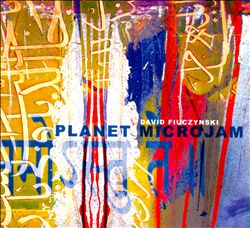
CD: RareNoiseRecords RNR025: 60:51
Website: http://www.rarenoiserecords.com/david-fiuczynski-store/planet-microjam-cd
Also available at: http://darla.com/
Artist Website: http://torsos.com/ Album Website: http://www.planetmicrojam.com/
Album samples: http://www.rarenoiserecords.com/jukebox/fiuczynski/pmj/
Tracks: 1) Micro Emperor; 2) Mystic MicroJam; 3) Meditacion; 4) Sun Song; 5) Horos Fuzivikos; 6) Drunken Longing; 7) Madoka Blue; 8) En Secreto; 9) Green Lament; 10) Apprehension; 11) Ragaku
Have you ever had a friend or acquaintance that you might see every five or ten (even fifteen) years, and then for some inexplicable reason they disappear into the ether? When you next see the friend the conversation picks-up where it left off, without skipping a beat? The intervening years are important and they might filter into the new conversation, but immediately the old connection is solid again.
The last time I saw David Fiuczynski he was with John Medeski and I am embarrassed to say that it was…eighteen years ago…it was a Lunar Crush back then. I have stayed in touch with Medeski and his compatriots, Martin and Wood, but I do not have any excuses for why I have not seen Fiuczynski in quite some time. So, after all these years, we reach again, this time on Planet MicroJam. This is where Brand X could have traveled after Moroccan Roll had they hit the teleport button to a laterally warped microtonal universe.
I will say it now: I think this is a great and colorful album. This is one of those times when the connection for me is instantaneous, even when it is challenging. The reason is the interest in exploring, pushing the edges of musicality, and at the point where it seems like it might break apart, there is a sonic magnet that pulls it all together, and that is the Fuze.
This time guitarist David Fiuczynski is microtonally jamming with Evgeny Lebedev on keyboards, David Radley on violin and Takeru Yamazaki on keyboards. Special guests also include Kenwood Dennard, Jovol Bell, Jack DeJohnette and Eric Kerr on drums with appearances by Trout (Fuze’s pup).
The album opens with Micro Emperor (based on a fragment of Beethoven’s 5th Piano Concerto) and it slides and twists immediately into stimulating fretless territory. Mystic MicroJam starts with a lazy vamping rhythm, strums on the piano soundboard with twisting guitar and keyboards syncopating. After a speedy refrain, meandering violin joins and all peregrinate and then return to edgy indolence and then solos play off each other.
Meditacion starts with playful chordal-quartertones by Fiuczynski and then drums, violin, guitar, bass and piano meander in a delightfully light-hearted banter. The piano at times harkens back to Corea’s work on Romantic Warrior. Sun Song is based on Sun Ra’s piece of the same name with polite melodic percussion and guitar on the edges and in between. As the piece continues, layers are added into a soothing fabric. Horos Fuzivikos is a spinning tarantella that does stop and then romp with a great spirit.
Horos Fuzivikos
Drunken Longing is a traditional Chinese interlude. Madoka Blue’s guitars and keyboards cascade then guitar, bass and drums have a layered conversation with strategic interjections from a treated piano—a bit like a herd of wrens in the trees. En Secreto’s trio furtively creeps and is based on a quartertone string quartet by Julian Carrillo. Green Lament is a subdued guitar solo. Apprehension starts by taking it easy, then the rhythm quickens, sound expands and dissonance appears. Takeru Yamazaki solos on violin, trading themes with guitar and piano and the structure switches between chaotic and rhythmic. There are times when John Goodsall-like phrases appear. Ragaku is a Far Eastern postscript and there are percussive stops emphasized with growls and barks by Trout.
For some, this work will be an acquired taste (quarter and micro tones can take some getting used to…for dogs too), but if you are in for a tonal adventure, I say take the leap and turn it up.
So David, let’s stay in touch more often, OK? I know; it’s entirely my fault.

Photo of Fuze by Gaspard Duroselle
***
This is a solicited review.
Machinefabriek – Stroomtoon

Artist website: http://www.machinefabriek.nu
Available at: http://machinefabriek.bandcamp.com/ & http://www.metamkine.com/
Label: Nuun Climax #Nuun 11 CD: http://www.nuun-records.com/?page_id=718
CD Time: 35:51 Tracks: 1) Eén; 2) Twee; 3) Drie; 4) Vier; 5) Vijf
Prolific composer, artist and performer Rutger Zuydervelt (known as Machinefabriek) has written that the intent of this short-format album is to experiment with the sound of electricity using a new live set-up tone of analogue tone generators, effect and loop pedals. As I have noted in a recent review, I also keenly appreciate his background in graphic design—the quality of the visual aspects of his work, the design, layout and presentation of a given album’s artwork. Perhaps unintentionally, Machinefabriek has evoked some historic sound explorations in a similar vein to those made by Kraftwerk in their 1975 album Radio Activity (though without the seminal electro-pop sound).
The first time I listened to Stroomtoon, I immediately thought of the Kraftwerk track The Voice of Energy. The overall feel of the album is like touring a large industrial building late at night, passing through mechanical rooms or an electrical generation station. The recording is sharp, with piercing clarity at times and the visceral depths at others. This is not a conventional music album; it is experiential and visual ambience. Stroomtoon consists of one long format piece, followed by four shorter glimpses.
Eén is an industrial-strength ambient world. It is like a tour through a power station with turbines winding and cranes moving equipment overhead. This track starts with a sound akin to the long wind-down of electric motors. It is hypnotizing, and the layering gives the sense of descending while remaining in suspension. Ascent begins at about 8:00 as other incidental sounds enter the scene. It has some shades of the opening titles of Louis and Bebe Barron’s soundtrack to Forbidden Planet. At about 14:00 it is as if we have moved into an electrical switchgear room. A high-pitch whine permeates the space and the clicking, beeping and thuds here are like the systems within a building (even the sound of high pressure steam passing through pipes above). The piece builds almost to the point of the threshold of pain, and suddenly at the close there is an expansive low frequency cluster and the large switch is thrown—OFF.
Twee pulses and pumps, like a heart. This track builds slowly with a sharp clicking edginess of static electricity. Low frequencies push in, switches are thrown, and adjustments made then…click into a quieter zone, yet with radio interference. Drie opens with low frequencies and a sense of building tension; an ominous rhythm shadows and there is a sudden deep buzz like passing through an energy field. Gradually, chaos builds as radio interference overtakes and builds to a sudden full stop.
Stroomtoon (Preview)
Vier is pure tones; high, low, blending and slowly warping. There is tranquility in it. It is more the sound of systems at rest, on stand-by, and monitoring. Vijf is the sound of perhaps the giant transformers at the heart of this power station. Here there is deep humming with blending harmonics, as if moving between enormous pieces of electrical distribution equipment. As the track continues a door seems to be opened and the listener is transported into a vast room of pulsing energy; made me think of scenes of the long abandoned outpost of The Krell.
At first, I was concerned that I would have a hard time relating to a recording like this; I tend to gravitate to more musical works. Yet the intent of the recording is quite compelling and the results very effective—a cinematic journey through a densely energized realm, a really fascinating work. One last note: Because of the wide range of frequencies and the great clarity of the recording, be aware that Stroomtoon may challenge some audio systems. It could even be considered a reference recording for audio system evaluations.

Photo of Rutger Zuydervelt by Michel Mees
*****
This was a solicited review.
Celer Machinefabriek – Maastunnel/Mt. Mitake – Numa/Penarie – Hei/Sou *UPDATED sound links*

Artist website: http://www.machinefabriek.nu
Artist website: http://www.thesingularwe.org/celer/
Available at: http://machinefabriek.bandcamp.com/ and http://www.experimedia.net/
Videos by Marco Douma: http://www.marcodouma.com/
“Having a great time, wish you were here…”
While some on holiday are sucked into over-crowded commercial tourist traps, and others are off in their resorts or private villas, some of the most memorable places and experiences are the somewhat unusual, even off the beaten-path locales. Picture postcards often contain brief accounts or memories of travels to these places, being descriptive, cryptic or comical anecdotes of a given day’s events, compressed into a few short phrases—a substitute for longhand letters. They also serve to freeze a moment in time in a more permanent and retrospective fashion than the immediacy of a quick e-mail or photo sent via the internet. These moments in time are what the trilogy of releases by Celer (Will Long) and Machinefabriek (Rutger Zuydervelt) are like.
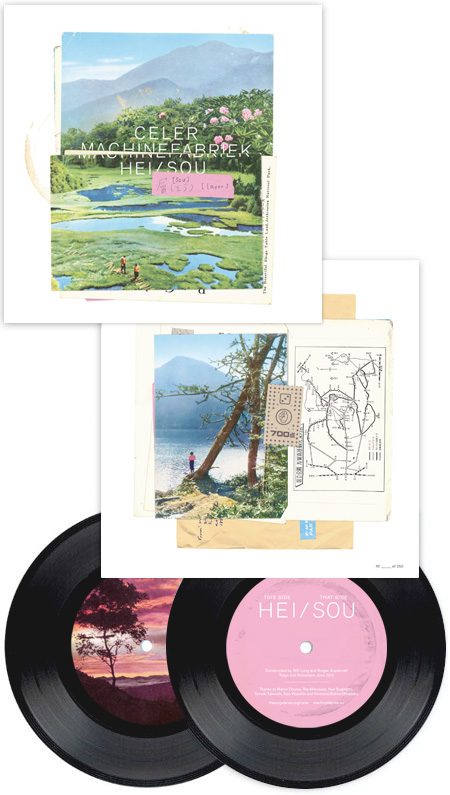
It started when they performed together in November, 2010 in Tokyo, Japan and then decided to collaborate remotely on a series of short releases beginning in October, 2011 between Tokyo and Rotterdam. The pieces started as larger works and eventually were edited into musical postcards, or drone poems* of sorts, evoking a place, event or state of mind. Artwork found by Long in Tokyo has been used for the covers of the 7 inch vinyl releases with design and graphic layout by Zuydervelt. As much as I appreciate the convenience of digital-format music, there is something quite special about the 7 inch record, packaged in artful sleeves of re-purposed postcard and souvenir images. Even better, each piece is accompanied (via download) by a beautiful and timeless video interpretation by multimedia artist Marco Douma.
The soon-to-be-released Hei/Sou is the last in this trilogy. Maastunnel/Mt. Mitake and Numa/Penarie were the first two releases. Digital files are also available and the vinyl pressings are limited to 250 copies each (Maastunnel/Mt. Mitake vinyl is now sold out).
Maastunnel/Mt. Mitake are readily identifiable places. Maastunnel is a tunnel in Rotterdam and this track has some mystery. The piece opens on the outside approach to the tunnel (with the ambient sounds of water). There is an apparent twist in the plot where voices can be heard, “I didn’t see his face…he might have been just anybody…just anybody.” Suddenly, a break to the interior where vehicles are passing over expansion joints creating pulses that resonate throughout the underground structure before a quick return to the roadway above-ground. Mt. Mitake is a contrast to the underworld. It starts with a sense of floating in the clouds. The second section creates a sense of tension with the calming effects of the first section in the background; kind of a panoramic view with scenes changing. The peaceful opening section returns to close the track.
Numa/Penarie are more obscure experiences. Numa is almost like a collection of sounds experienced throughout the day; clusters of lights buzzing, bell-like sounds, subways braking, jets taking off in the distance. The second section is more intense (again, a feeling of being underground), expansive and layered with lower frequencies underneath. The close brings a return of lighter and higher frequencies, returning somewhat to the opening themes. Penarie is perplexing; it’s dense, electric and unrestrained. It expands and contracts with clusters of tones. Then there is a pleasant interlude of Mellotron-like waves before mixing with the original themes and sounds, while being accompanied by a clock and then fading quickly, almost like a fleeting dream.
The forthcoming Hei/Sou is the more contemplative of the three releases, and the most abstract. Hei starts with a cymbal-like percussive and then drifts into a gentle sustained keyboard mantra with a wandering background of gentle buzzing and contrasting deep bell-like tones. The cymbals return and are combined with a placid cluster of sound. Sou opens with a Morse-code-like pulse and omnipresent warping tones that gradually combine with a fabric of lightly sequenced rhythms, and there they hang in suspension as the pulsing grows stronger and then fades. Gradually an undertow of deep liquid sound emerges to the foreground and the rhythms are overtaken and then disappear.
These self-released sound postcards are beautifully presented visions of places and experiences. Where will Celer and Machinefabriek be traveling to next?
Maastunnel/Mt. Mitake Preview
Numa/Penarie Preview
Hei/Sou Preview
***
*Drone Poem: Like Tone Poems, a shorter format single musical work, within the drone or electro-acoustic genre, based on or evoking the content of a poem, story, place or event. The term initially inspired by some of the recent shorter-form works by Nicholas Szczepanik on his album We Make Life Sad.
***
A solicited review, but I have purchased the first two releases and now preordered the latest.
Bring Me The Head Of —> Kyle Bobby Dunn
Record Label & Sound Samples: Low Point (2012) LP049
http://lowpoint.bandcamp.com/album/bring-me-the-head-of-kyle-bobby-dunn
Artist Website: https://sites.google.com/site/kylebobbydunn/
CD 1 Time: 57:34 CD 2 Time: 64:10
Tracks CD 1: 1) Canticle Of Votier’s Flats; 2) La Chanson De Beurrage; 3) Ending Of All Odds; 4) Douglas Glen Theme; 5) An Evening With Dusty; 6) The Hungover; 7) Diamond Cove (And Its Children Were Watching)
Tracks CD 2: 1) The Troubles With Trés Belles; 2) Innisfal (Rivers Of My Fathers); 3) The Calm Idiots Of Yesterday; 4) Parkland; 5) Complétia Terrace; 6) In Search Of A Poetic Whole; 7) Kotylak; 8) Moitié Et Moitié
I consider listening to Kyle Bobby Dunn’s work to be like how I imagine time travel could be; sitting in a chair in a dimly lit room, the button is pressed, and the journey begins. Then the walls and world around dissolve and nothing matters, but everything is there through the passage of time.

A Young Person’s Guide To…
Being a relative newcomer to KBD’s work (having A Young Person’s Guide To… , Ways Of Meaning, and this double CD), I find his work to be mysterious and boundless. I also sense in some of his writings (around the internets and within the liner notes of his albums) that KBD has a rather wry sense of humor (I note the “beurrage” and the stick of butter on CD 1)—an homage to the mundane, but pleasurable. The instrumentation (I have read) is mostly processed guitar, loops and treatments, yet throughout the album almost none of the sounds are readily identifiable—makes it all the more mystifying. The ethereal simplicity of the resonance belies its depth.

Ways Of Meaning
While his work can sound serious at times, there is a charming and timeless delicacy that instills a sense of wonderment and discovery, but without overt sentimentality. It is like being set free in weightlessness and seeing new things at every turn or blink-of-an-eye and wanting to see and hear more. There is also a sense of being at peace and a reverence to places (of note, Votier’s Flats, Douglas Glen and Diamond Cove; areas close together in the Calgary, Alberta, Canada locale…and is Innisfal actually Innisfail?). I think there are deeply cherished memories in this work.
This latest double-CD has a mix of long and short tracks. Canticle Of Votier’s Flats (in Fish Creek Provincial Park) is a short preamble to the journey. There is soft warmth in the slow layering of La Chanson De Beurrage and imagery of trains or ships in the far away during a deep night in Ending Of All Odds. There are some points where there are comparisons to the works of others (not SOTL!). There is a subtle idée fixe that appears in the Douglas Glen Theme that is reminiscent of An Ending (Ascent) from Apollo: Atmospheres and Soundtracks by Eno, Lanois & Eno (which just happens to be one of my favorite tracks from that 1983 album). And what about An Evening With Dusty? I smile.
Douglas Glen Theme and The Troubles With Trés Belles have the slightest of hints of sonorous brass similar to the recent Tape Loop Orchestra (Andrew Hargreaves – CD 2) album The Burnley Brass Band Plays On In My Heart. The latter KBD piece possesses a deeply held sense of another time and place, as if the journey is temporarily paused to have a look around…and to remember. The expansiveness of Parkland contrasts with the apparent visceral darkness of the introverted Complétia Terrace. In Search Of A Poetic Whole gracefully surges like an awakening. The album closes with two rather somber pieces and I speculate that Kotylak is a calm dissonant statement of reaction.
Works such as this take time to gestate—they’re not just knocked-out in the studio. Understanding memories (often appearing in dreams) are sometimes nebulous, and with time to ponder and sculpt, do clarify into ageless and timeless music such as this. The cinematic parallels are also clear…when I see the long takes of Tarkovsky’s Solaris (flowing water, sinewy highways…) it is as if KBD has translated visions into fluid sonorous existence.
This is powerful stuff and I would love to hear it live too.
Squackett – Chris Squire & Steve Hackett – A Life Within A Day
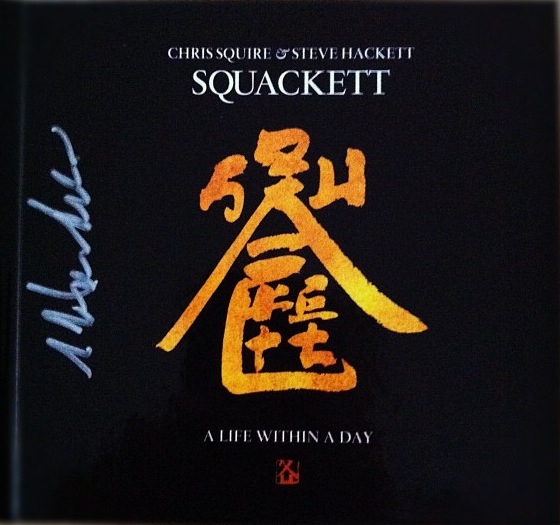
Esoteric Antenna/Cherry Red Label: CD/LP/Stereo/5.1Mix EANTCD #21002 46:20
Label Website: http://cherryred.co.uk/
Chris Squire Website: http://www.chrissquire.com/
Steve Hackett Website: http://www.hackettsongs.com/
Squackett Website: http://www.squackett.com/
Tracks: 1) A Life Within A Day; 2) Tall Ships; 3) Divided Self; 4) Aliens; 5) Sea Of Smiles; 6) The Summer Backwards; 7) Stormchaser; 8) Can’t Stop the Rain; 9) Perfect Love Song
Collaborators include: Roger King (album producer, keyboards, programming, and 5.1 Surround Sound Mix), Jeremy Stacey (drums), Amanda Lehmann (backing vocals), Christine Townsend (violin and viola), Richard Stewart (cello) and Dick Driver (double bass). Songwriting credits are Hackett/Squire/King with Nick Clabburn on Divided Self, _?_ Healy on Aliens, Gerard Johnson/Simon Sessler on Can’t Stop the Rain and Johnson on Perfect Love Song
****
PLEASE NOTE: Apparently, the Record Label has long since removed the track samples from Soundcloud, but I have since relocated the Divided Self Youtube clip.
It took a while to get to these fair shores, and I resisted listening to the previews…
Progressive Rock is by now a fairly broad genre and I am quite happy that it has seen resurgence in popularity recently, with both younger and older listeners (thanks in part to artists like Steven Wilson and Porcupine Tree). At its worst, some Prog Rock tracks can carry on far too long and collapse under the weight of their own bombast, instrumentation or blatant commercialism, and at best can yield some really inventive music, pulling from a variety of influences and periods (rock, blues, folk, classical, instrumental, vocal…). This is not at all to say that longer pieces are all bad—far from it (my lasting fondness for the Genesis works Firth of Fifth or Cinema Show support this). Since my primary experience over the years has been with the works of Steve Hackett and Genesis, my point of reference is more Hackett than with Chris Squire and his band Yes.
This has been a busy and very productive time for Steve Hackett (SH), since the release of his album Out Of The Tunnel’s Mouth in 2010. Chris Squire (CS) appeared, somewhat mysteriously, on the tracks Fire on the Moon and Nomads, and again on the 2011 SH album Beyond the Shrouded Horizon on tracks Looking For Fantasy, Catwalk, Turn This Island Earth and bonus CD tracks Four Winds: North and Enter The Night. Some may recall my recent review of SH’s album Beyond the Shrouded Horizon:
https://wajobu.com/2012/03/17/steve-hackett-beyond-the-shrouded-horizon/
The Squackett project had apparently been brewing for about four years while SH could settle personal matters and scheduling with CS. I more or less parted ways with the works of the band Yes at about the same time that Bill Bruford left for King Crimson; I remained laterally interested in their subsequent releases and followed Jon Anderson’s earlier solo career before his work got a bit too mystical for my taste (although I enjoyed much of Anderson’s collaborative work with Vangelis).
Chris Squire’s work comprises some twenty studio albums, ten live albums and numerous compilations with Yes in addition to his three solo albums and many collaborative works with Rick Wakeman and others. The Yes Album is perhaps my strongest connection to CS’s work. The song I’ve Seen All Good People, and in particular part b: All Good People (penned by Squire) and then later the driving bass line in the song Roundabout from the 1971 album Fragile.
As for Steve Hackett, in his long career, he has constantly reinvented and explored many music genres, styles and formats (having practically invented the “unplugged” album with the acoustic/instrumental Bay Of Kings in 1983). SH has also explored shorter format songwriting, having penned beautiful ballads like the early Hoping Love Will Last (from Please Don’t Touch) to the sardonic Little America (from Guitar Noir).
A Life Within A Day may be too song-oriented for diehard Prog Rock fans that desire longer instrumental works. With one exception, eight of the nine songs vary from four to six minutes in length. Squire, Hackett and Roger King (long-time SH collaborator) have produced an album of concise, well-crafted and accessible songs. For the most part, the album takes few breaks and stays sharp with minimal forays into a more (and often dreaded, in Prog Rock circles) “commercial” sound. I appreciate that the songs are for the most part NOT overly polished; there are some rough edges, quick key and rhythm changes (Jazz and Blues fills). There are enough familiar Prog Rock elements present for this album to strike a successful balance between the shorter format and instrumentation.
The songs:
A Life Within A Day: Although not as stark in instrumentation or spoken-word, the opener has an air of the SH song Darktown about it; majestic opening, sudden rhythm shifts, aggressive percussion, sharp guitar, bass solos and SH’s clustered vocals with Roger King’s sinister (and familiar) orchestral production. This is the most aggressive track on the album.
Tall Ships: A nylon string guitar opening followed by vamping guitar, bass and percussion riffs (constructed similarly to works penned by Mike Rutherford, but with sounds of Robert Fripp and Bill Nelson-like guitars) sail with this ocean-going journey. CS’s vocals coupled with a rather catchy rhythm, guitar reminiscent of Steve Winwood’s album Arc of a Diver followed by a broad vocal chorus—funky too.
Divided Self: Instantly, The Byrds Turn, Turn, Turn comes to mind—homage to the 1960s? SH sings lead vocals with an infectious rhythm, catchy and quick guitar solo chorus and melodic bass line. Following the main part of the song there is a hauntingly playful ending like that of SH’s Circus of Becoming (with whistling). Some might also notice a similarity to the Genesis song Tell Me Why. This is a great song!
Not An Official Video
Aliens: CS is the primary vocalist and there are times that this easily could be heard as a Yes track (the vocal chorus is akin to Jon Anderson’s sound); the lyrics being of future travels and science fiction. The keyboard opening is a bit timid. This also has a sound that is similar to the opening SH’s Loch Lomond (acoustic guitars sounding a bit like zithers). It remains relatively tame. Layered vocals and guitar solo fills.
Sea Of Smiles: Clustered vocal opening, melodic percussion, keyboards, bass line, up-tempo rhythm that repeats. A guitar solo coda that eventually develops into a dense almost relentless rhythm similar to Group Therapy from SH’s 1982 album Highly Strung.
The Summer Backwards: Is the shortest track on the album and it has a comfortable and reflective quality. The opening is very similar to one of my favorite vocal pieces by SH, Serpentine Song, descriptive of the scene—almost a waltz (trading three and four beats)—no pencil-grey days here though.
Stormchaser: Guitar, bass and drums open with more sinister vocal treatments; reminiscent of Duel from Till We Have Faces. It is the sound of raucous pursuit.
Can’t Stop the Rain: CS is lead vocalist, and at first the processed vocals threw me (auto-tune I find to be a bit distracting), and then the pleasantly layered vocal chorus by Amanda Lehmann washed that feeling away and the contrast seems to fit. It has a rather relaxing, but steady beat with Jazzy acoustic guitar fills. It then shifts to a more somber mood as it blends into a reflective…
Perfect Love Song: This piece seems to me to be more of a building coda to Can’t Stop the Rain than a stand-alone song. The vocals are shared by SH & CS.
****
Long distance and long-term collaborations are often tricky (compromises made and sometimes continuity lost). At times, A Life Within A Day seems a bit safe for Hackett, Squire and King aka Squackett who have been known as musical innovators throughout their careers. Yet it is a spirited gateway to the rest of their collective works and a solid introduction, I think, to a wider audience. A great change of pace, and I enjoyed many of the songs on this album, almost immediately.
Simon Scott – Below Sea Level
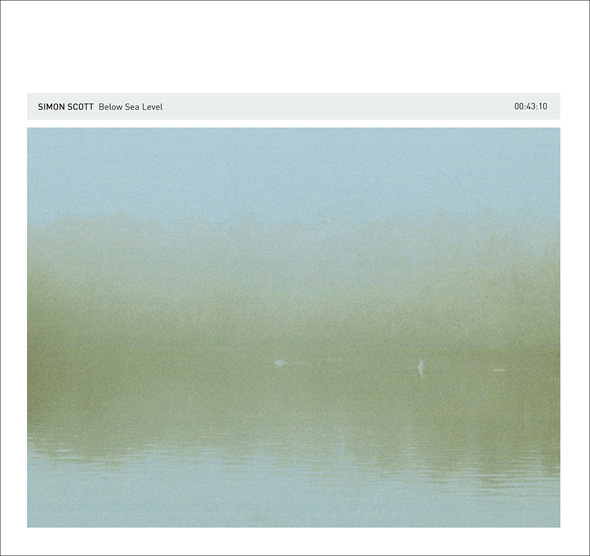
Record Label: http://12k.com/ #12K1071
CD Time: 43:10
Artist Website: http://simonscott.org/
Tracks: 1) __Sealevel.1; 2) __Sealevel.2; 3) __Sealevel.3; 4) __Sealevel.4; 5) __Sealevel.5; 6) __Sealevel.6; 7) __Sealevel.7
Simon Scott has given us a great gift—finding music in nature, while the rest of the World is flashing by. Below Sea Level is not only an expansive work of academic and historic significance, but it captures the feeling and sounds of being in and near the Fens of East Anglia, UK. The work often abstracts the literal and produces a sense of contemplative reverence for an area that has endured great and tragic changes since the 17th Century, due to ill-advised human intervention over nature.
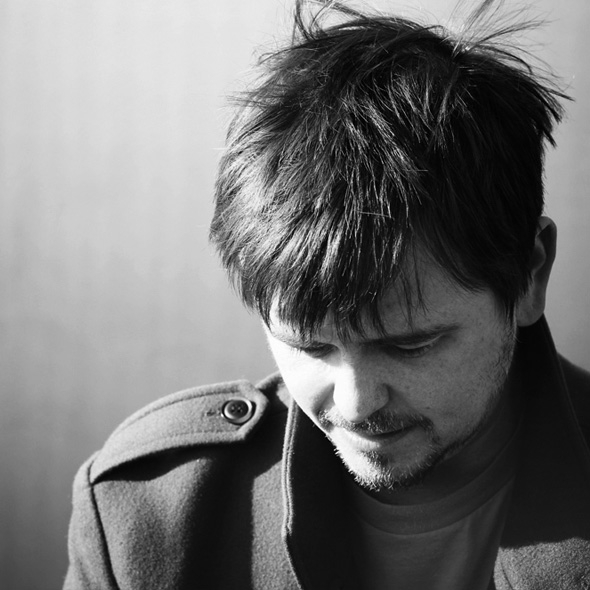
Simon Scott – Courtesy of 12k
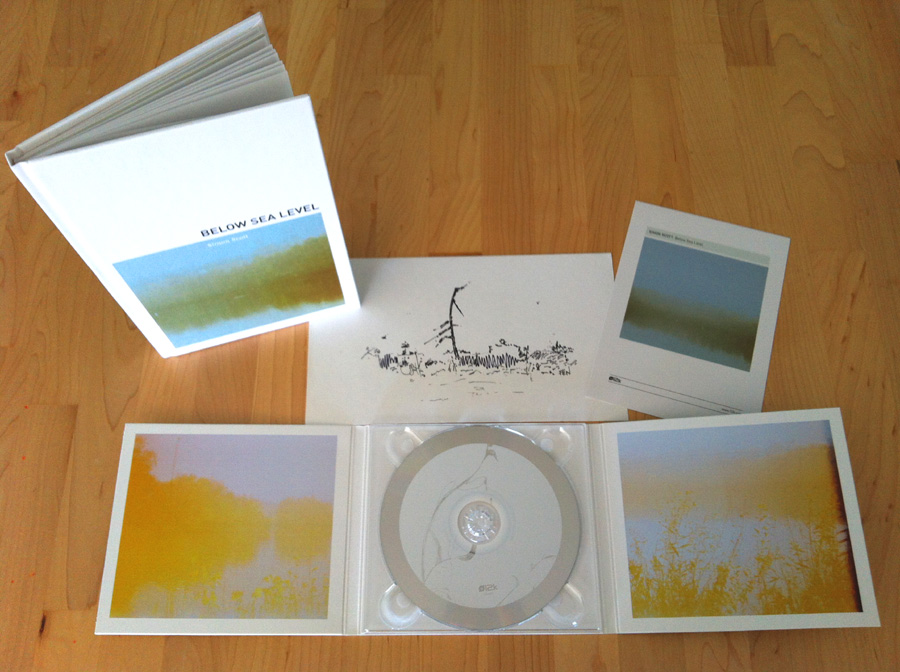
I have been fortunate to explore some parts of this region (as far north as Stiffkey—both farm and fen). Taylor Deupree’s 12k record label has assembled this beautiful work including a deluxe edition (CD, illustrated hardbound journal, inked sketch by Scott and a 34 minute live recording download). I recommend purchasing this edition, though the CD alone is a fine alternative and is also beautifully packaged.
Below Sea Level is clearly an exploration with some very personal roots and memories, “Over the two years I visited the Fens to record, my childhood memories were reawakened and I realised as I explored a landscape that was personal to me, but contained unfamiliar and hidden acoustic details.”, writes Scott. With each track, the listener is taken ever-deeper into this mysterious landscape.
__Sealevel.1 is almost as if eyes open from a dream, and we are in the Fens, first observing from the outside before entering. The birds, insects, water underneath, and the drifting breezes fill the vision, as a lone electric guitar is the beacon for the marvelous journey. Other treatments and electronics weave their way into the flora and fauna.
__Sealevel.2 rises as of the morning sun, geese fly overhead and the fabric of the environmental and instrumental sounds is woven deftly and seamlessly. The attention to the production of this work is so masterful that it is often difficult to discern where the natural and synthetic begin and end. Water filters through, rhythmic buzzing and guitar arpeggios mesh together with ambient sounds and avian denizens. As this piece closes, first there is a building drone of sound and then it subsides into a hint of acoustic guitar.
__Sealevel.3 begins in the visceral depths (low frequencies) with birds aloft overhead. It’s the feeling of pushing deeply into the unknown of the mysterious Fens of peat while getting lost in the droning electronics and deep rumbling and distorted guitar before reemerging.
__Sealevel.4 is near the water, at the edges and down low. The instrumentation is reminiscent of flowing water weeds and marsh grasses as they pass by on the journey, ever-deeper into the marshland.
__Sealevel.5 begins with the shrill and mystical and then a return to an identifiable acoustic guitar theme, which to me, appears as the human element observing the landscape, before being absorbed again back into the sounds of the surroundings. The memories of Scott’s childhood seem to filter in with a short passage from a music box before fading.
__Sealevel.6 is dense with an almost sensory overload of sound; the layered and diverse gives a sense of the incredible simultaneous activity occurring even in this natural landscape.
__Sealevel.7 closes the work with a calming and melodic aquatic voyage, flowing slowly and soon returning to the ambient sounds of insects above the water that inhabit this expansive other-worldly realm.
In an era where the artist and their works are often undervalued (file-sharing, Spotify and the utter drivel being released by many of the corporate record labels), it is so heartening to see, yet again, an independent record label such as 12k paying tribute to a work such as this. Simon Scott has produced in Below Sea Level an authentic, thoughtful and informative work that is a real treat to behold and explore.
Anthony Phillips & Andrew Skeet – Seventh Heaven

CD1 & CD2 #VPD555CD: Total Times: 46:43 and 51:08 Released 2012
Artist Website: http://www.anthonyphillips.co.uk/
Artist Website: http://www.andrewskeet.com/
Record Label: http://www.voiceprint.co.uk/
Tracks CD1: 1) Credo In Cantus (vocal by Lucy Crowe); 2) A Richer Earth; 3) Under The Infinite Sky; 4) Grand Central; 5) Kissing Gate; 6) Pasquinade; 7) Rain on Sage Harbour; 8) Ice Maiden; 9) River of Life; 10) Desert Passage; 11) Seven Ancient Wonders (vocal by Belinda Sykes); 12) Desert Passage (reprise); 13) Circle of Light; 14) Forgotten Angels; 15) Courtesan; 16) Ghosts of New York; 17) Shipwreck of St Paul; 18) Cortege
Tracks CD2: 1) Credo In Cantus (instrumental); 2) Sojourn; 3) Speak of Remarkable Things; 4) Nocturne; 5) Long Road Home; 6) The Golden Leaves of Fall; 7) Credo; 8) Under The Infinite Sky (guitar ensemble version); 9) The Stuff of Dreams; 10) Old Sarum Suite (five parts); 11) For Eloise; 12) Winter Song; 13) Ghosts of New York (piano version); 14) Daniel’s Theme; 15) Study In Scarlet; 16) The Lives of Others; [sic] 18) Forever Always
When many think of the music of Anthony Phillips, often they first remember his association with the early days of the band Genesis, even though it has been more than forty years since he left that band. After formal music training in the early 1970s, Ant did continue to collaborate with Mike Rutherford on The Geese and the Ghost and Smallcreep’s Day, in addition to Ant’s other solo works such as Wise After The Event and Sides in the mid to late 1970s. Ant has released about thirty albums to the general public, in addition to the many compilations of his extensive catalog.

Anthony Phillips
The younger Andrew Skeet has worked as an arranger and orchestrator for George Michael, Suede, Unkle, Sinead O’Connor and Hybrid. Since 2004 Skeet has worked with Neil Hannon of The Divine Comedy on three albums as musical director, arranger, and playing piano as well as touring throughout Europe. Andrew Skeet also established the music production company Roxbury Music with Luke Gordon (former Howie B collaborator) and together their music has been featured in film, television and commercials: The Apprentice, Dispatches, and Banged Up Abroad. Skeet has also orchestrated and conducted scores for The Awakening and Upstairs Downstairs. The album The Greatest Video Game Music was produced in 2011 by Andrew Skeet along with the London Philharmonic Orchestra and has been one of the most successful classical releases in many years.

Andrew Skeet
Ant and Andrew crossed paths when Universal Publishing Production Music commissioned Ant to write a collection of cinema-related music for UPPM’s Atmosphere label. Much of Ant’s music career for the last twenty or so years has been writing what is often referred to as “library music” or stock music composed for use in films, television or commercials in addition to other commisioned and self-produced works. Periodically Ant has collected these tracks, edited and in some cases re-recorded them for his Private Parts and Pieces, Missing Links or other album releases that are available to the general public (primarily through the Voiceprint and Blueprint labels).
It is always of particular interest to me to dig through Ant’s music to find the roots of some of his library work. I do miss the days of his more rock-oriented albums and singing, but recognize that getting that kind of work published these days is not easy or commercially viable. Ant goes through periods where his work is more keyboard oriented, but in 2005 he released a gorgeous double CD entitled Field Day filled with varying acoustic guitar work written and recorded from 2001 to 2005 (the exception being a re-recording of his 1975 piece Nocturne from PP&PP2 Back to the Pavilion…one of my favorite albums of his earlier solo works).
Field Day forms the basis for portions of Seventh Heaven where some of the solo guitar works have been orchestrated in addition to pieces that Ant and Andrew co-wrote later. Ant is credited with having written ten of the thirty-five compositions. The orchestrated pieces from Field Day that I can identify include: Credo, Nocturne, River of Life, Sojourn, Rain on Sag Harbour and the exquisite Kissing Gate. Each of these pieces is lightly orchestrated and perfectly complements the original to heighten the sentiments of the composition.
For fans of Ant’s prog-rock work this album might be a stretch, but if listeners enjoyed the album Tarka (the orchestral collaboration with Harry Williamson released in the late 1980s) then I think this Phillips and Skeet collaboration will be well received. The orchestration and recording is lush yet is not overdone. Many of the compositions are quite visual and evoke certain moods or a sense of place. The orchestrations vary from solo instrument (guitar, piano) to full orchestra, chamber or ensemble.
There are some really gorgeous tracks, from the opening of CD1 Credo In Cantus (based on Ant’s Credo from Field Day) and the transition into A Richer Earth and the dramatic Under The Infinite Sky. Grand Central evokes a sense of motion as in a view taken from the station in New York on a busy morning. Desert Passage by contrast is a stark and dramatic piece based around (I think) a mandocello with Middle Eastern themes along with woodwind soloist (and collaborator from PP&PP6 New England) Martin Robertson.
CD2 opens with an instrumental reprise of Credo In Cantus and ties the two discs together. A spirited orchestral version of Sojourn follows and then the mysterious piano of Speak of Remarkable Things links to the poignant and beautiful guitar Nocturne from long ago—it has an ageless quality to it. Long Road Home has the image of a beginning (and it is quite cinematic in its breadth) with first full orchestra followed by solo woodwinds and closing with piano. The Golden Leaves of Fall continues a similar piano theme and to me the two pieces seem strongly connected. Mid-disc is Old Sarum Suite in five short movements and it has a brilliant range of instrumentation and themes, and shows the versatility of Phillips and Skeet’s collaboration. It has an historic feel to it similar to Henry: Portrait From Tudor Times from “Geese”. CD2 closes with an introspective piece Forever Always, (a common thread, reflection, in Ant’s own work since “Geese” Collections/Sleepfall: The Geese Fly West).
There are extensive liner notes with the CDs as well as photographs of the recording sessions with the orchestras and biographies on the soloists and principal players (John Parricelli, Belinda Sykes, Martin Robertson, Lucy Crowe, Paul Clarvis and Chris Worsey). The works were recorded in three phases (from 2008 through late 2011), with the City of Prague Philharmonic Orchestra and Choir in Prague, then with string section at Angel Studios and then some tracks were re-recorded at Abbey Road along with recordings at Ant’s studio. The only quirk that I noticed is that CD2 actually has seventeen tracks, although it skips from 16 to 18 in the liner notes (typo!).
Seventh Heaven is both a collaborative work with Anthony Phillips as well as a splendid introduction to the work of Andrew Skeet. Whether a fan of Anthony Phillips’s prog-rock, instrumental or library compositions, I think this is a great addition to his oeuvre. Seventh Heaven is an expansive, sophisticated, and elegant work.
Lorenzo Feliciati – Frequent Flyer

CD: RareNoiseRecords RNR023: 49:38
Record Label Website: http://www.rarenoiserecords.com/lorenzo-feliciati-store/frequent-flyer-cd
Album samples: http://www.rarenoiserecords.com/jukebox/feliciati/ff/
Artist’s Website: http://www.lorenzofeliciati.com
Italian bassist Lorenzo Feliciati is better known in European modern Jazz circles than in America and elsewhere. His previous solo albums include, Upon My Head from 2003 and Live at European Bass Day and More from 2006. More recently, he collaborated with English keyboardist Roy Powell, trumpeter Cuong Vu (who has worked with The Pat Metheny Group) and drummer Pat Mastelotto (King Crimson’s drummer in line-ups 5 through 7 and ProjeKcts) under the moniker of Naked Truth with a strong and intriguing album entitled Shizaru also on the RareNoiseRecords label.

Shizaru was crafted around no single voice—more like a musical conversation built around varying moods. For Frequent Flyer, Feliciati has not strayed from that concept, adding an even more diverse set of collaborators (many of whom are from the Italian Progressive Rock and Jazz scene). This is an album that blurs genres of Rock, Fusion, Funk, Jazz and includes the edges of Latin and Afro-Cuban sounds. Comparisons of Feliciati’s work have been made to bassists such as Jaco Pastorius and Percy Jones, but technically and stylistically, my vote is for Jeff Berlin (with some influences of Miroslav Vitous).
The subtitle of Frequent Flyer also reveals, I think, something more about the background of the music: Diary of a Traveling Musician, not only documenting the quotidian aspects of diaries, but perhaps disclosing thoughts and desires related to the foundations the work. Musically, Frequent Flyer is as diverse as the moods one might find within a written diary. Feliciati has noted that, “I wanted to do an album with all the wonderful musicians during my traveling around for gigs, festivals and sessions.” Portions of this album had actually been recorded prior to the start of the Naked Truth project.
There are many strong pieces in Frequent Flyer, some more favorable to my ears than others. Two tracks (as noted below) seem a bit underdeveloped in structure, and thus held my interest less. But as with all music, first impressions of an album are often not the lasting impressions after repeated auditions. This album has grown on me as I have listened to it in different environments (home, car or walking). What I appreciate the most is the range of explorations in addition to Feliciati’s musicianship.
****
The Fastswing Park Rules: At first I was fooled–by the mournful saxophone opening (being reminiscent of Bill Bruford’s Earthworks’ It Needn’t End In Tears), only to be lured into a dark and industrial atmosphere of expansive saxophone, bass and percussion improvisation.
Groove First: Is a very playful, funky and cheerful piece, with melodic and rhythmic shifts reminiscent of Percy Jones and Stanley Clarke and quite similar in many ways to the spirit of some of Brand X’s Moroccan Roll mixed with some Return to Forever and Weather Report. Fender Rhodes and congas provide vigorous and upbeat counterpoint throughout.
93: Is a really great and lyrical piece with dense textures and a deliberate syncopated rhythm that is reflective yet mysterious and is expansive in its arrangement (with a touch of melancholy, in instrumentation, akin to some of the work of the late Mark Linkous, AKA Sparklehorse).
Riding The Orient Express: Percussion and guitar are used to represent the presence of a train and there are breaks where the bass takes the melody. This has some of the feel of Steve Hackett’s recent work in his album Out of the Tunnel’s Mouth. The development of this piece, however, seemed a bit plodding and thin–one of the weaker pieces on the album, for me.
Footprints: Is a very inventive, and fun (yes, I said fun!) arrangement of Wayne Shorter’s piece from the album Adam’s Apple originally by the quartet of Shorter, Hancock, Workman and Chambers. It really shows Feliciati’s quick-hands, musicianship and interpretive skills quite well. In this version, Feliciati takes the Shorter sax melody on bass and is supported by spirited Brazilian-like ensemble percussion. I found a video version of this piece—a great illustration of the spirit of this track.
Footprints Video
Never Forget: Is mysterious, edgy and atmospheric. Bass and electronics punctuate as Cuong Vu’s trumpet floats between diaphanous spirit and sinister animal. This is another great track with expansive cinematic qualities.
Gabus & Ganabes: Is spunky and rhythmically driving with bass chordal and melodic drifts and violin work by Andrea Di Cesare reminiscent of Jean Luc Ponty’s mid-career works.
Perceptions: Is contemplative with a piano opening similar in spirit to some of Harold Budd’s work and forms a backbone for this meditation with fluid bass improvisation and sound samples by DJ Skizo.
The White Shadow story: Is funky, visual, electronic, buzzing and starts off brooding, then goes up-tempo with a ripping guitar solo.
Law & Order: This track is the other weaker piece on the album (and that’s my opinion only), it’s rather plodding and a bit too methodical despite the challenging bass and organ runs, which are supported by percussion and guitar. Some might see some similarities with works of Emerson Lake and Palmer.
Thela Hun Ginjeet (for those in-the-know, an anagram of Heat In The Jungle, the story of street encounters with authority): Is a driving cover from the 1981 King Crimson album Discipline. The story I’ve read is that this piece is often played by Feliciati and band mates during sound checks. I’ve always loved this KC album, and this is a great interpretation of the original with some incredible handwork by Feliciati, Gualdi and Block.
****
Frequent Flyer is an energetic, musical and diverse album to explore. It has great dynamics and a solid sound throughout. I always enjoy being pushed into new musical territories and Lorenzo Feliciati’s travels with a talented group of musicians is a great introduction to his work and influences.
****
Tracks and players:
1) The Fastswing Park Rules with Bob Mintzer (saxes) and Lucrezio de Seta (drums)
2) Groove First with Roy Powell (Fender Rhodes and Moog) and Paulo La Rosa (percussion)
3) 93 with Pat Mastelotto (drums) and Aidan Zammit (Wurlitzer and strings)
4) Riding The Orient Express with Pat Mastelotto (drums) and Phil Brown (guitar)
5) Footprints with Robert Gualdi, Stefano Bagnoli and Maxx Furian (drums)
6) Never Forget with Cuong Vu (trumpet), DJ Skizo (turntables) and Pier Paolo Ferroni (drums)
7) Gabus & Ganabes with Patrick Djivas (bass solo) and Andrea Di Cesare (violin)
8) Perceptions with DJ Skizo (turntables) and Pier Paolo Ferroni (drums)
9) The White Shadow story with Daniele Gottardo (guitar), DJ Skizo (turntables) and Pier Paolo Ferroni (drums)
10) Law & Order with Jose Florillo (Hammond organ) and Daniele Pomo (drums)
11) Thela Hun Ginjeet with Roberto Gualdi (drums) and Guido Block (bass, lead and backing vocals)
****
This is a solicited review.
Winter Garden: Eraldo Bernocchi – Harold Budd – Robin Guthrie

RareNoiseRecords – RNR021 – CD 2011 – 47:21
Available from: http://www.rarenoiserecords.com/bernocchi-budd-guthrie
Also available from: http://darla.com/index.php
Tracks: 1) Don’t Go Where I Can’t Find You; 2) Losing My Breath; 3) Winter Garden; 4) Entangled; 5) Harmony And The Play Of Light; 6) Heavy Heart Some More; 7) White Ceramic; 8) Stay With Me; 9) South Of Heaven; 10) Dream On
There are certain situations, places, visions, works of art or music that evoke emotions or memories that defy explanation; reactions that are beyond words, or perhaps descriptions that cannot do a sensation or experience justice. They are in effect, indescribable. This is the alluring feeling I am left with after listening to “Winter Garden”, the first simultaneous release by Eraldo Bernocchi (Italian musician and producer), Harold Budd (pianist and composer) & Robin Guthrie (producer, guitarist and founder of Cocteau Twins and Violet Indiana) on the RareNoiseRecords label.
In the December 2011 issue of HiFi Zine I reviewed Harold Budd’s latest solo work, “In The Mist”. (Please see: http://www.hifizine.com/2011/12/harold-budd-in-the-mist/ ). I won’t dwell much on Budd’s many prior collaborations, other than to say that he has worked with many artists, including Robin Guthrie on at least seven releases. I am familiar with Budd’s work with Eraldo Bernocchi on Music For ‘Fragments From The Inside”–music for an art installation by Petulia Mattioli (a long time collaborator of Bernocchi). “Fragments…” was recorded live in 2006 and released on Sub Rosa as catalog #SR239 JC. Coincidentally, Petulia Mattioli provided the graphic design and photos for “Winter Garden”.

I admit to knowing little of Eraldo Bernocchi’s extensive prior work, and that exploration is for another time, so I will stay focused here on what I know. For background, I offer some brief thoughts on recent overlapping collaborations with both artists and Harold Budd: the 2011 Darla release entitled “Bordeaux” with Robin Guthrie, as well as “Fragments…” with Bernocchi. In “Fragments…” Budd’s piano work presents as a languid yet grounded introduction to Bernocchi’s electronic peregrinations consisting of treatments, rhythms, samples and deep pulses. Budd’s piano seems to reach for and tame the electronic wanderings while sensuously weaving, almost teasing Bernocchi’s explorations. To close the seven-part work of “fragments”, Budd’s piano returns as the foundation of the work—how this related to the video installation, I don’t know.

With “Bordeaux”, the nine named tracks aren’t driven by rhythm, but by Guthrie’s guitar work forming fabrics of textures, colors and emotions for Budd to gently punctuate. The feeling of this work is of warmth and sensuousness. Guthrie usually leads-in with his layered shimmering guitar before Budd responds, to play off the direction and mood that Guthrie has set. There are exceptions to this on pieces like “So Many Short Years Ago”, “The Belles of Saint Andrew” and “Southern Shore” where Guthrie’s textures respond to Budd’s piano phrasing and chord changes.
In “Winter Garden”, as the album’s title suggests, there is a chilled and mysterious sense of expansive desolation throughout. It is imbued with the vividness of the changing color of a winter sky; sharp golden light to warm the blue-grey chill of the winter air. There is also a dream-state cinematic quality to this album. The trio of Bernocchi, Budd & Guthrie play as a meshed ensemble with each artist taking the lead, depending on the piece or feeling being expressed.
I posit that this album is more than just collected individual tracks, but it is a sonic novella. The titles and accompanying music express a direction, emotion or location in a somewhat enigmatic unknown story. Perhaps it is imagined or real, or a combination of both. It is evident that the opening track “Don’t Go Where I Can’t Find You” is a beacon cast as the main theme (played by Budd) that later returns in “Winter Garden” and again in track 9 “South of Heaven”, each in slightly altered forms. I speculate that track 9 is the actual ending of the overall “story”, with track 10 “Dream On” being a postscript. To me, this album presents in sound, as a cohesive and plausible story. A brief overview of the tracks:
1) Don’t Go Where I Can’t Find You: Budd’s piano takes the main theme with Guthrie’s layered guitar and light treatments from Bernocchi. The theme is an entreaty of sorts and there is a feeling of longing and desolation in the music.
2) Losing My Breath: There are long pauses that create a sense of tension in the theme, played by Guthrie, with brief responses from Budd. A sense of suspension and anticipation is apparent with slow movement to arrive at a destination.
3) Winter Garden: The title track, with main theme by Budd and supporting chords and bass line by Guthrie and Bernocchi. Despite what seems to be a desired arrival and sense of place, there is a dissonance in the sound overlays that I perceive as portraying doubt, a possible foreshadowing. Yet, there is also comfort and resolution in the theme.
4) Entangled: Bernocchi begins with a pulsing bass line, a sense of apprehension, but also movement with descending keyboard tones as the piece progresses. The “conversation” is between Budd’s treated and bending piano and Guthrie’s guitar melodies and chords, with Bernocchi overlaying rhythmic intrigue.
5) Harmony And The Play Of Light: A soft bass pulsing with layered keyboards and guitar, but here the piano is compressed, piercing the background and giving a sense of brightness. There is also a feeling of suspension and anticipation.
6) Heavy Heart Some More: The feeling in this track is somber, with a foreboding as it advances: deep piano and bass notes creating a sense of darkness.
7) White Ceramic: This track, to me, seems to be a pause of sorts (and I admit to having some trouble placing this is in the overall story). Perhaps it’s an aftermath. The tones are bell-like and the phrasing and melodies are wandering, and seem to me to be searching.
8) Stay With Me: A quiet beginning, piano and layered electronics leading to a subtle rhythmic backdrop and then movement, a sense of traveling somewhere again, perhaps from the winter landscape to return to an unknown destination.
9) South Of Heaven: The recapitulation of the slightly altered opening theme on piano, layered in shimmering guitars and bending electronics and subtle (deep) comforting bass notes, suggesting an ending and perhaps resolution.
10) Dream On: As if the sun is descending on a chilled landscape, a chorus of guitars and layered electronics move with the waning sunlight, a flowing bass line in support and piano as if thoughts are wandering…in reflection.
The recording of “Winter Garden” is expansive and crystalline. I found it so easy to listen to with rapt attention. It draws one into whatever the story that is being told. As soon as it ended, I wanted to begin again–gorgeous.
Stay With Me (Track 8):
Note: This article will be published shortly at a music & audio equipment-related online e-zine and IS a solicited review (although I already had purchased the recording).
Review: Michael Franks – Time Together

CD – Shanachie 5189 – Sleeping Gypsy Music – June 2011
http://www.shanachie.com/ & http://michaelfranks.com/
1) Now That the Summer’s Here, 2) One Day in St. Tropez, 3) Summer in New York, 4) Mice, 5) Charlie Chan in Egypt, 6) I’d Rather Be Happy Than Right, 7) Time Together, 8) Samba Blue, 9) My Heart Said Wow, 10) If I Could Make September Stay, 11) Feathers From an Angel’s Wing
****
“Why must the present…Turn to past…So fast? The disappearing now…” from the song “Time Together”
****
This is long overdue, but better late than never…
While not always the case, some of the best songwriters, filmmakers and artists (in my opinion) have a solid foundation in literature and writing—having the ability to clearly express thoughts and emotions, regardless of the medium. I think it is also true that one’s own work is improved by knowing limitations and collaborating with others. Michael Franks’ work is a prime example of this, being a writer of finely crafted songs that tell stories, many of which include a variety of arrangement techniques brilliantly suited to a given song.
In his teen years in California he discovered poetry, picked up a guitar, and went on to study English at UCLA while learning independently about and listening to music: Brubeck, Getz, Gilberto, Jobim and Davis, among many others. For a time he wrote songs as a freelancer, and I learned only recently that his works appeared in films including Zandy’s Bride (starring Liv Ullmann and Gene Hackman). Others recorded his earlier songs and in 1973 he released an eponymous work (on Brut Records…my original copy long ago worn out) that was later reissued as “Previously Unavailable”.
I first became familiar with Franks’ work after he had relocated from California to New York when a friend recommended that I purchase “Burchfield Nines” (released in 1978). From there I went back to his first three albums “Michael Franks”, “The Art of Tea” (known best for “Popsicle Toes”) and “Sleeping Gypsy”. In total, Franks has released seventeen separate studio albums and there have been a variety of reissues and compilations including a 1980 live album “Michael Franks with Crossfire Live”. Most of his work has been recorded with Warner/Reprise (1975 through 1995), one release on Windham Hill in 1999 “Barefoot On The Beach”, 2003’s “Watching The Snow” on Rhino (then Koch Records) and “Rendezvous in Rio” on Koch Records in 2006.
Throughout his career, aside from Franks’ songwriting and singing (with his almost whispering mellow vocals), also of interest to me has been the variety of musicians, producers and arrangers he has collaborated with—a group of incredibly talented musicians and vocalists, too many to list here such as, Joe Sample, Larry Carlton, Wilton Felder, Astrud Gilberto, Peggy Lee, the Yellowjackets, the Brecker brothers, and producer/arrangers such as, Russell Ferrante, Jimmy Haslip, Matt Pierson, Jeff Lorber, Tommy LiPuma, John Simon, Rob Mounsey, Walter Becker, Chuck Loeb, Charles Blenzig, Mark Egan, and (my favorites) Gil Goldstein and Ben Sidran.
And mysteriously deposited throughout his albums have been songs from a (perhaps forever…waiting patiently) forthcoming Broadway musical “Noa Noa” based on the life of artist Paul Gauguin who spent time in the 1890s in Tahiti and wrote a journal of the same name. Many contemporary artists of the same period appear in the songs, like Vincent Van Gogh. Franks’ work ranges from acoustic to electric Jazz contemporary vocals, some funk and fusion (like with Jeff Lorber) to work that skims the edges of pop vocals (“Your Secret’s Safe With Me” from the album “Skin Dive”). Much of his most successful work has skillful wordplay, innuendo and humor (like “When Sly Calls” from 1983’s “Passionfruit”), but his most haunting and beautiful are my favorites like his duet with Peggy Lee (one of her last recorded works) “You Were Meant For Me”, exquisitely arranged by Ben Sidran.
With some minor exceptions, the album “Time Together” instantly became a favorite of mine this past summer. “Now That Summer’s Here” and “Summer In New York” setting an upbeat mood for a delightfully mellow summer, as Franks can do so well. Will we ever know if “One Day in St. Tropez” is fact or fiction?—a story of hitchhiking in France in 1963, narrator picked-up by Brigitte Bardot in a Jaguar XKE; the poetry and timing in this is light-hearted, romantic and the fantasy of it all, like a dream. “Mice” is a delightfully humorous statement on how perhaps the “lower” species can teach humanity about better behavior. For the first time (as far as I know), Franks dipped his toe into politics with “Charlie Chan in Egypt” reporting on the tragic state of affairs America found itself in as a result of recent military incursions. The album continues with other memories and romances of summers past as in “Samba Blue” and subtle advice on keeping things positive in “I’d Rather Be Happy Than Right”. Then the melancholy of summer, drawing to a close, as expressed in “If I Could Make September Stay”. My favorite of all 11 songs is the tender and loving tribute to the Franks family’s departed (rescue) dachshund Flora in the title track “Time Together” (Franks being a devoted animal lover and supporter of various animal rescue organizations). In this, Gil Goldstein’s arrangement is just stunning and a perfect complement to the lyrics and sentiments being expressed.
Here it is: Time Together:
Michaels Franks’ voice and music certainly are not for every listener, but I think that this is one of his best albums since 1993’s “Dragonfly Summer” or 1995’s “Abandoned Garden”. An album for any season, and especially for a gloomy and chilly winter morning as it is, as I write this…
Forthcoming Reviews

“Winter Garden”, the new instrumental CD by Eraldo Bernocchi, Harold Budd and Robin Guthrie on the RareNoiseRecords label: http://www.rarenoiserecords.com/ The album is also available at Darla Records: http://darla.com/ This IS a solicited review, but I already owned the recording.
“Beyond the Shrouded Horizon”, Steve Hackett’s new album available on the InsideOut label and through the artist’s website: http://www.hackettsongs.com/
My Online Reviews Currently Appear At…
http://affordableaudio.org/Affordable$$Audio/Current_Issue.html and http://www.hifizine.com/ Stay tuned for additional online locations.

 wajobu