
Gareth Dickson – Quite A Way Away – *UPDATED Happy Easters Video*

CD 43:24 – 12K1070 – 12k Records
http://www.12k.com/ & http://www.garethdickson.com/
1) Adrenaline, 2) Noon, 3) Get Together, 4) Quite A Way Away, 5) This Is The Kiss, 6) Happy Easters, 7) Nunca Jamas (Never Ever), 8) Jonah
More beautiful music to disappear into, discovered this time by an association with a record label that I have quickly come to admire a great deal, 12k. There is quite a story behind this album by Gareth Dickson and it is told best, right here:
http://www.12k.com/index.php/site/releases/quite_a_way_away/
The comparisons to the sound, the voice and the music are immediate: Nick Drake, Bert Jansch and others, yet there are some distinct differences, some technological and some musical. I speculate that some of the tunings and picking are similar to techniques used by Nick Drake (whose work I am far more familiar with), but there are similarities to another guitarist I admire a great deal, Anthony Phillips (Geese and the Ghost, many others, and collaborations with Harry Williamson: Tarka & Gypsy Suite).
With the exception of instrumental piece Happy Easters, each song starts with an extended introduction on the guitar. It sets the mood, the color, space and even establishes a sonic incantation for the coming lyrics (much of which are of love, longing and searching).
Noon
The recordings have incredible depth (considering they are classified as “lo-fi”). I’m not sure how the album was engineered, processed or mic’ed, but there are some guitar sound similarities to Neil Young’s recent album Le Noise that was produced and engineered by Daniel Lanois. In Quite A Way Away the guitar sounds as an orchestra (whether strings are muted or being played at their fullest at the heart of the guitar). The instrumentation is as stark as Nick Drake’s Pink Moon yet the sound is as full as Five Leaves Left or Bryter Layter—so wonderful to hear.
Happy Easters, to me, is very strongly reminiscent of the acoustic sections of Anthony Phillips’ Scottish Suite as well as other pieces from his second Private Parts and Pieces series of albums. Quite fitting, since Gareth Dickson is originally from Glasgow, Scotland, and his voice also reveals his roots elsewhere on the album.
Happy Easters
This is not an album of songs with guitar accompaniment nor is it a guitar album with vocals. Gareth Dickson combines both and reaches into the sonorous depths to create a passionate, deeply emotional and soulful music.
Links to other song samples here: http://soundcloud.com/gareth-dickson
shangrila – Film and Original Soundtrack
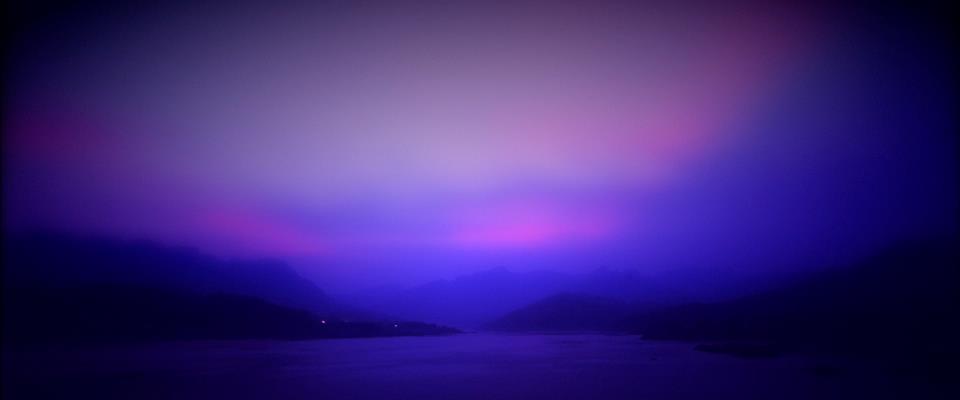
First, I am a layperson when it comes to my analysis of this film and second, it is the product of my elder son (yet trying to remain objective), but this is a brief overview of the film and its meanings and symbolism. It is important to note that some might interpret this film differently and might say that I am completely off-base.
The collaborator is musician Danny Cohen (and Easton Gruber), from Chicago who developed a score for the film based on a summary of what the film was about and the proposed direction for the narrative. The score was to be reminiscent of the Chinese culture, yet modern in instrumentation. There were many versions of the film (shorter versions and trailers), but the film and soundtrack are inseparable and they tell a common story. There are many parts to the film, overlapping themes, overtones, political commentary and film theory that I cannot begin to understand. Color also has symbolism. In the broadest sense, this film has three parts: meditation, transition (with free-style voiceover) and a lucid dream.
shangrila link (video below): https://vimeo.com/36822506
I encourage viewing in full screen mode with headphones or higher quality speakers.
Rather than a scene by scene description, I’ll offer an overview. Red represents China, Communism and deaths caused at the hands of Chinese Government either through oppression of minority cultures (such as the Uyghr culture), population displacement, and the rise of the China as an industrial power. Orange represents Chinese culture and religious heritage. Green is the environment, which is at risk due to industrialization and development (government and private), yet still has a strong presence and importance thanks to its foundations in ancient Chinese culture and identity. Blue is the coming of the darkness, and the transition from natural to artificial. It is a lucid dream of a trip through China and the people and sights encountered (and note how people look away from cameras, as a reaction to the feeling of their being watched by their own government–surveillance). Yet, there is strength in anonymity and hope that it will champion over authoritarianism.
Throughout the film, in particular during the meditation portion, as with Kubrick’s work, central light and symmetry are strong. Various points in the meditation scenes serve as focal points for meditation, such as a blue dot on a shoe or an orange carp in a pond. During the meditation scenes, in many shots, there were thousands of people present, yet from the camera’s point of view, one is alone in the contemplation of the view. Some of the views are memories of other places and the familiarity of a mountainscape in China resembling the Adirondack Mountains in New York State, in America.
Some might note the homage to Apocalypse Now and the wasteland of the riverscape that has been greatly affected by industrialization and pollution from enormous factories–the travesty of the results, yet the beauty of the silence (as it passes from right to left). Also of note is the massive change in the land and rivers as a result of the construction of the Three Gorges Dam (note the drop of the water in the high-walled scene as entire land areas are altered by this project). The water is a river of blood, the blood of millions of Chinese who have given their lives through revolution, relocation, destruction and ethnic oppression.
Throughout the dream there is a mix of visual memories of the Chinese people living in their society, developing an identity, yet remaining anonymous due to their authoritarian surroundings. Gradually the lucid dream of the massive cities, people and surroundings dissolves from reality (with an homage to the film Taxi Driver) into a trip between the Earth (Solaris – Tarkovsky 1972) and the Universe (2001 – Kubrick 1968) as the images of humanity dissolve and fade to white.
I am interested in your interpretations too and hope you enjoy it.

In Rotation
Various albums are in rotation here at the moment, with some “classical” recordings (Bernard Herrmann, Aaron Copland and a Karajan rehearsal) on the way from an auction I recently bid on at Polyphony:
http://www.polyphonyrecordings.com/
Printed and online catalogs become available (every two or three months) and Lawrence Jones (the proprietor of Polyphony) conducts auctions as he has since 1978 (reel-to-reel tapes, LPs, books and other items). The recordings are each graded for condition (as well as the covers) and auditioned by Larry, so one can rest assured that they arrive as described and carefully packaged. Larry has many rare items and often entire recording collections become available, like a recent, almost complete collection of Camden label LPs, here:
http://www.polyphonyrecordings.com/camden_gallery.php
******
Before anyone thinks I’m listening only to ambient music these days, here’s a brief overview of things moving between turntables and CD players:
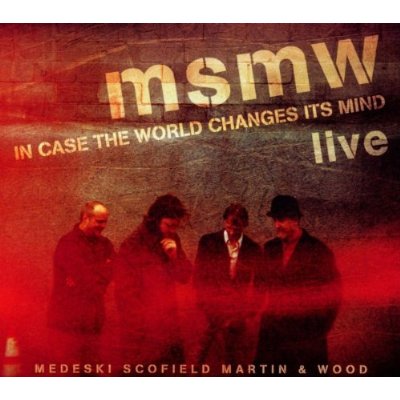
Medeski Scofield Martin & Wood – In Case The World Changes Its Mind (Live) – fabulous recording!
Van Der Graaf Generator – A Grounding In Numbers – It’s surprisingly good…and gritty.
Drums Between The Bells – Brian Eno and Rick Holland – The piece “Glitch” is remarkable, among others.
Nicholas Szczepanik – Ante Algo Azul – A twelve part suite of recordings along with artwork, custom sleeves and poetry that I am delving into now, fascinating.
Steve Wilson – Grace For Drowning – Excellent
Carolina Chocolate Drops – Luminescent Orchestrii (10″ 4 song vinyl EP)
Elizabeth Fraser – Moses (12″ vinyl EP) – I miss her voice from the days of Cocteau Twins
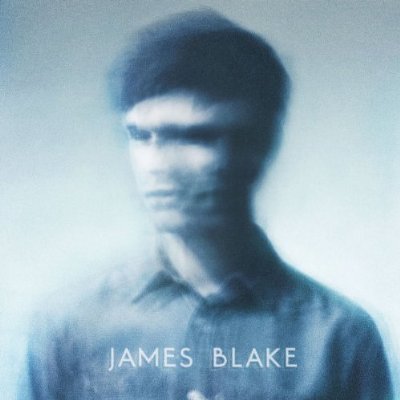
James Blake – his first eponymous double vinyl LP–really interesting and a (dynamically) challenging recording of great depth. With thanks to my son for getting this for me.
The Black Keys – El Camino – kicking some rock and roll and blues butt.
Yellow Birds – The Color
Fountains of Wayne – Sky Full of Holes – More finely crafted songs.
Tom Waits – Bad As Me – This album just rips.
Wire – Chairs Missing (revisiting a great album from 1978)
Montt Mardie – Skaizerkite – Really energetic songs (AKA David Olof Peter Pagmar) from Sweden.

The Bruford Tapes – From 1979, a reissued 2 channel FM broadcast by Bill Bruford and band.
Long Way Down – Soundtrack to the African motorcycle adventure taken by Ewan McGregor & Charley Boorman.
Leonard Cohen – Old Ideas – His 12th studio album…I’ve only heard excerpts and so far and I’m looking forward to this.
Michael Franks – Time Together (released in the summer of 2011) – some great songs from the humorous “Mice” to the heartfelt farewell to his family’s pup, Flora. Gil Goldstein’s arrangements on this are absolutely magical.
Trombone Shorty – For True – Get your funk on!
Taylor Deupree – his albums Shoals and Northern (on his 12K label), electronic/acoustic explorations, beautifully packaged.
Tomas Phillips + Mari Hiko – Prosa (on M. Ostermeier’s Tench label) – Dynamic recording and imagery.
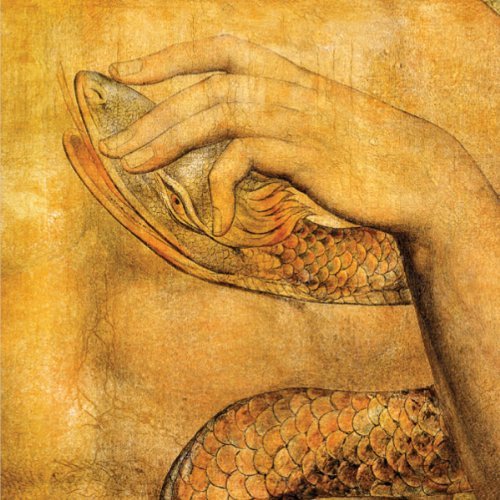
John Zorn – The Gates of Paradise – inspired by the works of William Blake with John Medeski, Kenny Wollesen, Trevor Dunn and Joey Baron – A really beautiful, lyrical and mysterious work inspired by the mystic.
Martin Schulte (Marat Shibaev) – Silent Stars, Odysseia and Treasure – Atmospheric Techno
bvdub – Then – House, Techno, experimental and ambient
There just isn’t enough time in the day (nor money in the music budget). Anyone else have suggestions?
Forthcoming Reviews

“Winter Garden”, the new instrumental CD by Eraldo Bernocchi, Harold Budd and Robin Guthrie on the RareNoiseRecords label: http://www.rarenoiserecords.com/ The album is also available at Darla Records: http://darla.com/ This IS a solicited review, but I already owned the recording.
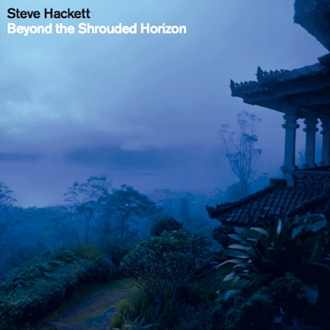
“Beyond the Shrouded Horizon”, Steve Hackett’s new album available on the InsideOut label and through the artist’s website: http://www.hackettsongs.com/
Recent work by Monty Adkins and new work by Marcus Fischer
Monty Adkins – Fragile.Flicker.Fragment

In my review below of M. Ostermeier’s latest album, I didn’t note that Marc referred me to the work of Monty Adkins and specifically his recent CD “Fragile.Flicker.Fragment.” This album is a real gem, beautiful electric and acoustic pieces and wonderfully produced and it has been nominated for a Qwartz8 award in the album category in France: http://qwartz.fr/2012/01/24/qwartz-8-categorie-album-cat/ It’s available at Audiobulb Records: http://www.audiobulb.com/
The track “Remnant” has an accompanying video, which is here:
****
Marcus Fischer – Collected Dust
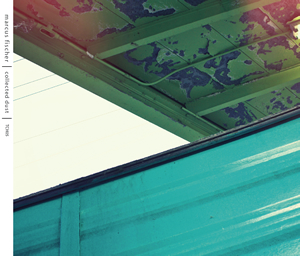
Also, I recently became aware of the work of Marcus Fischer (why do I miss all these great artists?). He has a just released CD entitled “Collected Dust”. Please read more about Marcus’s work at his website: http://dust.unrecnow.com/ as well as at Tench Records (sound files here): http://www.tenchrec.com/TCH05.html The CD just arrived yesterday and it’s playing now. A splendid work (also electric and acoustic in a similar vein to Monty Adkins’s work).
M. Ostermeier – The Rules of Another Small World

Tench Records – TCH04 – 37:11
http://www.tenchrec.com/ & http://www.words-on-music.com/mostermeier/
1) Micro Forest Updraft, 2) Streambed Arrangement, 3) Sunlight on My Desk, 4) I Took Out Your Picture, 5) Floorboards, Well-worn, 6) Trickle Down, 7) Fast Darters, 8) Underwater Drifting, 9) Retreating Night, 10) Suspicions, 11) Ngth
I’ll admit it; I was first intrigued with this album because of its cover, images of an abandoned sci-fi pod-style housing project in northern San-Zhr, Taiwan taken by photographer Craig Ferguson. Coincidentally, I had recently purchased the band Should’s sharply crafted album “Like A Fire Without Sound” on the Words on Music label. Little did I realize, but M. (Marc) Ostermeier is also part of Should, along with Tanya Maus & Marc’s brother, Eric. Marc is also co-owner of the Words on Music label. After rather experimental sampled-guitar beginnings in Austin, Texas, Should’s music has evolved into rather direct (and often very catchy), yet introspective, post-rock works sometimes classified as the “shoegazer” genre.
“The Rules of Another Small World” certainly takes some cues from Brian Eno and Harold Budd’s ambient works together and it sounds as if one is exploring the environs of what is depicted on the album’s cover. In contrast to Should’s directness, this is music-on-the-edges of consciousness or the fringe of a dream, with great depth. It evokes, for me, a feeling of having vivid memories without remembering all of the details, yet still being left with strong images, sounds and colors. The album has an almost early-era Kraftwerk beginning, similar to “Kling Klang” from the 1972 album “Kraftwerk 2”. In that work, bells, gongs and chimes of various types start and then drift into a muffled drone of flute, guitar and electric piano.
Audio Tracks “Micro Forest Updraft” & “Underwater Drifting”: the-rules-of-another-small
Ostermeier uses electronic and acoustic instruments (piano and possibly a vibraphone) effectively and melodically throughout with various treatments. There are ambient sounds, real and electronically created. The recording is penetratingly clear and broad, but not overpowering, so the result is a very relaxing and sensuous exploration of an ethereal musical realm. This is music with a direction, not free-form ambient sounds, at all. With each subsequent listen, I hear new things and focus on different parts and counterpoints in the recordings. Marc previously released an equally intriguing album “Chance Reconstruction” TCH01, with another beautifully decorated sleeve of black and white forest images.

TCH01 Chance Reconstruction
My Online Reviews Currently Appear At…
http://affordableaudio.org/Affordable$$Audio/Current_Issue.html and http://www.hifizine.com/ Stay tuned for additional online locations.
On Instrumental Music – Old and New
Teaser: I’m working on a review of “Winter Garden”, the new instrumental CD by Eraldo Bernocchi, Harold Budd and Robin Guthrie on the RareNoiseRecords label.
****
In a recent broadcast of the American Public Media program “On Being”, Krista Tippett was talking with the late Irish poet and philosopher John O’Donohue who noted, “Music is what language would love to be if it could.” It’s a fascinating interview on what O’Donohue explored throughout his short life (he died at the age of 52 in 2008) and called “the invisible world” and ties to spirituality, mysticism, beauty, and ties to his Irish homeland and history.
http://being.publicradio.org/programs/2012/inner-landscape-of-beauty/transcript.shtml
While I don’t necessarily think written or spoken language is inferior to music, instrumental works can evoke instantaneous memories or emotions that are often indescribable. Certainly, spoken words or sung lyrics can elevate, or make more familiar, the emotion of a piece, but I have always been fascinated by instrumental music, from early to modern as well as current forms (either as pure electronic or combined acoustic, found-sampled sound coupled with electronic music).
I often return to familiar musicians for new work and to revisit their earlier works. Many long-established artists continue to explore and reinvent themselves. Brian Eno and his many collaborators is an example of such an artist. With the demise of so many traditional record shops (especially in rural and suburban areas), I have found it increasingly difficult to find new music. Time was when I could walk into my local record shop and “Bob” who I had known for years knew my tastes in music, but also knew I was open for new explorations. If I was on the hunt for something new, “Bob” always had great ideas, but now he’s gone.
It has taken me some time, but slowly, I am finding new sources for music (in addition to word-of-mouth from friends), whether it’s direct from independent music labels, music related websites, podcasts or referrals from musicians. I have also found the (almost instant) crowd-sourcing aspect of Twitter to be very helpful for finding legal sources for artist’s works when some outlets are out of stock.
Music comes from unlikely sources too. Recently I was listening to an NPR Heavy Metal (not my usual haunt) genre podcast from NPR’s All Songs Considered, and NPR Music’s Lars Gotrich paused between Metal songs to refer to a young electronic/drone musician from the Chicago area named, Nicholas Szczepanik. The piece that Lars sampled was a short excerpt from NS’s mid-2011 release “Please Stop Loving Me”, a single 48 minute track, a portion of which is here:
Certainly, some people will react differently, but my reaction to “PSLM” was instantaneous and visceral. The layering of the sound, the reaching for something and when almost at the point of contact the music shifts slightly to another layered emotion, feeling or color. Yet, I found the piece incredibly relaxing and comforting despite its density. It took me a few tries to find a CD of the work, but thanks to that instant crowd-sourcing at Twitter, I found a copy in France from: http://www.bassesfrequences.org/ Jerome, the owner of the website, could not have gotten me the CD much faster. “PSLM” is a really remarkable work. I look forward to Nicholas’s forthcoming releases.
Nicholas has two LP releases coming soon (that’s right folks, vinyl) : “The Truth of Transience” available at: http://www.isounderscore.com/ and “We Make Life Sad”, soon to be available at: http://www.mewelesite.be/ (and it looks like the LP will be pressed with clear vinyl).
Harold Budd – In The Mist – CD
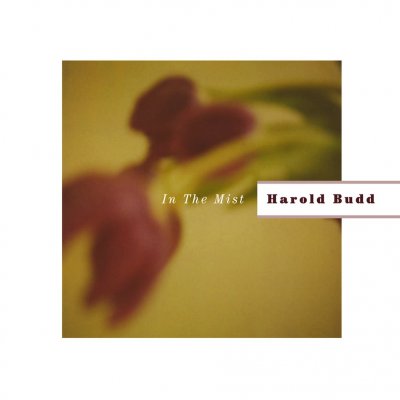
Darla DRL248 – 2011 http://darla.com/index.php
Track Listing: The Whispers: 1) Haru Spring, 2) The Whispers, 3) The Startled, 4) The Foundry (For Mika Vainio), 5) The Art of Mirrors (after Derek Jarman) Gunfighters: 6) Three-Fingered Jack, 7) Greek George, 8) Black Bart Shadows: 9) Come Back To Me In Dreams, 10) Parallel Night, 11) Sun at 6 Windows, 12) The Panther of Small Favors, 13) Mars and the Artist (after Cy Twombly)
It was an early morning in the studio in late April, 1980 after a long night of drafting with temperamental Rapidiograph pens on mylar. Black turned to indigo, then to purple, red-orange and finally a golden sun was in through the high studio windows. It was the first light of the morning and “First Light” from Harold Budd & Brian Eno’s “Ambient 2 – The Plateaux of Mirror” was playing on a stereo belonging to my studio-mate Bill. This was my introduction to the first of many Harold Budd (born 1936) solo and collaborative works. I knew Eno’s own work, his collaborations with Robert Fripp and the glam-rock days of Roxy Music. Budd and Eno’s work together was music of sonorous ambience and while stark, it was broadly spatial and filled our studio as did the rising sun. Later that morning I went to the college record shop and bought a copy of the LP (and I still have it). Eno and Budd collaborated again in 1984 on the Editions EG album, “The Pearl”.
Prior to “Ambient 2”, Budd’s early compositions were collected on the 1978 Editions EG release “The Pavilion of Dreams”. Since then Budd has released nearly forty solo and collaborative works with Robin Guthrie, Elizabeth Fraser, Simon Raymonde, Clive Wright, Eraldo Bernocchi, Hector Lazou, Andy Partridge, Zeitgeist and Daniel Lanois among others.
In 2004, with the release of the double CD “Avalon Sutra/As Long As I Can Hold My Breath” (on Samadhi Sound) it was rumored that Budd had retired, having started his career as a composer in the 1960s and then a teacher of music composition at the California Institute of the Arts from 1970 to 1976. Curiously, in 2005, his retirement seemed short-lived and work surfaced again: collaborations with Eraldo Bernocchi (“Fragments from the Inside”, recorded live for an art installation) and Robin Guthrie (formerly of the Cocteau Twins), a soundtrack for the film “Mysterious Skin”. Since then, Budd has been quite prolific with more than twelve recordings released in the last six years.
Budd’s instrumentations vary from stark piano, electronically treated piano, processed synthesizers to string quartets and spoken voice. One piano piece “The Room” from the 1988 release “The White Arcades” was later expanded to an entire album of “rooms” in 2000, entitled “The Room”. There is also an album of two Budd improvised piano sessions, produced by Daniel Lanois in 2003 that was secretly recorded at Lanois’ house and released as “La Bella Vista”. In 2007, Budd released solo and separate collaborative works with guitarists Clive Wright & Robin Guthrie on Darla Records.
“In The Mist” is Budd’s first solo work since 2004. It is divided into three sections: The Whispers, Gunfighters and Shadows. Whispers: Starts with the first five notes of “Haru Spring”, the reality of an untreated piano and gradually each piece merges into a dream-state with the subsequent treated piano pieces. In these, time and sound are gently altered. The sensation (for me) is that of being in a half-waking state. There on the edge and lingering in between, suspended. Budd has a unique way of paring mood, sound, space and atmosphere down to the barest of essentials, yet his pieces never bear the cliché sound or rhythms of so many other artists labeled as producing ambient music.
Gunfighters: These pieces are darker in tone, have more identifiable melodic structures and seem more about telling stories, as the titles might suggest. They do seem to have American southwestern ambience to them. Like with Whispers, the opening piece uses the piano as the primary instrument with the latter two pieces having a more altered sound (with electronics and light synthetic percussion). The pieces have a cinematic quality, with imagined, yet tangible visuals. The last piece “Black Bart” is marginally sinister, with a pulsing drone throughout and punctuated with untreated piano.
Shadows: Is a departure from the other two sections and a string quartet is used exclusively. Though the textures and harmonies are broader, the mood is somber and to my ears (and eyes) the colors are varying shades of gray and the feeling is poignant yet abstract. “Sun At 6 Windows” appears to be about passing time, but here there is no altered sound or bending, it’s straight with a mood that is reflective and sentimental.
I know at some point, it will be inevitable that Harold Budd will retire, but it is my hope that it is still far into the future. I revisit Harold Budd’s works of the last thirty years often, especially during times where quiet reflection is needed. I recommend this beautiful and simply packaged CD and also urge a journey to discover Budd’s earlier works, both solo and collaborative; they are enriching on many levels.
Budd Discography: http://en.wikipedia.org/wiki/Harold_Budd
Appeared in the December, 2011 Hifi Zine: http://www.hifizine.com/2011/12/harold-budd-in-the-mist/
Will Samson – Hello Friends, Goodbye Friends – CD
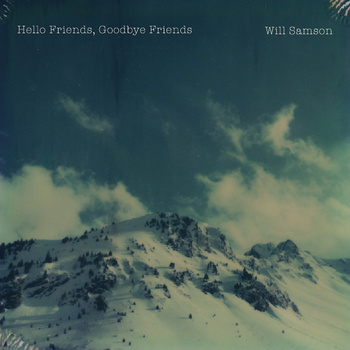
2011 PLOP/NATURE BLISS Distributed in USA by Darla
http://willsamson.bandcamp.com/ & http://willsamson.co.uk/
Tracks 1) My Broken Mirror, 2) Panda Bears, 3) Meet me at Home, 4) Find me in the Ocean, 5) Violins and Polaroids, 6) Sleeping, 7) Friends, 8) Great Plains
I know very little of Will Samson’s prior project “Himalaya” other than some youtube video uploads, but I picked up his new album “Hello Friends, Goodbye Friends” after reading a description at online music merchant Darla.com, and I took a chance. After a number of years of searching for, acquiring and tweaking various pieces of vintage and new audio equipment, I have finally turned back to finding new music as well as revisiting old friends and their new material on both CD and vinyl. I like all sorts of music, except angry-man-head-bangin’ rap and heavy metal of a similar ilk.
Samson is of diverse national heritage (Chilean, Indian and Italian), born in England, lived in Australia and currently resides in Berlin, Germany. I was instantly struck by the power of this deeply personal album. It’s a real gem. Most music takes time to grow on me, often with eight or ten listens of an album, and even then, I might have only two or three favorite pieces.
It is evident that the young Mr. Samson is on a voyage of discovery—both sonic and life. I was also drawn to the story behind the music (journeying though Europe, Asia and the Himalayas at 19, one way ticket, self-doubt, celebration, loneliness & joyfulness), but only after hearing the album and wanting to know more. Some might classify his work as ambient, folk, indie and when loaded into iTunes it curiously comes up classified as “pop”. This music just takes the World and slows it down allowing for contemplation of the music and perhaps various issues that consume one’s own life. The songs are beautifully crafted, in a way, similar to F. M. Cornog’s (of East River Pipe), yet they lack the edgy subjects and politics that F. M. often explores.
The first piece on the CD, “My Broken Mirror” starts with a shimmering of acoustic guitar and what appears to be a light electric guitar overdub used almost like a horn, to beckon the listener mournfully “Ooo…it’s going to get easier…”. Yet the spirit of the music is uplifting and optimistic. Later on in the CD ,“Friends” is reminiscent of Anthony Phillips’ beautiful piece “God if I saw Her Now” from his first solo album “The Geese and the Ghost”. Every piece on “Hello Friends…” stands on its own, yet all function well together as a collective whole.
The recordings are stark (made with an eight-track recorder, a gift from his father before his travels and mixed by Samson) and there are many ambient sounds deep in the soundstage, footsteps across a room, the inner workings of a piano or the click of the recorder’s controls. Will Samson mixes his normal and falsetto voices in various pieces, almost chants of sorts and for some this may be bothersome, but stick with it. The supporting instrumentation appears to be parlor guitar, electric guitar with some effects, bass and piano with minimal electronic treatments and light percussion.
The album is an intimate personal meditation, yet is sonically broad like the mountainscapes depicted in the cover art. The CD’s jacket is a small gate-fold LP, typical of many Japanese releases. The album is little over thirty-eight minutes, which is far too short and leaves me wanting more, but one can be rewarded again with the replay button. This is the kind of album that makes me want to buy copies and give them to as many friends as I can think who would appreciate something as beautiful and rare as this album is.
***
***
Appeared in the September, 2011 Hifi Zine: http://www.hifizine.com/issues/september-2011/

 wajobu