Independent Music & Equipment Reviews, Forthcoming Music Label & Sounds

Latest

Lorenzo Feliciati – Frequent Flyer

CD: RareNoiseRecords RNR023: 49:38

Record Label Website: http://www.rarenoiserecords.com/lorenzo-feliciati-store/frequent-flyer-cd

Album samples: http://www.rarenoiserecords.com/jukebox/feliciati/ff/

Artist’s Website: http://www.lorenzofeliciati.com

Italian bassist Lorenzo Feliciati is better known in European modern Jazz circles than in America and elsewhere.  His previous solo albums include, Upon My Head from 2003 and Live at European Bass Day and More from 2006.  More recently, he collaborated with English keyboardist Roy Powell, trumpeter Cuong Vu (who has worked with The Pat Metheny Group) and drummer Pat Mastelotto (King Crimson’s drummer in line-ups 5 through 7 and ProjeKcts) under the moniker of Naked Truth with a strong and intriguing album entitled Shizaru also on the RareNoiseRecords label.

Shizaru was crafted around no single voice—more like a musical conversation built around varying moods.  For Frequent Flyer, Feliciati has not strayed from that concept, adding an even more diverse set of collaborators (many of whom are from the Italian Progressive Rock and Jazz scene).  This is an album that blurs genres of Rock, Fusion, Funk, Jazz and includes the edges of Latin and Afro-Cuban sounds.  Comparisons of Feliciati’s work have been made to bassists such as Jaco Pastorius and Percy Jones, but technically and stylistically, my vote is for Jeff Berlin (with some influences of Miroslav Vitous).

The subtitle of Frequent Flyer also reveals, I think, something more about the background of the music: Diary of a Traveling Musician, not only documenting the quotidian aspects of diaries, but perhaps disclosing thoughts and desires related to the foundations the work.  Musically, Frequent Flyer is as diverse as the moods one might find within a written diary.  Feliciati has noted that, “I wanted to do an album with all the wonderful musicians during my traveling around for gigs, festivals and sessions.”  Portions of this album had actually been recorded prior to the start of the Naked Truth project.

There are many strong pieces in Frequent Flyer, some more favorable to my ears than others.  Two tracks (as noted below) seem a bit underdeveloped in structure, and thus held my interest less.  But as with all music, first impressions of an album are often not the lasting impressions after repeated auditions.  This album has grown on me as I have listened to it in different environments (home, car or walking).  What I appreciate the most is the range of explorations in addition to Feliciati’s musicianship.

****

The Fastswing Park Rules: At first I was fooled–by the mournful saxophone opening (being reminiscent of Bill Bruford’s Earthworks’ It Needn’t End In Tears), only to be lured into a dark and industrial atmosphere of expansive saxophone, bass and percussion improvisation.

Groove First: Is a very playful, funky and cheerful piece, with melodic and rhythmic shifts reminiscent of Percy Jones and Stanley Clarke and quite similar in many ways to the spirit of some of Brand X’s Moroccan Roll mixed with some Return to Forever and Weather Report.  Fender Rhodes and congas provide vigorous and upbeat counterpoint throughout.

93: Is a really great and lyrical piece with dense textures and a deliberate syncopated rhythm that is reflective yet mysterious and is expansive in its arrangement (with a touch of melancholy, in instrumentation, akin to some of the work of the late Mark Linkous, AKA Sparklehorse).

Riding The Orient Express: Percussion and guitar are used to represent the presence of a train and there are breaks where the bass takes the melody.  This has some of the feel of Steve Hackett’s recent work in his album Out of the Tunnel’s Mouth.  The development of this piece, however, seemed a bit plodding and thin–one of the weaker pieces on the album, for me.

Footprints: Is a very inventive, and fun (yes, I said fun!) arrangement of Wayne Shorter’s piece from the album Adam’s Apple originally by the quartet of Shorter, Hancock, Workman and Chambers.  It really shows Feliciati’s quick-hands, musicianship and interpretive skills quite well.  In this version, Feliciati takes the Shorter sax melody on bass and is supported by spirited Brazilian-like ensemble percussion.  I found a video version of this piece—a great illustration of the spirit of this track.

Footprints Video

Never Forget: Is mysterious, edgy and atmospheric. Bass and electronics punctuate as Cuong Vu’s trumpet floats between diaphanous spirit and sinister animal.  This is another great track with expansive cinematic qualities.

Gabus & Ganabes: Is spunky and rhythmically driving with bass chordal and melodic drifts and violin work by Andrea Di Cesare reminiscent of Jean Luc Ponty’s mid-career works.

Perceptions: Is contemplative with a piano opening similar in spirit to some of Harold Budd’s work and forms a backbone for this meditation with fluid bass improvisation and sound samples by DJ Skizo.

The White Shadow story: Is funky, visual, electronic, buzzing and starts off brooding, then goes up-tempo with a ripping guitar solo.

Law & Order: This track is the other weaker piece on the album (and that’s my opinion only), it’s rather plodding and a bit too methodical despite the challenging bass and organ runs, which are supported by percussion and guitar.  Some might see some similarities with works of Emerson Lake and Palmer.

Thela Hun Ginjeet (for those in-the-know, an anagram of Heat In The Jungle, the story of street encounters with authority): Is a driving cover from the 1981 King Crimson album Discipline.  The story I’ve read is that this piece is often played by Feliciati and band mates during sound checks.  I’ve always loved this KC album, and this is a great interpretation of the original with some incredible handwork by Feliciati, Gualdi and Block.

****

Frequent Flyer is an energetic, musical and diverse album to explore.  It has great dynamics and a solid sound throughout.  I always enjoy being pushed into new musical territories and Lorenzo Feliciati’s travels with a talented group of musicians is a great introduction to his work and influences.

****

Tracks and players:

1) The Fastswing Park Rules with Bob Mintzer (saxes) and Lucrezio de Seta (drums)

2) Groove First with Roy Powell (Fender Rhodes and Moog) and Paulo La Rosa (percussion)

3) 93 with Pat Mastelotto (drums) and Aidan Zammit (Wurlitzer and strings)

4) Riding The Orient Express with Pat Mastelotto (drums) and Phil Brown (guitar)

5) Footprints with Robert Gualdi, Stefano Bagnoli and Maxx Furian (drums)

6) Never Forget with Cuong Vu (trumpet), DJ Skizo (turntables) and Pier Paolo Ferroni (drums)

7) Gabus & Ganabes with Patrick Djivas (bass solo) and Andrea Di Cesare (violin)

8) Perceptions with DJ Skizo (turntables) and Pier Paolo Ferroni (drums)

9) The White Shadow story with Daniele Gottardo (guitar), DJ Skizo (turntables) and Pier Paolo Ferroni (drums)

10) Law & Order with Jose Florillo (Hammond organ) and Daniele Pomo (drums)

11) Thela Hun Ginjeet with Roberto Gualdi (drums) and Guido Block (bass, lead and backing vocals)

****

This is a solicited review.
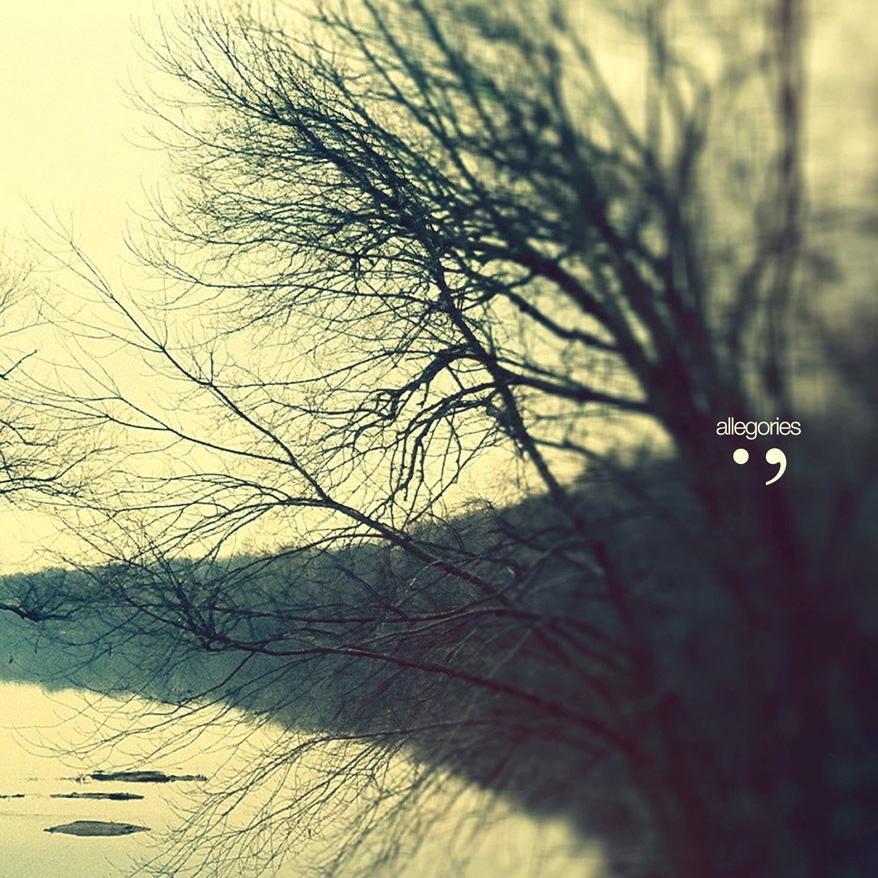
The Dwindlers – Allegories

CD: #has002  Time: 29:15

Limited Edition (50 copies per edition) on-demand published with illustrated booklet, poetry & credits.  Review copy is from First Edition.

Band Website: http://thedwindlers.com/

Member websites: http://www.michelleseaman.net/ and  http://www.benjamindauer.net/

Heart and Soul label: Allegories

http://heartandsoullabel.blogspot.com/2012/03/has002-dwindlers-allegories-book-of_15.html

Previous Album on FeedbackLoop label: Dreams

http://feedbacklooplabel.blogspot.com/2010/11/fbl008-dwindlers-dreams.html

Tracks: 1) The Pelican and The Girl; 2) Monkey; 3) How The Ostrich Became a Girl and Her Bicycle; 4) Pickering’s Hyla; 5) Widow, Daddy, and the Wolf; 6) Peacock and the Kitty; 7) Dolphin

Spoken word recordings have existed since the advent of wax and foil cylinder recorders.  In the 1920s as Jazz was developing as a musical genre, poets were exploring differing rhythms and styles in their works, breaking away from more traditional forms of meter and rhyme.  These were the explorations of E. E. Cummings, T. S. Eliot, Jazz Poet Langston Hughes and others.  Syncopated rhythms, phrases repeated, and with some poets, the rejection of traditional conventions of punctuation and manuscript.

The Dwindlers are poet Michelle Seaman and bassist composer Benjamin Dauer.  Their collaboration started in 2002 in Chicago and they now create their work in the southeastern US.  Their first album was the digitally released “Dreams” on the FeedbackLoop Label #FbL 008.

Allegories combines instrumental Jazz with poetry and includes printed poems (of tracks 1, 2, 3, 5, 6 and 7) with illustrations by Seaman and instrumentation (I assume) by Dauer.  It’s a very interesting and challenging album and I find the approach to be quite refreshing!  It is a relatively short recording, spanning between a long EP and a full-length CD.  Subjects relate to fauna, instincts, desire, observations, phobias and inner monologues (without being self-indulgent).  The printed poems appear to be a framework for the apparently improvised recorded performances (might there be further improvisations during a live performance?).

As Jazz music is about listening, sharing, improvising, and responding, poetry can be used as another instrument or voice in an ensemble for counterpoint or support.  Beat Generation writers expanded on this, like Jack Kerouac who was sometimes accompanied with improvised music during poetry readings (composer David Amram was known to sit-in and jam piano or bongos during readings).  Jazz and Jazz Poetry has also been about activism and in the 1970s Gil Scott-Heron emerged (being influenced by Hughes) as a powerful voice in topical and confrontational spoken-word Soul, Jazz & Blues.  Scott-Heron (also a rap music pioneer) greatly influenced later hip-hop groups like Public Enemy.

Other artists have continued to explore the spoken-word with a variety of music and multi-media artists influences: Jim Morrison and The Doors (described as “electric poets”), Laurie Anderson, David Byrne, Harold Budd (as on his 1991 album By The Dawn’s Early Light), and more recently the 2011 collaboration of Brian Eno and poet Rick Holland on their album Drums Between The Bells, and the growling reflections of Leonard Cohen on his 2012 album Old Ideas.

The voices of Allegories are sultry with occasional interplay of the technically descriptive.  There are changing points of view and perspectives—seeing through another’s eyes (not necessarily human).  The way the words are phrased against the music; they sometimes transform into layered double-entendres.  The often-hypnotic and stark instrumentation punctuates the spaces between the words with a foundation of acoustic bass, layered electronics and percussion, adding to the tension and release.

The Pelican and the Girl starts with a shimmering veil and then plays between female and male voices and further heightens an implied sexual tension as descriptions shift from bird to woman and back.  There are points where the words lure one into an imagined scene only to be returned to a stark lesson on natural history.  The drums and bass during Monkey are reminiscent of Morello & Wright’s vibe on Take Five (from the album Time Out) and voice, although monotone; is similar to the interplay of Desmond and Brubeck.  Pickering’s Hyla is an instrumental break and sounds akin to a forest at the vernal pools at dusk.  The second half of the album is more layered, electronic and ambient after a sensuous acoustic “theme and response” bass introduction to Widow, Daddy and the WolfPeacock and the Kitty and Dolphin gently pulse with Seaman’s voice stroking fur, feather and flowing through water.

Allegories is a provocative and engaging album of poetry—vivid and shifting with very musical, alluring and technical Jazz counterpoint.  The recording has a welcomed softness that does not compromise the clarity.  It would certainly be suitable as background music (and would likely pique the curiosity of a roomful of listeners), but I found it best played at the level of a live performance to fully appreciate it.

The Pelican and the Girl (and two others) – The Dwindlers


 *************

This is a solicited review.
Chad Wackerman – Dreams Nightmares And Improvisations (DNAI)

CD: CWCD5: 53:24

Website: http://www.chadwackerman.com/

Album samples: http://www.chadwackerman.com/album.html

Available at: http://www.cdbaby.com/cd/chadwackerman2

Tracks: 1) Glass Lullaby; 2) A New Day; 3) Bent Bayou; 4) Star Gazing; 5) Edith Street; 6) The Fifth; 7) Waterways; 8) The Billows; 9) Monsieur Vintage; 10) Rapid Eye Movement; 11) Brain Funk; 12) Spontaneous Story; 13) Two For Ya; 14) Invisible

Chad Wackerman is a gracious host and shares willingly (including authorship).  Although he starts his album with a mellifluous and spacious solo percussion track, he really has nothing to prove—no pyrotechnic drumming meltdowns required.  He has collaborated with and provided support for the best: Frank Zappa, Allan Holdsworth, James Taylor, and many others as a session musician.  He has toured with his own Chad Wackerman Trio (Doug Lunn, bass and Mike Miller, guitar) as well as conducts drum clinics.  Chad has chops, but doesn’t feel the need to shove it to the front of the mix.

On “DNAI”, the album players include: Chad (drums and percussion), Allan Holdsworth (guitars, Synthax & Starr Z-Board), Jim Cox (keyboards) and Jimmy Johnson (bass).  This is Chad’s fifth solo album, others include: Forty Reasons (1991), The View (1993), Scream (2000) and Legs Eleven (2004).

What I’ve always appreciated about Chad’s work (having seen him perform live a few times) is that he is technically precise, versatile, quick-handed, and uses varied dynamics with aplomb.  Some might rush out to buy this album as another Allan Holdsworth trio album, but that’s not at all what this album is.  Aside from his solo pieces, Chad either trios as an equal with Holdsworth and Johnson or Cox and Johnson, and one duo piece with Cox.  This album displays a variety of styles from Funk, hard-driving Fusion, mellow instrumental Jazz, and brooding Progressive.

Chad provides a solid backbone for the trios and punctuates each piece with deftly placed accents including tone and color often missing from percussionists who play purely for speed and to impress.  Wackerman’s work is energetic yet not overpowering to his trio-mates, and this is evident in tracks like “A New Day” where the percussion introduces Holdsworth’s broad chordal backdrop and is followed by Johnson’s steady bass and Holdsworth’s Synthax solo with synchopated off-beat fills by Wackerman.  I don’t find the Synthax to be nearly as expressive (melodically) as Holdsworth’s guitar solos, but that’s a matter of taste, I suppose.  “Star Gazing” is a far better piece featuring Holdsworth’s Synthax—broader fabric of sound.

Some pieces begin with a drum solo, such as “Edith Street”, but again Wackerman moves quickly aside for his trio players’ contributions.  One nice aspect to this album is that it does display a wider variety of guitar sounds from Holdsworth and Cox’s keyboards add edginess, depth and an even broader sound.  The album hits its stride with “The Fifth”, which starts solidly and languidly moves through a variety of textures and fills on percussion, guitar and bass—a really fantastic piece written by Wackerman with lyrical solos by Johnson and Holdsworth.  “Waterways” is a floating tonal exploration.  “The Billows”, another self-penned has more of the classic sound and feel of so many works that Wackerman-Holdsworth-Johnson have recorded previously.  It also includes a brief and effective drum solo.  Solo drums return on “Rapid Eye Movement” and great care has been taken with how the drums and cymbals are mic-ed, it’s a very spatial mix, befitting the title, and again, not overly flashy.  “Brain Funk” has a visceral organ sound provided by Cox and this is a piece where Chad drives the beat—it has a great feel as does “Two For Ya”.  To close the album with a subtlety I appreciate, “Invisible” is a suspended arhythmic other-worldly exploration.

This is an excellent album.  It’s well-recorded and engineered across two studios and a really pleasurable listening experience.

What’s Spinning At Work Today? **UPDATE**

Cortney Tidwell’s – Boys:  A really interesting (and at times experimental) exploration of songwriting and sound.  This and her previous albums, one self-titled from 2005 and “Don’t Let The Stars Keep Us Tangled Up” from 2006 (with Kurt Wagner and William Tyler of Lambchop) have also resulted in some inventive remixes (by Hands Off Cuba) and videos.  Available from: http://www.cityslang.com/

Savvas Ysatis + Taylor Deupree’s – The Sleeping Morning:  A four track EP resulting from a 2007 collaboration.  Electro-acoustic, peaceful and recorded directly to multi-track with minimal editing.  The CD might still be available at some distributors, but a download is at: http://www.12k.com/ Try also…looks like the CD is still here: http://darla.com/

Lambchop’s – Damaged: Another in the canon of  calming beautiful works with delightful wordplay as in the opening track “Paperback Bible”.  Available at: http://www.mergerecords.com/

Gareth Dickson’s – Collected Recordings: After listening to Gareth’s latest album “Quite A Way Away” on the http://www.12k.com/ label, I hunted around for his previous work and found this, a collection of recordings from the previous five years on the http://driftingfalling.com/ label.

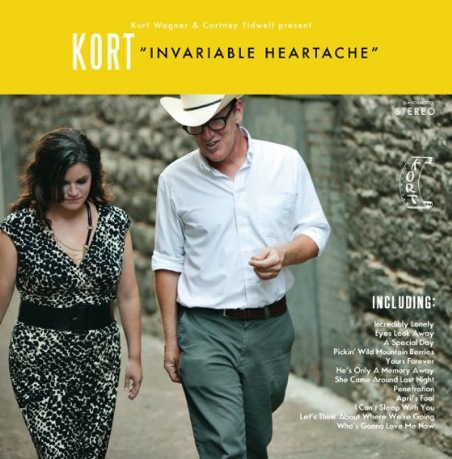
KORT’s – Invariable Heartache: This is actually the album that got me familiar with Cortney Tidwell’s solo work.  A great album of re-recorded songs that were once on the Chart record label (run by Cortney Tidwell’s grandfather, Slim Williamson).  Kurt Wagner of Lambchop is the collaborator, so Cort + Kurt = KORT.  You can get this album here: http://www.mergerecords.com/store/store_detail.php?catalog_id=846

*****************

Afternoon Postscript:  OK, I was slow and missed the chance to get the original issues on CD and vinyl, so I settled for a 12k/iTunes download and burned CDs, so this is what’s on this afternoon:

Marcus Fischer – Monocoastal: I’m just listening for the first time as I type this.  A combination of field recordings, found sounds, harmonics and textures woven and inspired by Fischer’s wanderings up and down the west coast for 20 years.  This is Marcus Fischer’s website: http://unrecnow.com/dust/about

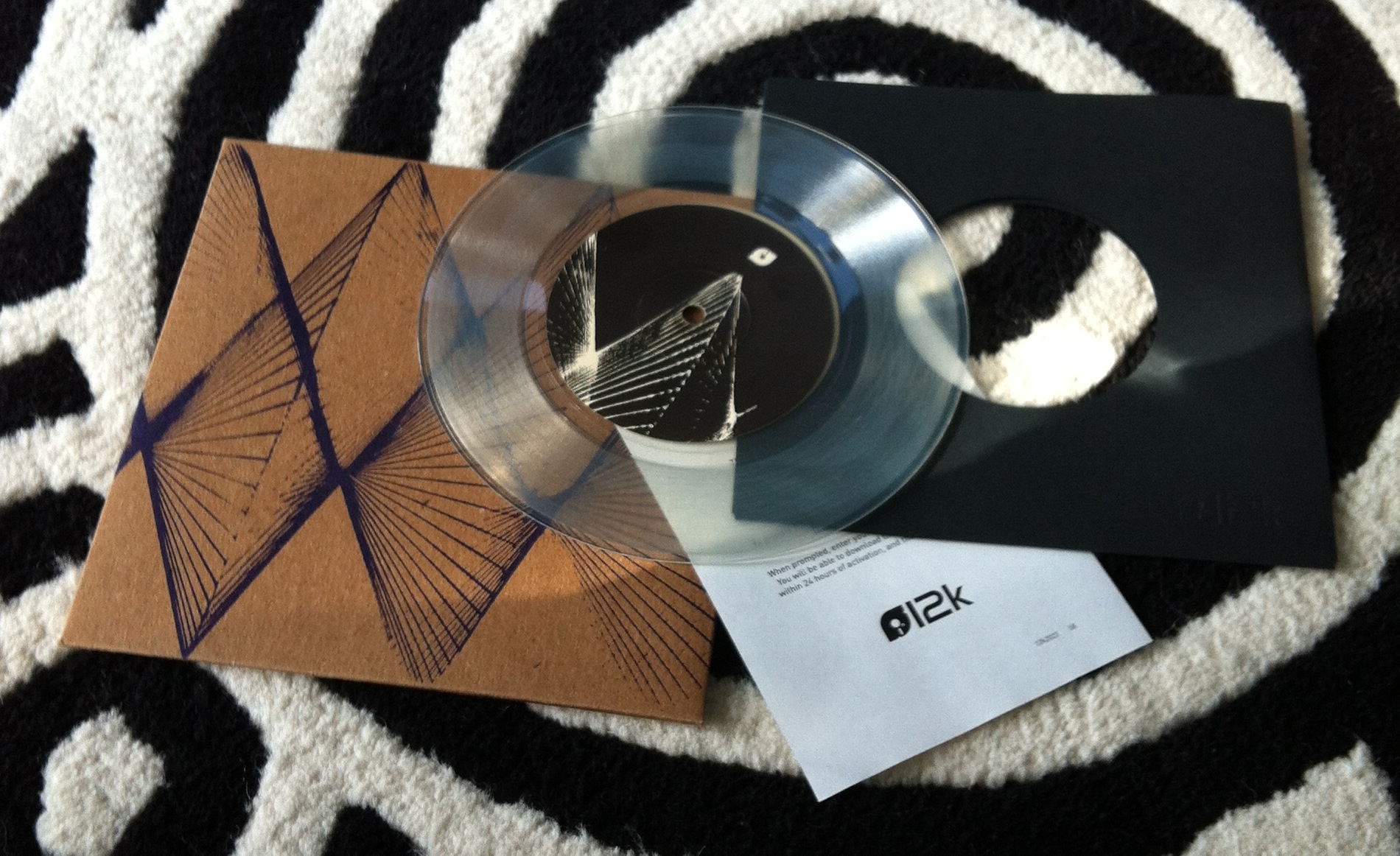
Taylor Deupree + Marcus Fischer – In A Place Of Such Graceful Shapes: This was originally issued as a small box with a CD and clear vinyl 7″.  It really looked beautiful and am sorry to have missed out on it.  More electro-acoustic heaven.  More about this album and both artists here: http://www.12k.com/index.php/site/releases/in_a_place_of_such_graceful_shapes

A video excerpt is here:


Winter Garden: Eraldo Bernocchi – Harold Budd – Robin Guthrie

RareNoiseRecords – RNR021 – CD 2011 – 47:21

Available from: http://www.rarenoiserecords.com/bernocchi-budd-guthrie

Also available from: http://darla.com/index.php

Tracks: 1) Don’t Go Where I Can’t Find You; 2) Losing My Breath; 3) Winter Garden; 4) Entangled; 5) Harmony And The Play Of Light; 6) Heavy Heart Some More; 7) White Ceramic; 8) Stay With Me; 9) South Of Heaven; 10) Dream On

There are certain situations, places, visions, works of art or music that evoke emotions or memories that defy explanation; reactions that are beyond words, or perhaps descriptions that cannot do a sensation or experience justice. They are in effect, indescribable.  This is the alluring feeling I am left with after listening to “Winter Garden”, the first simultaneous release by Eraldo Bernocchi (Italian musician and producer), Harold Budd (pianist and composer) & Robin Guthrie (producer, guitarist and founder of Cocteau Twins and Violet Indiana) on the RareNoiseRecords label.

In the December 2011 issue of HiFi Zine I reviewed Harold Budd’s latest solo work, “In The Mist”. (Please see: http://www.hifizine.com/2011/12/harold-budd-in-the-mist/ ).  I won’t dwell much on Budd’s many prior collaborations, other than to say that he has worked with many artists, including Robin Guthrie on at least seven releases.  I am familiar with Budd’s work with Eraldo Bernocchi on Music For ‘Fragments From The Inside”–music for an art installation by Petulia Mattioli (a long time collaborator of Bernocchi).  “Fragments…” was recorded live in 2006 and released on Sub Rosa as catalog #SR239 JC.  Coincidentally, Petulia Mattioli provided the graphic design and photos for “Winter Garden”.

I admit to knowing little of Eraldo Bernocchi’s extensive prior work, and that exploration is for another time, so I will stay focused here on what I know.   For background, I offer some brief thoughts on recent overlapping collaborations with both artists and Harold Budd: the 2011 Darla release entitled “Bordeaux” with Robin Guthrie, as well as “Fragments…” with Bernocchi.  In “Fragments…” Budd’s piano work presents as a languid yet grounded introduction to Bernocchi’s electronic peregrinations consisting of treatments, rhythms, samples and deep pulses.  Budd’s piano seems to reach for and tame the electronic wanderings while sensuously weaving, almost teasing Bernocchi’s explorations.  To close the seven-part work of “fragments”, Budd’s piano returns as the foundation of the work—how this related to the video installation, I don’t know.

With “Bordeaux”, the nine named tracks aren’t driven by rhythm, but by Guthrie’s guitar work forming fabrics of textures, colors and emotions for Budd to gently punctuate.  The feeling of this work is of warmth and sensuousness.  Guthrie usually leads-in with his layered shimmering guitar before Budd responds, to play off the direction and mood that Guthrie has set.  There are exceptions to this on pieces like “So Many Short Years Ago”, “The Belles of Saint Andrew” and “Southern Shore” where Guthrie’s textures respond to Budd’s piano phrasing and chord changes.

In “Winter Garden”, as the album’s title suggests, there is a chilled and mysterious sense of expansive desolation throughout.  It is imbued with the vividness of the changing color of a winter sky; sharp golden light to warm the blue-grey chill of the winter air.  There is also a dream-state cinematic quality to this album.  The trio of Bernocchi, Budd & Guthrie play as a meshed ensemble with each artist taking the lead, depending on the piece or feeling being expressed.

I posit that this album is more than just collected individual tracks, but it is a sonic novella.  The titles and accompanying music express a direction, emotion or location in a somewhat enigmatic unknown story.  Perhaps it is imagined or real, or a combination of both.  It is evident that the opening track “Don’t Go Where I Can’t Find You” is a beacon cast as the main theme (played by Budd) that later returns in “Winter Garden” and again in track 9 “South of Heaven”, each in slightly altered forms.  I speculate that track 9 is the actual ending of the overall “story”, with track 10 “Dream On” being a postscript.  To me, this album presents in sound, as a cohesive and plausible story.  A brief overview of the tracks:

1) Don’t Go Where I Can’t Find You: Budd’s piano takes the main theme with Guthrie’s layered guitar and light treatments from Bernocchi.  The theme is an entreaty of sorts and there is a feeling of longing and desolation in the music.

2) Losing My Breath: There are long pauses that create a sense of tension in the theme, played by Guthrie, with brief responses from Budd.  A sense of suspension and anticipation is apparent with slow movement to arrive at a destination.

3) Winter Garden: The title track, with main theme by Budd and supporting chords and bass line by Guthrie and Bernocchi.  Despite what seems to be a desired arrival and sense of place, there is a dissonance in the sound overlays that I perceive as portraying doubt, a possible foreshadowing. Yet, there is also comfort and resolution in the theme.

4) Entangled: Bernocchi begins with a pulsing bass line, a sense of apprehension, but also movement with descending keyboard tones as the piece progresses.  The “conversation” is between Budd’s treated and bending piano and Guthrie’s guitar melodies and chords, with Bernocchi overlaying rhythmic intrigue.

5) Harmony And The Play Of Light:  A soft bass pulsing with layered keyboards and guitar, but here the piano is compressed, piercing the background and giving a sense of brightness.  There is also a feeling of suspension and anticipation.

6) Heavy Heart Some More: The feeling in this track is somber, with a foreboding as it advances: deep piano and bass notes creating a sense of darkness.

7) White Ceramic: This track, to me, seems to be a pause of sorts (and I admit to having some trouble placing this is in the overall story).  Perhaps it’s an aftermath.  The tones are bell-like and the phrasing and melodies are wandering, and seem to me to be searching.

8) Stay With Me: A quiet beginning, piano and layered electronics leading to a subtle rhythmic backdrop and then movement, a sense of traveling somewhere again, perhaps from the winter landscape to return to an unknown destination.

9) South Of Heaven: The recapitulation of the slightly altered opening theme on piano, layered in shimmering guitars and bending electronics and subtle (deep) comforting bass notes, suggesting an ending and perhaps resolution.

10) Dream On: As if the sun is descending on a chilled landscape, a chorus of guitars and layered electronics move with the waning sunlight, a flowing bass line in support and piano as if thoughts are wandering…in reflection.

The recording of “Winter Garden” is expansive and crystalline.  I found it so easy to listen to with rapt attention.  It draws one into whatever the story that is being told.  As soon as it ended, I wanted to begin again–gorgeous.

Stay With Me (Track 8):

Note: This article will be published shortly at a music & audio equipment-related online e-zine and IS a solicited review (although I already had purchased the recording).

Steve Hackett – Beyond the Shrouded Horizon

InsideOut – 0505630 – http://www.insideoutmusic.com/

Extended Version 2 CD with hardbound booklet with lyrics, credits and photos

(Also available on vinyl): http://www.hackettsongs.com/

CD 1: 1) Loch Lomond; 2) The Phoenix Flown; 3) Wanderlust; 4) Til These Eyes; 5) Prairie Angel; 6) A Place Called Freedom; 7) Between The Sunset And The Coconut Palms; 8) Waking To Life; 9) Two Faces Of Cairo; 10) Looking For Fantasy; 11) Summer’s Breath; 12) Catwalk; 13) Turn This Island Earth

CD 2 (Limited Edition Bonus): 1) Four Winds: North; 2) Four Winds: South; 3) Four Winds: East; 4) Four Winds: West; 5) Pieds En L’Air; 6) She Said Maybe; 7) Enter The Night; 8) Eruption: Tommy; 9) Reconditioned Nightmare

Released in the Fall of 2011, “Beyond the Shrouded Horizon” is an album that has been in steady rotation in my music room and on my iPod since that time, but I wanted to have some time to better absorb the album before writing about it.

Since the release of his last introspective album, “Out of the Tunnel’s Mouth”, there have been many changes in Steve Hackett’s life, he has married his collaborator/partner Jo [Lehmann] Hackett, gotten the rights back to his recording studio as well as his musical works.  My impression is that “Out of the Tunnel’s Mouth” is a deeply personal work and somewhat a reaction to his divorce during that period. “Beyond the Shrouded Horizon” [BtSH] is a departure from those inward themes and seems to be more outward looking, explorations and is a journey of discovery and reinvention that Hackett has been known for over his career.  Hackett doesn’t stay still, musically for too long, although his work is immediately identifiable—a blend of the familiar along with the new.  I wouldn’t necessarily label “BtSH” a concept album, but the pieces are thematically linked.

Aside from his roots being dipped in the blues, Hackett has always been an experimenter with sounds, effect & guitar techniques (he is credited with the fretboard “tapping” style he first introduced on the Genesis album “Nursery Cryme”).  It has also been written that prior to his audition for Genesis, SH was preparing, not by playing songs of the day, but exploring new sounds with his guitar, amp and equipment.

SH has released nearly 40 studio and live albums since his departure from the band Genesis in 1977.  Sadly, many still associate his musical identity largely with his work with Genesis (though his work with them was an essential part of their output from 1971 through 1977).  Hackett, however, has had a rich solo career delving into many genres of music: electric and acoustic, blues, progressive rock, classical and including eastern Europe to the Middle and Far Eastern musical influences.  He was also one of the first rock artists to release an “unplugged” album, “Bay Of Kings”, in 1983 (leaving his then label, Charisma Records, to do it).  The music press has labeled some of his work as more heavily produced or commercial progressive rock (and was quite successful on the Billboard Charts), like the 1986 eponymous album “GTR” with Steve Howe, Max Bacon, Phil Spalding and Jonathan Mover (produced by Geoff Downes).  He has collaborated with a broad range of artists: his brother John Hackett, Nick Magnus, John Wetton, Ian McDonald, Djabe, Chris Squire, Julian Colbeck, Anthony Phillips (and I have left many names off this rather short “long” list), and his current live band including: Roger King, Gary O’Toole, Nick Beggs, Amanda Lehmann and Rob Townsend.

Since his first solo work from 1975 (while still with Genesis), “Voyage of the Acolyte”, each album has included an inventive range of sounds and emotions from the most tender to the ferocious and dark.  More recently, keyboardist Roger King has been a close collaborator, co-songwriter, and technical advisor with Hackett.  Jo [Lehmann] Hackett also co-wrote some songs on SH’s previous album “OOTTM”, but for “BtSH” most of the songs are written by the trio of SH, RK & JH with two song credits added for Steve Howe and Jonathan Mover.

In many respects this album and back to his albums including “Dark Town” from 1999, have a strong cinematic quality—very visual and punctuated with scene and mood changes and transitional links between pieces.  Many of the breaks and tempo changes during a given song are similar to cuts in a film, shifting from broad to intimate scenes (from full orchestra to lone nylon guitar).  The contrasts throughout the album (to heighten dramatic effect) are not unlike those techniques used by Robert Fripp et al in many earlier King Crimson’s albums, up to the album “Red”.

“Beyond the Shrouded Horizon” is a journey (but there is a sense of a shifting timeline and locations).  The album opens with a broad electric anthem, “Loch Lomond” (the largest freshwater lake in Great Britain, north of Glasgow, Scotland).  It appears to be a departure, leaving the old behind to seek the new.  There are alternating sections of fierce electric guitar choruses and acoustic accompaniment during the verses that documents the journey outward.  The next two pieces “The Phoenix Flown” and “Wanderlust” serve as first a majestic transport to the next destination with an acoustic six-string pause before the next piece.

“Til These Eyes”, I think, is one of the most beautiful ballads that Hackett & Co. has ever recorded.  It has a sense of reflective melancholy.  It is a song of a mature voice and clearly speaks from a life of experience.  SH’s vocals are sung in a low (almost weary) register and are well suited with the symbolism of the lyrics and accompanying music. It has the feeling of a ship’s captain, reviewing his life in a logbook, mulling over the mistakes, the losses and what is sought upon arrival at the ultimate destination: “…til these eyes have seen love.”

The journey continues and is announced by the instrumental “Prairie Angel”.  The piece begins with a first languid and then rhythmic electric guitar and then transitions to a raucous blues chorus (with SH playing harmonica) and this leads to a not entirely clear but distinct western destination, “A Place Called Freedom” and a love seen and sought.  The original “Prairie Angel” electric guitar theme returns to close the song.

“Between The Sunset And The Coconut Palms” is a lullaby of sorts, a dream while traveling into the night with an orchestral interlude reminiscent of the waves carrying the ship into the next port.  “Waking To Life” is the arrival in a different land (and Amanda Lehmann sings vocals).  The piece is a cross-fertilization of Middle and Far Eastern music influences (even a sense of a Bollywood production) with an expansive orchestra following an electric guitar solo.  The closing instrumental passage and guitar solo appears to be homage to the 1978 piece “Please Don’t Touch”.

The ominous transitional flute introduction to the “Two Faces of Cairo” is reminiscent of John Hackett’s opening to “The Steppes” from the 1980 album “Defector” and then the scene is that of (and almost presages, given the time this album was recorded) the political upheaval of the recent Egyptian revolution.  An ensemble of percussion beats out the protest and is accompanied by a searing guitar solo by SH with an intermingled orchestra.  “Looking For Fantasy” seems to be another point of reflection from a different point of view and during another time, a Camelot of sorts.

“Summer’s Breath” is a nylon-stringed interlude with distant voices on the beach.  Hackett has such a gift for expressing emotions through his guitar.  This transitions into a moody and raucous blues piece, “Catwalk”, which recalls his album “Blues With A Feeling” from 1995.  One section has a fret board tapping run and solo that just rips a hole in the shifting time window of the journey (louder is better here).

“Turn This Island Earth” is the result of the collaboration of the three main songwriters along with Howe and Mover.  It is the portion of the album where the travel is science fiction.  It is the broadest, most orchestral, and dramatic piece on the album.  It is certainly taking cues from the days of GTR.  There is a middle section following an orchestral catharsis that borrows the theme of “Leaving” from the album “Defector” before moving to a dreamy march section with vocals.  The mood shifts in this piece are quite dramatic and the musical scenes are as broad as the distance traveled (even with a snippet of Greensleeves) as the journey closes.

Throughout the album, there is a mix of acoustic and electric guitars, extensive keyboards (with digital orchestral sampling), woodwinds and strong support from the rhythm section of the band.  Unlike the last release (where the drums were digital samples) “BtSH” includes both digitally sampled and actual percussion by Gary O’Toole and Simon Phillips.  The recording varies from broad to sharply compressed (heightening the scenes) and from densely layered to the intimacy of a single guitar (that sounds as if SH is playing in one’s room).  It’s an exciting journey and I hope SH continues to record and tour, for many years to come.

****

The bonus CD includes an interesting collection tracks (and well worth the added expense, although the track “Eruption: Tommy” is dropped on the LP set).  A four-part suite entitled “Four Winds” (North, East, South and West) co-written by Hackett and King (except part three by Hackett and Benedict Fenner).  The fifth piece “Pieds En L’Air” is movement five of the Capriol Suite written by Peter Warlock in 1926 and beautifully played by the trio (as a quartet) of Dick Driver on double bass, Richard Stuart on cello and Christine Townsend on both violin and viola.  From this piece, it is not difficult to hear where the flowing lyrical quality has influenced SH’s work, especially his acoustic guitar pieces.  “She Said Maybe” by Hackett and King is a Jazz-like piece that (for me) recalls some of Allan Holdsworth’s or Jan Akkerman’s work, a steady rhythm section and musical improvisations by both Hackett on guitar and King on keyboards, both solo and together.  “Enter The Night” is a vocal version of “Depth Charge” from the 1991 live album “Time Lapse”, but this appears to be a re-recording of the piece (credited to Hackett, King and Jo Hackett).  It is difficult to pick a stand out in this second CD, but “Eruption: Tommy” (actually written by Tom Barlage of the band “Solution”, not Thijs Van Leer as credited) made famous by the Dutch band “Focus” on their 1971 “Focus II” album is an absolutely splendid cover of this work.  The CD closes with a re-recording of “The Air-Conditioned Nightmare” from the 1981 album “Cured”, recast as “Reconditioned Nightmare”.

Note: This article will be published shortly at an online music and audio equipment-related e-zine.

From the recording of Loch Lomond:

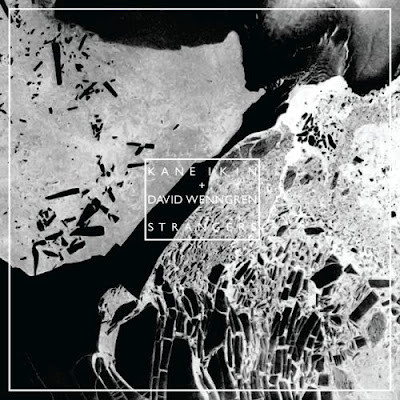
Kane Ikin + David Wenngren – Strangers

CD KESH017: 45:54 (Mastered by Taylor Deupree of 12k)

Record Label: http://www.keshhhhhh.com/

Available at: http://www.experimedia.net/

1) Swell; 2) Call; 3) Veil; 4) Chalk; 5) Drifter; 6) Strings + Interlude

Album Preview:


*This posting has been updated upon further listening*

This is the first joint work created by Kane Ikin (one half of Solo Andata) and David Wenngren (Library Tapes).  I have read that “Strangers” Ikin and Wenngren did not meet during the recording and that the structure and overall sonic feel of the album was not planned.  This and other similar works mark a continuing re-emergence of instrumental music by a new generation of creative and technically inclined musicians that craft layered sound atmospheres (often referred to as “electro-acoustic minimalism”), yet the music is engaging and stimulating.

I have been an avid listener and collector of synthetic electronic music since the early 1970s, yet there is something to be admired about the production of fine instrumental music with an ambience and mystery of electronics, being created with cleverly disguised analog instruments (acoustic or amplified) as well as found, ambient, looped or processed sounds.

Historical context: While they abandoned their early legacy when they issued their boxed set “The Catalogue” in late 2009, Kraftwerk’s work started with a similar experimental spirit to “Strangers”, based on analog instrumental drones of guitars, flutes and rhythms of found percussion on pieces like “Kling Klang” from the 1972 album “Kraftwerk 2”.

Kling Klang Part 1: http://www.youtube.com/watch?v=50M7RLgipNc

Same with early works by Tangerine Dream and others, before they switched to early sequencers and then hefty modular synthesizers, like the Moog (or later more portable and somewhat less reliable EMS VCS3) as well as tape-based samplers like the Mellotron or Chamberlin.  Early works by Evangelo Papathanasiou (Vangelis) were mostly created with organ, clavinet, woodwinds, piano and percussion processed with reverb, delay and other effects, as in “Creation du Monde” from the 1972 soundtrack to “L’Apocalypse des Animaux” by long time collaborator and filmmaker Frederic Rossif.

Creation du Monde: http://www.youtube.com/watch?v=J0QQJfPi3ps

In “Strangers”, there is meandering warmth to the album, a peaceful sense of comfort and meditation with a tangible awareness of humanity and nature (an absence of the synthetic).  Layers of guitar, bass, piano (deep soundboard), percussion (low register bells and gongs) and strings appear throughout.  From the collaborators there is a joint sense of discovery and response as each layered track progresses.  This method of joint remote authorship is risky, yet very intriguing and the results are quite successful.

The titles of each track do seem to symbolize the development of the sonic ideas.  “Swell” is akin to Ikin’s gorgeous recent work “Contrail” with apparent glissando drifts of guitar and layered keyboard peregrinations.  “Call” has the feel of time-shifted incantation with repeated musical phrases.  The intensity of the “call” increases as it progresses.  While there is a general feeling of the pastoral in this track, there are times where layered sounds mesh to a point of tension, later to be diffused to a calming resolution.  “Veil” starts with a repeated tonal beacon and gradually it diffuses into a suspended wash of winds, harmonics and tonal percussives.  “Chalk” is hypnotic and haunting with a sense of a distant faded memory returning.  “Drifter” contains repeated sampled phrases that establish a building tension as the fabric of the piece intensifies.  Washes of noise (almost like lashing waves in a storm) enter the piece until they subside (this piece, to me, does appear to be chopped a bit at the end).  “Strings + Interlude” builds slowly, and pulses as layers and sounds are introduced.  It has a feeling of darkness, yet it’s punctuated with sounds that introduce light and color into the soundscape.  Then the strings disappear and the interlude is a peaceful and mysterious aftermath–this piece, along with “Chalk” and “Swell” are the most cinematic.

This video using “Chalk” will give a sense of what I mean…rather unusual historic footage:


Gone are the soulless interfaces of MIDI and sequenced boxes of beat, and with “Strangers” we are presented with a thoughtful, visual and distinctive journey into an ethereal realm of musical authenticity.


East River Pipe – We Live In Rented Rooms

Merge Records – mrg342 – CD – Released 2011 – http://www.mergerecords.com/artists/eastrp

Track Listing: 1) Backroom Deals; 2) Cold Ground; 3) Payback Time; 4) Summer Boy; 5) I Don’t Care About Your Blue Wings; 6) Tommy Made a Movie; 7) The Flames Are Coming Back; 8) When You Were Doing Cocaine; 9) Conman; 10) Three Ships

I don’t recall the publication, but I certainly remember the moment and it marked a turning point for me—I was ready for something different, musically.  Much of the music I had been listening to, at the time, was from larger commercial record labels with corporate directors and production teams, where artists rarely could steer their music in a direction of their own making.  As much as I admire well-produced, engineered and recorded works of all sorts, the review I was reading in the late 1990s intrigued me enough to find a copy of East River Pipe’s “The Gasoline Age”.

East River Pipe is F.M. Cornog (aka, Fred) and his early adult years were apparently rather dark and mired with substance abuse and a brief encounter with homelessness.  Eventually, with the assistance of a woman named Barbara Powers, F.M. recovered and she helped him acquire recording equipment to write songs.  Years later, F.M. would marry Ms. Powers. 

F.M. does not play live, or tour and he records alone, initially in his bedroom and now in a compact home-studio.  He has a small and devoted fan base.  His equipment is mostly low-tech (at first a 4 track portable) and though he has updated to digital recording his set-up remains simple.  He writes his own material, plays the instruments, sings, produces, records and determines the direction of his own artistic expression.  As far as I have read, his label Merge Records lets him do what he wants with his work and material is released on no particular schedule except when F.M. says the work is ready.  I admit that for some, his music will be an acquired taste, but he writes on subjects that often cut right to the bone with reality.  Artists such as Lambchop, David Byrne, The Mountain Goats and Okkervil River have covered his songs.

F.M. tells stories; some are stark, tragic and perhaps echo aspects of his own past.  He also captures a mood and its color with a remarkable depth that belies the simplicity of a given song.  Many of his songs are short, some seem like hooks or choruses without verses like “Wholesale Lies” from “The Gasoline Age”.  In many ways, Fred writes with a clarity and sharpness as Ernest Hemingway wrote.  What one hears in the words, melodies and instrumentation is all that’s needed to express the thought, nothing else.


After “The Gasoline Age”, I purchased his earlier works “Mel”, “Poor Fricky” and the compilation of his early cassette tape releases “Shining Hours in a Can”.  Then to his subsequent releases “Garbageheads on Endless Stun” and the rather dark “What Are You On?”  Cornog songs can be sardonic and even political and often (I think) there’s irony in the upbeat tone of the music as a sharp contrast to the dark subjects of the lyrics like with the opening track of “Where Does All The Money Go?” on “Garbageheads…”


Married and now with a young daughter and a day-job at Home Depot, Cornog’s releases are less frequent (5 years since his last), but his songs are still keen yet with slightly more atmospheric arrangements.  The songs on “We Live In Rented Rooms” observe human conditions, provide social commentary, defend the defenseless and for some dream about what is likely unattainable.  Some might think the subjects are a downer, but in many of the songs there are glimmers of hope in a verse, a chorus or a catchy melody.  They are the kind of songs that can make one stop and think about one’s own situation.


I suppose that one might have to be in a certain frame of mind for listening to this album.  “Backroom Deals” opens the album is a piece about the annoying realities of making it through a workday for many.  Despite the melancholy of the languid almost defeated rhythm of the piece it’s punctuated deftly with guitar and electric piano to make it to quitting-time.  “Summer Boy” is possibly the reality of a local who watches the comings and goings of tourists and at the end of the season, being the one who is forgotten.  “The Flames Are Coming Back” is of one who is trying to turn a life around and the struggle to keep things together for a family.  “When You Were Doing Cocaine” gets right to it with the shock of a corrupted life affecting others and the piece is sewn together with an almost lullaby of a melody and the dreamy irony of a chorus that beckons for a better place.

In the music business today, many artists demand to be seen and heard, but F.M. Cornog as East River Pipe, true to himself, quietly sings of those who exist below the din of a world flashing by.

This review appeared in the January 2012 Issue of Affordable Audio: http://www.affordableaudio.org/Affordable$$Audio/Current_Issue.html

Kane Ikin – Contrail EP

http://www.12k.com/index.php/site/releases/contrail/

Vinyl (7″ Clear) : A: Contrail B: Synthetic Setting  Digital: C: Sailing D: Short Wave Fade (all 4 tracks MP3 d/l) Total time all 4 tracks: 21.5 minutes

This EP recording is a marvelous walking companion.  Some pieces being better suited for the woods and the others for the exploration an old vacant factory.  Kane Ikin is Melbourne, Australia-based and also one half of Solo Andata (this is KI’s first solo release outside of SA).  The pieces are mysterious, hypnotic and transfer the listener to another realm.  The recording is analog, tape-based and sounds vary from found, looped and sampled to plucked and percussive.  There is an ethereal sense of a soft glare shimmering as sounds appear and dissolve.  If one is fortunate enough to obtain a limited edition vinyl copy, it’s a real treat to see the care with which the 12K label takes in support of their artists.

When the EP arrived, I have to admit I was not sure at what speed to set my turntable.  I inquired and the zen-like response from 12K made me laugh…but I had to ask, given a recent mistake I had made with another 12″ recording that I assumed was 33-1/3 RPM, but turned out to be a 45 RPM.  THAT particular recording turned out to sound great either way, but it made better sense to my ears at the intended speed.

And this…

A promotional video for the EP:


Review: Michael Franks – Time Together

CD – Shanachie 5189 – Sleeping Gypsy Music – June 2011

http://www.shanachie.com/ & http://michaelfranks.com/

1) Now That the Summer’s Here, 2) One Day in St. Tropez, 3) Summer in New York, 4) Mice, 5) Charlie Chan in Egypt, 6) I’d Rather Be Happy Than Right, 7) Time Together, 8) Samba Blue, 9) My Heart Said Wow, 10) If I Could Make September Stay, 11) Feathers From an Angel’s Wing

****

“Why must the present…Turn to past…So fast?  The disappearing now…” from the song “Time Together”

****

This is long overdue, but better late than never…

While not always the case, some of the best songwriters, filmmakers and artists (in my opinion) have a solid foundation in literature and writing—having the ability to clearly express thoughts and emotions, regardless of the medium.  I think it is also true that one’s own work is improved by knowing limitations and collaborating with others.  Michael Franks’ work is a prime example of this, being a writer of finely crafted songs that tell stories, many of which include a variety of arrangement techniques brilliantly suited to a given song.

In his teen years in California he discovered poetry, picked up a guitar, and went on to study English at UCLA while learning independently about and listening to music: Brubeck, Getz, Gilberto, Jobim and Davis, among many others.  For a time he wrote songs as a freelancer, and I learned only recently that his works appeared in films including Zandy’s Bride (starring Liv Ullmann and Gene Hackman).  Others recorded his earlier songs and in 1973 he released an eponymous work (on Brut Records…my original copy long ago worn out) that was later reissued as “Previously Unavailable”.

I first became familiar with Franks’ work after he had relocated from California to New York when a friend recommended that I purchase “Burchfield Nines” (released in 1978).  From there I went back to his first three albums “Michael Franks”, “The Art of Tea” (known best for “Popsicle Toes”) and “Sleeping Gypsy”.  In total, Franks has released seventeen separate studio albums and there have been a variety of reissues and compilations including a 1980 live album “Michael Franks with Crossfire Live”.  Most of his work has been recorded with Warner/Reprise (1975 through 1995), one release on Windham Hill in 1999 “Barefoot On The Beach”, 2003’s “Watching The Snow” on Rhino (then Koch Records) and “Rendezvous in Rio” on Koch Records in 2006.

Throughout his career, aside from Franks’ songwriting and singing (with his almost whispering mellow vocals), also of interest to me has been the variety of musicians, producers and arrangers he has collaborated with—a group of incredibly talented musicians and vocalists, too many to list here such as, Joe Sample, Larry Carlton, Wilton Felder, Astrud Gilberto, Peggy Lee, the Yellowjackets, the Brecker brothers, and producer/arrangers such as, Russell Ferrante, Jimmy Haslip, Matt Pierson, Jeff Lorber, Tommy LiPuma, John Simon, Rob Mounsey, Walter Becker, Chuck Loeb, Charles Blenzig, Mark Egan, and (my favorites) Gil Goldstein and Ben Sidran.

And mysteriously deposited throughout his albums have been songs from a (perhaps forever…waiting patiently) forthcoming Broadway musical “Noa Noa” based on the life of artist Paul Gauguin who spent time in the 1890s in Tahiti and wrote a journal of the same name.  Many contemporary artists of the same period appear in the songs, like Vincent Van Gogh.  Franks’ work ranges from acoustic to electric Jazz contemporary vocals, some funk and fusion (like with Jeff Lorber) to work that skims the edges of pop vocals (“Your Secret’s Safe With Me” from the album “Skin Dive”).  Much of his most successful work has skillful wordplay, innuendo and humor (like “When Sly Calls” from 1983’s “Passionfruit”), but his most haunting and beautiful are my favorites like his duet with Peggy Lee (one of her last recorded works) “You Were Meant For Me”, exquisitely arranged by Ben Sidran.

With some minor exceptions, the album “Time Together” instantly became a favorite of mine this past summer.  “Now That Summer’s Here” and “Summer In New York” setting an upbeat mood for a delightfully mellow summer, as Franks can do so well.  Will we ever know if “One Day in St. Tropez” is fact or fiction?—a story of hitchhiking in France in 1963, narrator picked-up by Brigitte Bardot in a Jaguar XKE; the poetry and timing in this is light-hearted, romantic and the fantasy of it all, like a dream.  “Mice” is a delightfully humorous statement on how perhaps the “lower” species can teach humanity about better behavior.  For the first time (as far as I know), Franks dipped his toe into politics with “Charlie Chan in Egypt” reporting on the tragic state of affairs America found itself in as a result of recent military incursions.  The album continues with other memories and romances of summers past as in “Samba Blue” and subtle advice on keeping things positive in “I’d Rather Be Happy Than Right”.  Then the melancholy of summer, drawing to a close, as expressed in “If I Could Make September Stay”.  My favorite of all 11 songs is the tender and loving tribute to the Franks family’s departed (rescue) dachshund Flora in the title track “Time Together” (Franks being a devoted animal lover and supporter of various animal rescue organizations).  In this, Gil Goldstein’s arrangement is just stunning and a perfect complement to the lyrics and sentiments being expressed.

Here it is: Time Together:


Michaels Franks’ voice and music certainly are not for every listener, but I think that this is one of his best albums since 1993’s “Dragonfly Summer” or 1995’s “Abandoned Garden”.  An album for any season, and especially for a gloomy and chilly winter morning as it is, as I write this…

MINDBENDERS

Learn, Ponder, Discuss

richard jefferies

visionary author and naturalist (1848-1887)

My Patronus Is Coffee

Life is Messy. Send Coffee and Posh.

Wendy Artin, photos from the exhibition

This is a blog with news - to see Wendy Artin's website, please visit www.wendyartin.com

JAZZ LIVES

MAY YOUR HAPPINESS INCREASE! "Lives" is both noun and verb.

No More Workhorse

Appear highbrow without trying by reading...

Stationary Travels

Journeys in Sound & Music

The Oxford Culture Review

"I have nothing to say, and I am saying it" - John Cage

Kendra Steiner Editions (Bill Shute)

publishers and champions of contemporary poetry and experimental music from San Antonio, Texas

monty adkins | SKRIKA

composer | dark ambient sound artist

Sunnymeade Astro

An Amateur Astronomer's Observing Diary from the Welsh Border

Wist Rec.

Handy Music Handmade

Somme Battlefields

WW1 Centenary website by Paul Reed

WW1 Centenary

Great War Centenary 2014-2018 website by Paul Reed

Out of Battle

Musings of a Military Historian

The Echoes Blog

The weblog of Echoes, the nightly music soundscape on Public Radio and the internet.

gleamingsilverribbon

Words, sounds and pictures by Kate Carr