The Green Kingdom – Incidental Music
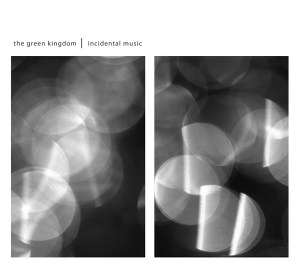
Tench – TCH03: CD Time: 39:58
Record Label Website: http://www.tenchrec.com/
More on this release: http://www.tenchrec.com/TCH03.html
Artist Website: http://thegreenkingdom.wordpress.com/
Available at: http://darla.com/
1) Three Friends Of Winter; 2) Backyard Epiphany; 3) Over Treetops; 4) Cherry Theme; 5) Slow Bloom; 6) Green Theme; 7) Floatation Themes; 8) rshda; 9) Whispered Through Pines
Whether in a conscious state of reverie or in the pre-waking hours when fleeting visions come forth into the camera obscura* of the mind, there are moments where hanging onto the edges of dreams is perhaps more desirable than even slumber. And after the dreams end, in the glistening haze of the morning, The Green Kingdom’s latest album, appropriately titled Incidental Music, is the soundtrack for this quietude.
My first experience with Michael Cottone’s work was on the Home Assembly’s #HAM004 album from 2010 entitled Prismatic, and his more recent album Egress on Nomadic Kids Republic #011. Incidental Music holds time in suspension with subtle rhythms, and gentle yet tangible instrumentation (crystalline guitars, keyboards, kalimba and minimal processing) that encourage a calm wandering state of mind. Although different and original in his approach, there are some similarities in the feeling and sound in Cottone’s work to Dictaphone’s recent album Poems From A Rooftop (Sonic Pieces) and The Boats album Ballads Of The Research Department (12k), two albums that I like very much. It is evident that great care was taken in the recording of this album, and it has been beautifully mastered by Tench’s M. Ostermeier.
Three Friends Of Winter is the placid introduction, a point of awareness without a concrete reality. Backyard Epiphany is serene in its sense of movement and passage of time. Over Treetops is the beginning of a gentle awakening. There are Satie-esque moments of allure as in Cherry Theme and Green Theme, even after a chimed nudge opening in Cherry Theme. Slow Bloom and Floatation Themes blur the sense of time. rshda is the most ethereal track on the album; the moment before stirring, where reality is still beyond reach. The album closes with a gentle awakening in Whispered Through Pines.
There was a place-holder for album #TCH03 at Tench Records for some time. Now the mystery is solved, and the void filled with these delightfully tranquil scenes and halcyon musings from The Green Kingdom.

* Tip of the hat to Mr. Williamson.
The To-Listen Stack
I’m slowly working my way back to a stack of LPs that I have been avoiding due to the summer heat. My main turntable is connected to a pair of tube amps, and in hot weather tube output only makes a warm room…hot! So, time to move a “sand amp” into place until cooler weather. Here’s what I’m spinning:

Kink Gong – Xinjiang: An “ethno electronic collage” with incredible field recordings combined with electronics recorded by Laurent Jeanneau in China. Jeremy Bible at Experimedia recommended this in one of his (what I now call “dangerous Friday e-mails”). Available at: http://www.experimedia.net/index.php?main_page=product_music_info&products_id=5182

Hands Off Cuba – Volumes of Sobering Liquids: More sound experiments from a number of musicians who have worked in Lambchop over the years. Available at: http://www.sebastianspeaks.com/

William Tyler – Behold the Spirit: Long time guitarist with Lambchop and Hands Off Cuba, this is William Tyler’s latest solo work. Available at: http://www.tompkinssquare.com/william-tyler.html A short film on the release is here:

Jonas Munk – Pan: I know Jonas Munk’s work mostly from Manual (Confluence, I think is the best album under that moniker). Available at: http://www.elparaisorecords.com/content/jonas-munk-pan-cd
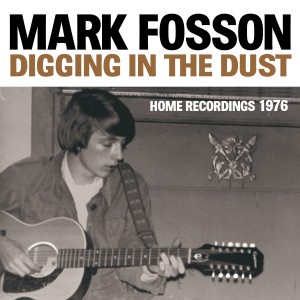
Mark Fosson – Digging In The Dust: Taken from the long lost home demo recordings of 1976 after Mark Posson had just acquired a 12 string guitar; even the final version of this recording was shelved and went unreleased until 2006 as The Lost Tokoma Sessions on Drag City Records. Available at: http://www.tompkinssquare.com/mark-fosson.html You can stream the record here: http://www.fretboardjournal.com/audio/mark-fosson-digging-dust-exclusive-stream
MOLE – What’s The Meaning?

CD: RareNoiseRecords RNR027: 70:39
Website: http://www.rarenoiserecords.com/mole-store/whats-the-meaning-cd
Album samples: http://www.rarenoiserecords.com/jukebox/mole/wtm/
Also available at: http://darla.com/
Mole Productions at Facebook: https://www.facebook.com/MoleProductions
Tracks: 1) PB; 2) Stones; 3) Trees And The Old New Ones; 4) Flour Tortilla Variation; 5) What’s The Meaning; 6) Greenland; 7) Grass; 8) Grubenid
Spirited, funky, and at times reflective is the vibe of the debut album What’s The Meaning from the Mexican, Argentinean and American contemporary jazz quartet known as MOLE. Originally started as a duo about eight years ago, Mark Aanderud (on piano and composer, from Mexico) and Hernan Hecht (on drums, from Argentina) sought out New York guitarist David Gilmore for his diverse recording credits and touring experience with Wayne Shorter, Steve Coleman’s Five Elements and others, as well as Jorge “Luri” Molina (on bass, also from Mexico).

Mark Aanderud and Hernan Hecht
So, the music? Think food…GOOD food…Mōl-eh! The album starts quietly and mysteriously with PB. The individual ingredients are being prepared for what will become a great meal. PB develops as the quartet gradually mixes together, an exchange of themes and solos. In Stones, the drums take a powerful lead and the solos gather around. With each track the intensity of the album grows, although there are some pauses along the way. The most delightful is Trees And The Old New Ones. It has some calming shades of Metheny and Mays’ 1981 album As Falls Wichita, So Falls Wichita Falls (September Fifteenth in particular). Bowed bass and cello (played by Dorota Barova) almost mournfully open the piece. The woven piano and guitar themes echo each other throughout along with skilful and gentle percussion.

Flour Tortilla Variation has a driving drum, piano and bass opening. Solos are traded and echoed between guitar and piano, including a closing guitar solo reminiscent of Al Di Meola’s expressive work. Brooding and syncopated is the feeling at the start of the title track, What’s The Meaning? Initially, a gentle piano and drum exploration between Aanderud and Hecht (think Bill Bruford’s Earthworks), which then weaves in Gilmore’s guitar to explore with piano interludes, and builds to a closing solo by Gilmore with chops reminiscent of Carlos Santana. Hecht and Molina lay down an upbeat foundation on Greenland for Aanderud and Gilmore to vamp and solo over—it’s a spirited romp.
Greenland
Grass is a languid piano and bass pulse with a repeated piano and guitar theme and is one last pause before the last track; Grubenid gets its funk on. This is a great piece with plucky shades of Stanley Clarke. After the guitar and bass opening vamp it stomps and Aanderud and Gilmore carry the somewhat off-key main melody. Gilmore then leads the rhythm with a growling and energetic solo and Aanderud responds. Guitar and piano return to the original theme before the rhythm section fades.
Let’s hope MOLE does some touring to support this album—they’re cookin’!

****
This is a solicited review.
Review: Michael Franks – Time Together

CD – Shanachie 5189 – Sleeping Gypsy Music – June 2011
http://www.shanachie.com/ & http://michaelfranks.com/
1) Now That the Summer’s Here, 2) One Day in St. Tropez, 3) Summer in New York, 4) Mice, 5) Charlie Chan in Egypt, 6) I’d Rather Be Happy Than Right, 7) Time Together, 8) Samba Blue, 9) My Heart Said Wow, 10) If I Could Make September Stay, 11) Feathers From an Angel’s Wing
****
“Why must the present…Turn to past…So fast? The disappearing now…” from the song “Time Together”
****
This is long overdue, but better late than never…
While not always the case, some of the best songwriters, filmmakers and artists (in my opinion) have a solid foundation in literature and writing—having the ability to clearly express thoughts and emotions, regardless of the medium. I think it is also true that one’s own work is improved by knowing limitations and collaborating with others. Michael Franks’ work is a prime example of this, being a writer of finely crafted songs that tell stories, many of which include a variety of arrangement techniques brilliantly suited to a given song.
In his teen years in California he discovered poetry, picked up a guitar, and went on to study English at UCLA while learning independently about and listening to music: Brubeck, Getz, Gilberto, Jobim and Davis, among many others. For a time he wrote songs as a freelancer, and I learned only recently that his works appeared in films including Zandy’s Bride (starring Liv Ullmann and Gene Hackman). Others recorded his earlier songs and in 1973 he released an eponymous work (on Brut Records…my original copy long ago worn out) that was later reissued as “Previously Unavailable”.
I first became familiar with Franks’ work after he had relocated from California to New York when a friend recommended that I purchase “Burchfield Nines” (released in 1978). From there I went back to his first three albums “Michael Franks”, “The Art of Tea” (known best for “Popsicle Toes”) and “Sleeping Gypsy”. In total, Franks has released seventeen separate studio albums and there have been a variety of reissues and compilations including a 1980 live album “Michael Franks with Crossfire Live”. Most of his work has been recorded with Warner/Reprise (1975 through 1995), one release on Windham Hill in 1999 “Barefoot On The Beach”, 2003’s “Watching The Snow” on Rhino (then Koch Records) and “Rendezvous in Rio” on Koch Records in 2006.
Throughout his career, aside from Franks’ songwriting and singing (with his almost whispering mellow vocals), also of interest to me has been the variety of musicians, producers and arrangers he has collaborated with—a group of incredibly talented musicians and vocalists, too many to list here such as, Joe Sample, Larry Carlton, Wilton Felder, Astrud Gilberto, Peggy Lee, the Yellowjackets, the Brecker brothers, and producer/arrangers such as, Russell Ferrante, Jimmy Haslip, Matt Pierson, Jeff Lorber, Tommy LiPuma, John Simon, Rob Mounsey, Walter Becker, Chuck Loeb, Charles Blenzig, Mark Egan, and (my favorites) Gil Goldstein and Ben Sidran.
And mysteriously deposited throughout his albums have been songs from a (perhaps forever…waiting patiently) forthcoming Broadway musical “Noa Noa” based on the life of artist Paul Gauguin who spent time in the 1890s in Tahiti and wrote a journal of the same name. Many contemporary artists of the same period appear in the songs, like Vincent Van Gogh. Franks’ work ranges from acoustic to electric Jazz contemporary vocals, some funk and fusion (like with Jeff Lorber) to work that skims the edges of pop vocals (“Your Secret’s Safe With Me” from the album “Skin Dive”). Much of his most successful work has skillful wordplay, innuendo and humor (like “When Sly Calls” from 1983’s “Passionfruit”), but his most haunting and beautiful are my favorites like his duet with Peggy Lee (one of her last recorded works) “You Were Meant For Me”, exquisitely arranged by Ben Sidran.
With some minor exceptions, the album “Time Together” instantly became a favorite of mine this past summer. “Now That Summer’s Here” and “Summer In New York” setting an upbeat mood for a delightfully mellow summer, as Franks can do so well. Will we ever know if “One Day in St. Tropez” is fact or fiction?—a story of hitchhiking in France in 1963, narrator picked-up by Brigitte Bardot in a Jaguar XKE; the poetry and timing in this is light-hearted, romantic and the fantasy of it all, like a dream. “Mice” is a delightfully humorous statement on how perhaps the “lower” species can teach humanity about better behavior. For the first time (as far as I know), Franks dipped his toe into politics with “Charlie Chan in Egypt” reporting on the tragic state of affairs America found itself in as a result of recent military incursions. The album continues with other memories and romances of summers past as in “Samba Blue” and subtle advice on keeping things positive in “I’d Rather Be Happy Than Right”. Then the melancholy of summer, drawing to a close, as expressed in “If I Could Make September Stay”. My favorite of all 11 songs is the tender and loving tribute to the Franks family’s departed (rescue) dachshund Flora in the title track “Time Together” (Franks being a devoted animal lover and supporter of various animal rescue organizations). In this, Gil Goldstein’s arrangement is just stunning and a perfect complement to the lyrics and sentiments being expressed.
Here it is: Time Together:
Michaels Franks’ voice and music certainly are not for every listener, but I think that this is one of his best albums since 1993’s “Dragonfly Summer” or 1995’s “Abandoned Garden”. An album for any season, and especially for a gloomy and chilly winter morning as it is, as I write this…
Gareth Dickson – Quite A Way Away – *UPDATED Happy Easters Video*

CD 43:24 – 12K1070 – 12k Records
http://www.12k.com/ & http://www.garethdickson.com/
1) Adrenaline, 2) Noon, 3) Get Together, 4) Quite A Way Away, 5) This Is The Kiss, 6) Happy Easters, 7) Nunca Jamas (Never Ever), 8) Jonah
More beautiful music to disappear into, discovered this time by an association with a record label that I have quickly come to admire a great deal, 12k. There is quite a story behind this album by Gareth Dickson and it is told best, right here:
http://www.12k.com/index.php/site/releases/quite_a_way_away/
The comparisons to the sound, the voice and the music are immediate: Nick Drake, Bert Jansch and others, yet there are some distinct differences, some technological and some musical. I speculate that some of the tunings and picking are similar to techniques used by Nick Drake (whose work I am far more familiar with), but there are similarities to another guitarist I admire a great deal, Anthony Phillips (Geese and the Ghost, many others, and collaborations with Harry Williamson: Tarka & Gypsy Suite).
With the exception of instrumental piece Happy Easters, each song starts with an extended introduction on the guitar. It sets the mood, the color, space and even establishes a sonic incantation for the coming lyrics (much of which are of love, longing and searching).
Noon
The recordings have incredible depth (considering they are classified as “lo-fi”). I’m not sure how the album was engineered, processed or mic’ed, but there are some guitar sound similarities to Neil Young’s recent album Le Noise that was produced and engineered by Daniel Lanois. In Quite A Way Away the guitar sounds as an orchestra (whether strings are muted or being played at their fullest at the heart of the guitar). The instrumentation is as stark as Nick Drake’s Pink Moon yet the sound is as full as Five Leaves Left or Bryter Layter—so wonderful to hear.
Happy Easters, to me, is very strongly reminiscent of the acoustic sections of Anthony Phillips’ Scottish Suite as well as other pieces from his second Private Parts and Pieces series of albums. Quite fitting, since Gareth Dickson is originally from Glasgow, Scotland, and his voice also reveals his roots elsewhere on the album.
Happy Easters
This is not an album of songs with guitar accompaniment nor is it a guitar album with vocals. Gareth Dickson combines both and reaches into the sonorous depths to create a passionate, deeply emotional and soulful music.
Links to other song samples here: http://soundcloud.com/gareth-dickson

 wajobu